
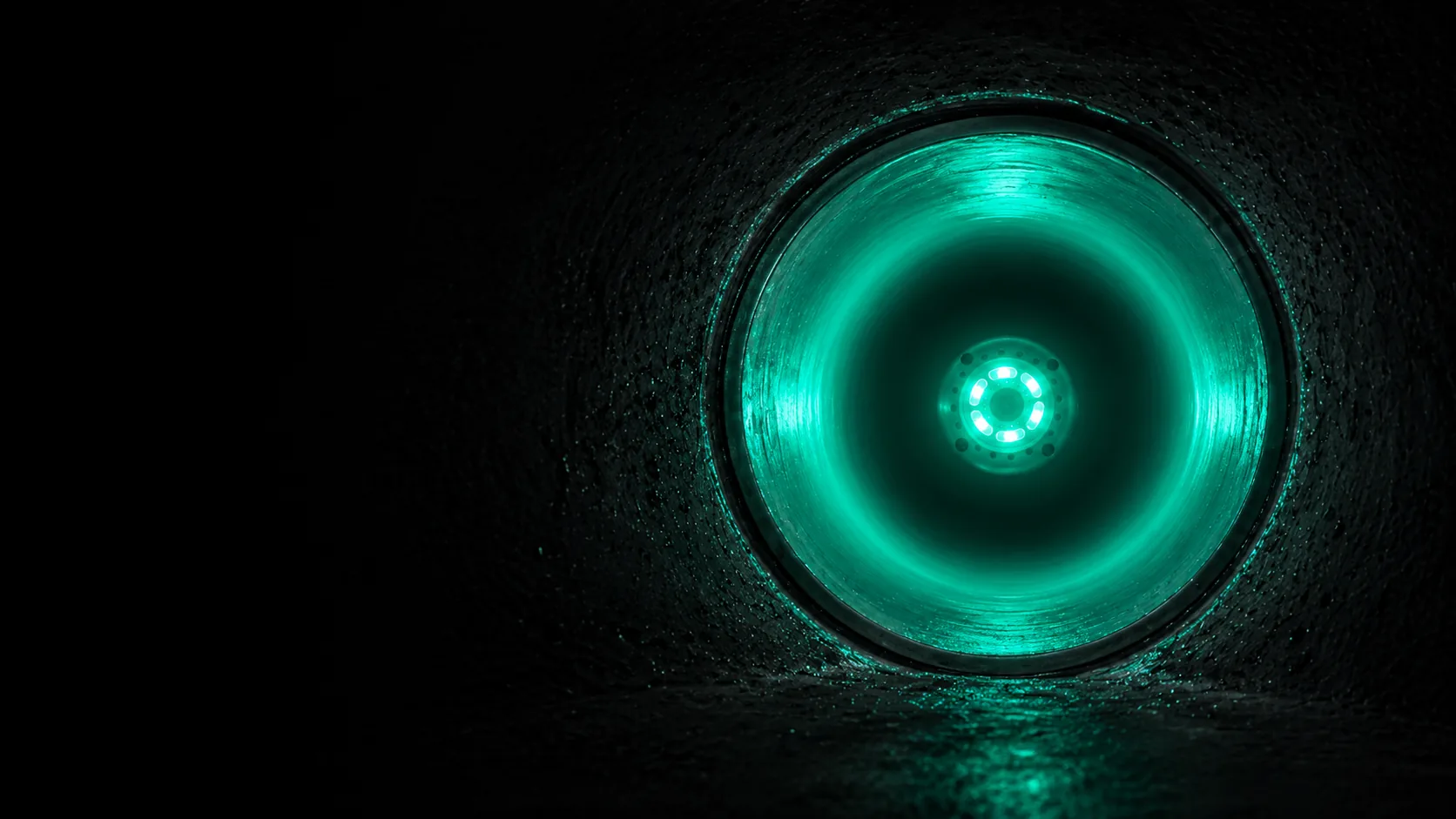
CIPP Lining & Trenchless Pipe Rehabilitation
New Pipe Performance. No Open Trench.
Cured-in-Place Lining & Targeted Point Repairs that Rebuild Structural Integrity from the Inside, without Tearing up Roads, Floors, Walls or Landscaping
Trenchless Rehabilitation
Services Offered
- 01
CIPP Rehabilitation
Trenchless rehabilitation that restores pipeline assets.
- 02
Sectional & Point Repairs
Targeted repairs for small or single defective sections.
- 03
Grouting & Joint Sealing
Grouting to stop infiltration and restore structural integrity.
- 04
Manhole Rehabilitation
Restores deteriorated manholes and stops infiltration at the structure.
Definition
What It Is
Trenchless Pipeline Rehabilitation (CIPP) restores aging or damaged pipe from the inside, forming a new structural pipe within the existing host pipe with little or no excavation. It is a minimally disruptive technology that delivers maximum return on investment. Whether you are a single-family homeowner, a property manager responsible for complex facilities and warehouses, or a government utility, Trenchless Pipeline Rehabilitation delivers real value to your aging infrastructure, backed by an unmatched lifetime warranty from Southeast Services. We rehabilitate sanitary sewer and storm pipe with CIPP lining, including sewer pipe lining, storm drain repair, culvert lining, and manhole rehabilitation, without open-cut excavation.
Signals
When You Need It
- Inspection found recurring defects: cracks, fractures, root intrusion, corrosion, or open joints.
- Infiltration and inflow is driving sanitary sewer overflow risk or a regulatory compliance deadline.
- The line runs beneath a road, slab, runway, or waterfront where open-cut is costly or not feasible.
- Aging cast iron in a commercial, institutional, or multi-unit building needs renewal, not replacement.
- A condition assessment flagged a structural grade trending toward failure ahead of a full break.
- An industrial, marine, or offshore line must stay in service while it is restored, with minimal downtime.
Method
How We Do It
- Step 01
Assessment
We rehabilitate to what the condition assessment shows, not to a default product. The data defines the scope.
- Step 02
Clean & Prep
Host-pipe preparation clears debris, roots, and scale first, so the new liner bonds and cures correctly.
- Step 03
Design
The liner resin and method are selected for the pipe material, service conditions, and install location.
- Step 04
Installation
Trained crews install the specified liner system on the main line, manhole, or lateral per the project scope.
- Step 05
Liner Curing
We deploy advanced curing unique to each project with curing verification on every install.
- Step 06
Verification
Post-rehabilitation CCTV documents the finished work and confirms a durable, long-term structural repair.
Deliverables
What You Get
- A new structural pipe within a pipe, installed inside the host line without open-cut excavation.
- Reduced infiltration and inflow at every rehabilitated pipe segment and lined connection.
- Restored flow capacity once roots, scale, and debris are cleared from the rehabilitated line.
- A smooth, jointless interior that improves flow and resists future root intrusion and buildup.
- Minimal surface disruption and a much faster return to service than open-cut replacement.
- An unmatched lifetime warranty from Southeast Services covering both labor and materials.
Engineering
Capabilities & Specs
- Methods Offered
- CIPP (UV, Ambient, Steam)SIPPSectional Point Repairs
- Diameter Range
- 2" to 72"
- Liner / Resin Systems
- Custom SolutionsCompliance with ASTM F1216 and ASTM F2019
- Host Pipe Materials
- Cast IronClayConcretePVCDuctile IronSteelMisc. Other Types
- Application Sectors
- Sanitary SewerStormwaterIndustrial ProcessIn-Building DWV
- Cure Verification
- Post-Installation CCTVCure LogsLiner Sampling
Answers
Frequently Asked Questions
Trenchless rehabilitation rebuilds a pipe from the inside by forming a new structural pipe within the existing host pipe, using methods such as cured-in-place lining (CIPP), spray-applied structural coatings (SIPP), and sectional point repairs. It restores structural integrity and flow without the open-cut excavation a full replacement would require.
It usually costs less in total once you account for restoration of surfaces above the pipe, roads, sidewalks, slabs, floors, and landscape, and the operational disruption of an open dig. Direct linear-foot cost varies by method, diameter, and access, which is why we scope from the assessment rather than quote blind.
Sanitary and stormwater service is typically taken offline only for the controlled window required to install and cure the liner on a given run. For occupied buildings we plan the work to minimize that window and coordinate bypass pumping or temporary service where the situation requires it.
Yes. The principal advantage of trenchless methods is rehabilitating pipe in place, under slabs, foundations, roads, and landscape, without breaking through the surface above. We confirm feasibility from CCTV and access conditions before quoting the work.
We service the diameters and host materials listed in the Capabilities & Specs section above (cast iron, clay, concrete, PVC, ductile iron). The exact range and any limitations for a given method are confirmed during assessment.
A properly installed CIPP liner is designed for a service life of at least 50 years. That is not a marketing number. It is supported by ongoing retrospective studies that have pulled and tested liners installed decades ago, including samples in service for 20 to 25 years that remained in excellent structural condition with no indication they would fall short of their intended life. Certain advanced systems, in particular UV cured glass reinforced liners, are engineered and independently tested for design lives of 75 to 100 years or more. The exact figure depends on the liner system, the resin, and the condition of the host pipe, so Southeast Services confirms the design life against the specific system installed on your project rather than quoting a single number for every job.
Field Notes
Related Articles From Our Blog
- Cast Iron Pipe Rehab for Property Managers
- Repair Cast Iron Pipes Without Replacement
- Is CIPP Lining a Permanent Sewer Fix?
- CIPP Lining Cost per Foot in Florida
- UV-CIPP Lining for Stormwater Culverts Under Roads
- No-Dig Sewer Rehabilitation for Occupied Hospitals
- Cast Iron Pipe Repair Vs Replacement Costs
- Trenchless Cast Iron Pipe Rehab for FL Homes
Get Started
Connect with a Solutions Specialist
Field-Grounded Answers About Your System, Not a Sales Pitch.