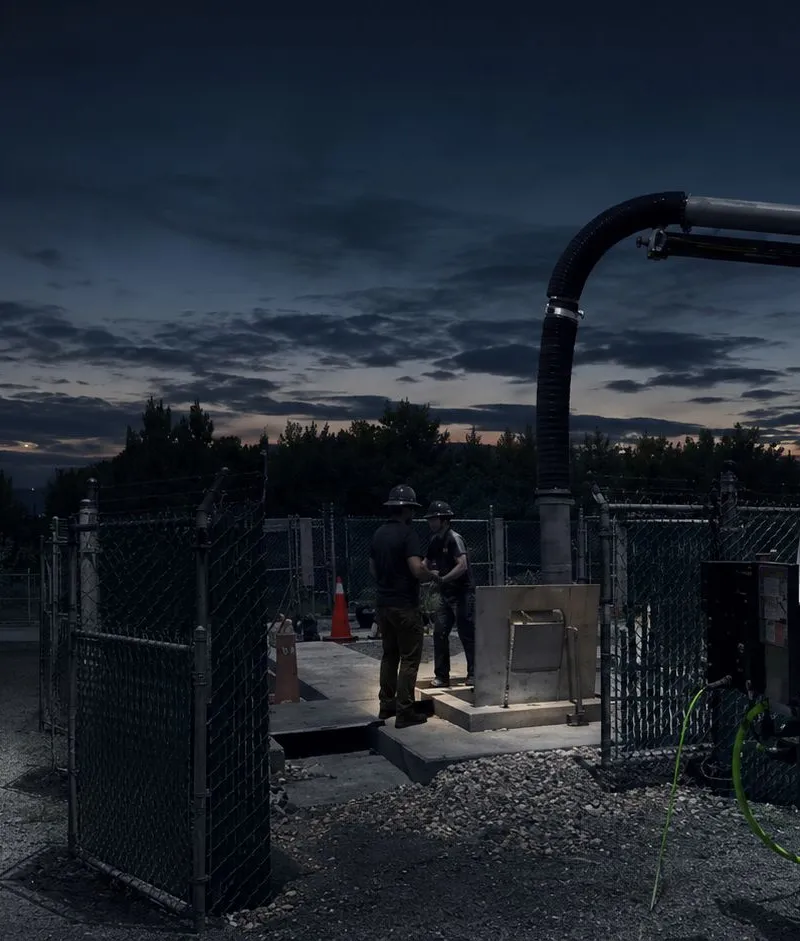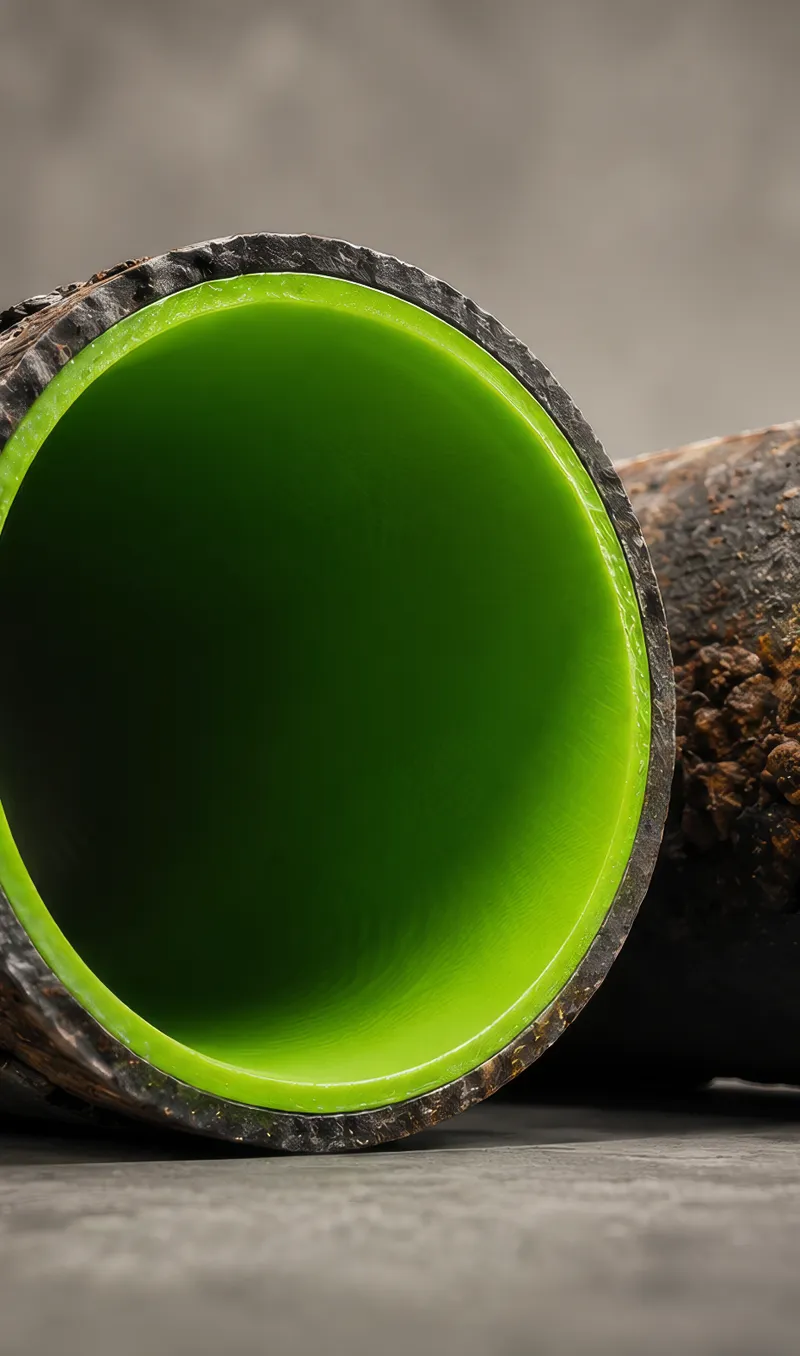
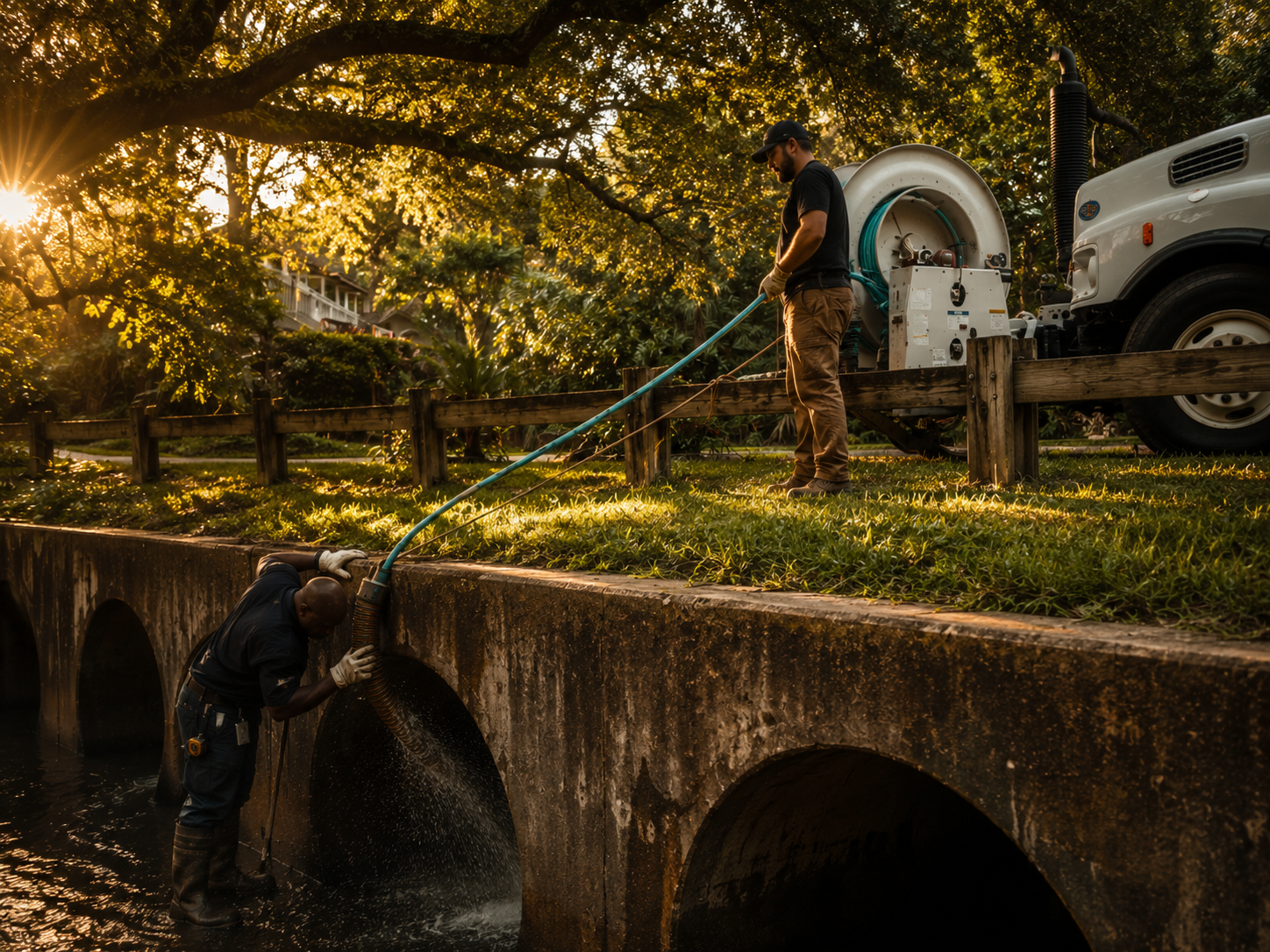
Culvert cleaning in Florida is not optional maintenance. It is the difference between a stormwater system that handles a summer downpour and one that backs up onto a parking lot, driveway, or shared roadway. This guide breaks down what property owners, HOAs, and facility managers need before hiring anyone to clear a culvert in 2026.
Culvert cleaning jobs in Florida fall into three buckets: routine debris removal, root intrusion cutting, and full rehabilitation after structural failure. For most commercial and residential properties, annual hydro jetting paired with CCTV pipeline inspection is the baseline. Skipping it is how a 24 inch corrugated metal culvert turns into a costly replacement.
Why This Matters
Florida gets more rain days than almost any other state, and sandy soils move fast when a culvert starts leaking at a joint. A clogged or collapsing culvert does not just flood a road. It undermines the roadbed or parking surface above it, and by the time a sinkhole forms, the pipe has usually been failing for months.
Hurricane season runs June through November, and Florida stormwater ordinances increasingly require documented maintenance logs for commercial properties and HOAs carrying drainage easements. If your county or insurer asks for proof of culvert maintenance after a claim, dated inspection records hold up. A verbal account of a single cleaning does not.
Who This Is For
This guide is written for facility managers, HOA boards, commercial property owners, and public works contacts responsible for culverts on private roads, retention pond outfalls, or driveway crossings anywhere in Florida. If you manage a system with pipe diameters from 12 inches up to 60 inches, corrugated metal or HDPE material, and at least one debris event per rainy season, the criteria below apply directly to you.
What to Look for in Culvert Cleaning for Florida Properties
Jetting Pressure Matched to Pipe Material
HDPE and reinforced concrete culverts tolerate higher pressure than older corrugated metal pipe, which can deform or perforate under aggressive jetting. Ask what pressure range a crew runs and why. The answer should reference the pipe, not a fixed number used on everything.
CCTV Pipeline Inspection Before & After
Pre-clean video shows root intrusion, joint separation, and sediment depth. Post-clean video proves the work got done and gives you a baseline for next year. A vendor skipping camera work on a culvert over 100 linear feet is asking you to trust them blind.
Debris Disposal & Sediment Handling
Florida culverts pull in palm fronds, sand, and construction runoff depending on location. A crew without a vacuum truck rated for wet sediment will leave slurry pooled at the outfall, which washes back in during the next storm.
Root Intrusion Cutting Capability
Oak and palm root systems find culvert joints fast in Florida's climate. Mechanical root cutting during the jetting pass, not a separate mobilization, keeps costs down and keeps the pipe clear longer between services.
Licensing & Stormwater Compliance Knowledge
A contractor working culverts tied to a permitted stormwater system should know the difference between routine maintenance and work that triggers a permit modification, and should be able to speak to FDEP related recordkeeping expectations.
Response Time During Rainy Season
June through November is not the time to discover a vendor has a two week backlog. Ask what turnaround looks like for an emergency culvert blockage during active rain events.
Top Approaches for Florida Properties
Hydro jetting with CCTV pairing. Combines 2,000 to 4,000 PSI water jetting, pressure set to pipe material, with a camera pass before and after. Works on culverts from 12 to 60 inches in diameter and clears sediment, sand, and light root growth in a single mobilization. This should be the default annual service.
Mechanical rodding with root cutting. Uses a rotating cutter head to clear heavy root intrusion in corrugated metal or clay culverts where jetting alone will not cut through mature roots. Best paired with jetting rather than used alone.
Vacuum excavation with sediment removal. Rated vacuum trucks pull heavy sand and silt loads that standard jetting just pushes downstream. Critical for culverts feeding retention ponds where sediment buildup is measured in feet after a hard rain season.
Structural relining without a pre-clean inspection. Some vendors pitch a reline job straight off a visual estimate, skipping the camera pass. It is faster to quote, but it means paying to reline a pipe without confirming actual defect locations. Skip this approach.
Chemical root treatment as a standalone service. Herbicidal foam treatments slow root regrowth but do nothing for existing sediment or structural joint separation. Fine as an add-on after mechanical cleaning, weak as the only line item on an invoice.
What to Avoid
A single flat rate quote with no diameter or footage listed was not built off an actual assessment, since culvert cleaning pricing should scale with linear feet and pipe diameter. Jetting first with no inspection tells you the pipe is clear but not why it clogged, which means the same failure repeats next rainy season. Contractors who will not provide before and after video leave you with no record for insurance, HOA board minutes, or county compliance files.
Verdict Comparison
| Method | Best For | Typical Diameter Range |
|---|---|---|
| Hydro Jetting Plus CCTV | Annual Maintenance | 12 to 60 Inches |
| Mechanical Rodding | Heavy Root Intrusion | 12 to 48 Inches |
| Vacuum Excavation | Wet Sediment, Retention Pond Outfalls | 18 to 60 Inches |
| Reline Without Inspection | Not Recommended | Any |
| Chemical Root Treatment Alone | Add-on Only | Any |