Vacuum excavation exposes buried utilities at selected work locations before municipal pipeline rehabilitation proceeds. For Florida public works departments and utility owners, the purpose is to establish field conditions that affect excavation, access, and the rehabilitation scope, not to promise a faster job or eliminate every risk.
- Vacuum excavation supports utility verification where municipal rehabilitation requires ground disturbance.
- OSHA requires safe and acceptable means to establish exact utility locations as excavation approaches them.
- Hydro excavation does not replace utility notification, excavation safety planning, or pipe condition assessment.
- Southeast Services provides vacuum excavation and rehabilitation services for municipal clients statewide in Florida.
Where Vacuum Excavation Fits in Municipal Rehabilitation
A municipal sanitary sewer or stormwater program needs separate answers about asset condition and buried utility location. CCTV pipeline inspection documents conditions inside the pipe. Utility verification addresses what is present where excavation or access work is planned. Neither record replaces the other.
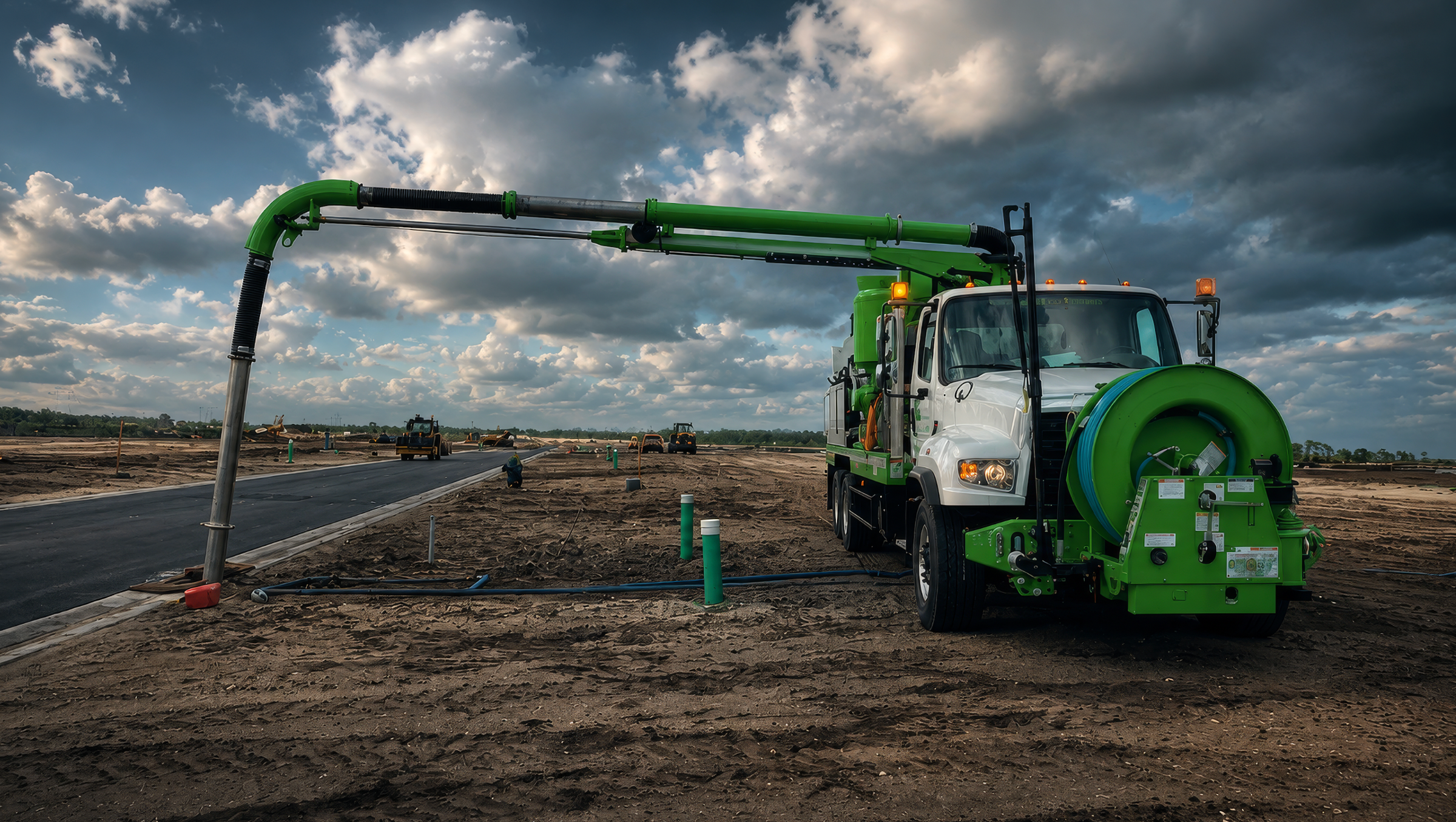
Southeast Services provides hydro excavation within its specialty and emergency services. The method uses pressurized water to loosen soil and a vacuum system to remove the resulting material. It exposes infrastructure without relying on a mechanical bucket to uncover the utility.
Vacuum excavation is relevant where a rehabilitation project includes ground disturbance near buried installations. It is not a blanket requirement at every pipe crossing or access point. The owner, designer, and qualified contractor should identify the locations that require verification from the actual work scope.
This guide addresses municipal utilities, public works departments, county governments, and special districts throughout Florida. The same planning principles apply to sanitary sewer and stormwater assets when excavation is part of the proposed work.
What OSHA Requires Before & During Excavation
OSHA's excavation standard, 29 CFR 1926.651(b), published in 1989 and amended in 1994, separates estimated utility locations from exact field locations. It requires estimated locations of underground installations to be determined before an excavation is opened. Utility companies or owners must also be contacted and asked to establish the locations before actual excavation begins, subject to the provisions in the standard.
As excavation approaches an estimated utility location, the standard requires the exact location to be determined by safe and acceptable means. While the excavation is open, underground installations must be protected, supported, or removed as necessary to safeguard employees.
The regulation does not prescribe vacuum excavation as the universal method. Nor does using a vacuum truck, by itself, establish compliance. The contractor must select acceptable procedures for the actual utilities, ground conditions, and employee exposure involved.
A municipal scope should identify who handles utility coordination, who performs field verification, and who is responsible for protecting exposed infrastructure. Those responsibilities belong in the work plan before excavation begins.
Separate Utility Notification From Field Verification
Sunshine 811's Private Locate Companies guidance, reviewed in 2026, explains that Sunshine 811 does not locate underground utility services itself. Member facility owners respond to the request and locate the utilities they own and maintain. The guidance also states that privately owned utilities are not located through that process.
Municipal project teams should therefore establish which installations are covered by the utility response and which require separate coordination. Do not assume that a marked corridor accounts for every buried installation within the project limits.
The scope should distinguish existing drawings, utility responses, surface marks, and physically exposed observations. If an installation cannot be identified, record that uncertainty and resolve it through the responsible owner and qualified field team. Do not turn an uncertain observation into a confirmed asset record.
Vacuum excavation supports physical exposure at defined locations. It is not a substitute for contacting utility owners or reviewing the notification requirements that apply to the excavation.
Select the Method From the Site Conditions
Hydro excavation is a vacuum excavation method, not a guarantee of damage-free work. Its suitability depends on the utility, surrounding ground, equipment access, and procedures used by the contractor. Calling the method non-destructive does not remove the need to protect the installation being exposed.
The scope should address water supply, removed material, disposal arrangements, surface protection, and restoration. Where groundwater or runoff is present, the qualified team should assess how those conditions affect the excavation plan. Do not assume that a Florida location alone establishes the soil profile or water table at a specific site.
OSHA's 1989 excavation standard, as amended in 1994, also addresses employee hazards from water accumulation and the stability of adjacent structures. These obligations remain relevant when vacuum equipment is used.
Avoid unsupported method rankings. A proposal should explain why its excavation approach fits the observed conditions, rather than claiming that air or water always performs better. Pressure settings, exposure procedures, and protective measures belong with qualified personnel, not a generic article checklist.
Coordinate Locates With Pipe Condition Assessment
Utility exposure does not establish whether a host pipe is suitable for cured-in-place pipe (CIPP) lining. Rehabilitation selection still requires evidence about the pipe's condition and the proposed work. Locate findings and inspection findings should remain distinct, then be reviewed together.
Southeast Services provides CCTV pipeline inspection and GIS system mapping as part of condition assessment. Every Southeast Services condition assessment technician is NASSCO certified. That inspection credential should not be presented as a substitute for excavation training or site safety responsibilities.
The project record should connect exposed utility observations with the relevant asset and planned work area. Useful scope requirements include field photographs, the reference used for recorded measurements, the observed utility identity, and any unresolved discrepancy with the drawings. These are documentation requirements to agree on, not a claim that every project receives identical deliverables.
Require the responsible designer or owner to review discrepancies before treating the original scope as unchanged. A field observation only informs the decision when it reaches the people responsible for design and execution.
Define Access Before Finalizing Rehabilitation Work
Municipal rehabilitation can include CIPP lining, sewer lateral lining, and sectional point repair. Where these activities require excavation, confirm that the proposed work area has been reviewed for utility conflicts. The extent of verification should follow the actual installation and access plan.
Do not assume that trenchless rehabilitation means no ground disturbance anywhere on the project. Likewise, do not require excavation where the selected method and existing access do not call for it. The condition assessment and design should establish the need.
For stormwater assets, the same distinction applies. Confirm what must be exposed to perform the specified repair or access work. Do not claim that exposing a structure satisfies stormwater permit obligations or guarantees that the structure will remain undamaged.
Keep excavation support, cleaning, inspection, rehabilitation, and restoration clearly described in the scope. If the field findings change the proposed access, have the responsible parties review that change before work proceeds under the previous assumptions.
Require a Defensible Locate Record
A municipal specification should define the information needed to accept the locate work. Ask for a record that distinguishes observed conditions from assumptions and connects each observation to the planned rehabilitation activity.
The record should identify the work location, exposed installation, documentation method, and unresolved conflicts. It should also state who receives the findings and who authorizes changes to the rehabilitation plan. Agree on mapping and measurement requirements rather than inserting an unsupported accuracy promise.
Avoid treating utility verification as proof of rehabilitation readiness by itself. A defensible scope also needs pipe condition information and an assessment of the selected repair method. Diagnosis and rehabilitation of sanitary sewer and stormwater systems require a licensed contractor and appropriately certified assessment personnel.
Frequently Asked Questions
What Is Vacuum Excavation for Utility Locates?
Vacuum excavation exposes buried installations by loosening soil and removing it with vacuum equipment. Hydro excavation uses pressurized water for soil loosening. In municipal rehabilitation planning, the exposed observations help establish conditions at defined work locations. The method does not replace utility notification, pipe inspection, or the contractor's excavation safety procedures.
Does OSHA Require Vacuum Excavation?
No. OSHA requires estimated utility locations before excavation and safe, acceptable means to determine exact locations as work approaches them. The standard does not designate vacuum excavation as the universal method. A qualified contractor must select procedures that fit the utilities, conditions, and hazards involved, while meeting the other applicable excavation requirements.
Does Every CIPP Project Need Utility Potholing?
No blanket requirement is established by the OSHA standard cited here. Utility verification should follow the project's excavation and access requirements. CIPP planning also requires pipe condition assessment. The owner, designer, and qualified contractor should determine where physical exposure is necessary, rather than specifying potholing at every crossing without reference to the work.
Do Sunshine 811 Responses Cover Private Utilities?
No. Sunshine 811 states that member utilities locate the installations they own and maintain, not privately owned utilities on the property. The project team must establish whether separate private utility coordination is needed. A utility response should not be treated as confirmation that every installation within the proposed excavation area has been identified.
Can Locate Findings Be Used in GIS Mapping?
Yes. Documented observations can be incorporated into the system's GIS record when the owner establishes suitable mapping and measurement requirements. The record should distinguish confirmed observations from unresolved information. GIS mapping does not replace the excavation safety process, and the team should not claim a measurement accuracy that the field documentation does not support.
Related Guides
Discuss the Municipal Rehabilitation Scope
Southeast Services provides assessment, cleaning, trenchless rehabilitation, and specialty work for municipal sanitary sewer and stormwater infrastructure throughout Florida. Discuss utility verification alongside the planned rehabilitation work so that the proposal identifies the field information needed before execution.
Southeast Services of the Treasure Coast, Inc. is a Florida-licensed contractor headquartered in Vero Beach and serving clients statewide.
Contact Southeast Services at 772-226-7416 or toll-free at 888-808-CIPP (2477). Commercial email: solutions@southeastservices.com. Headquarters: 815 10th Court SW, Vero Beach, FL 32962.