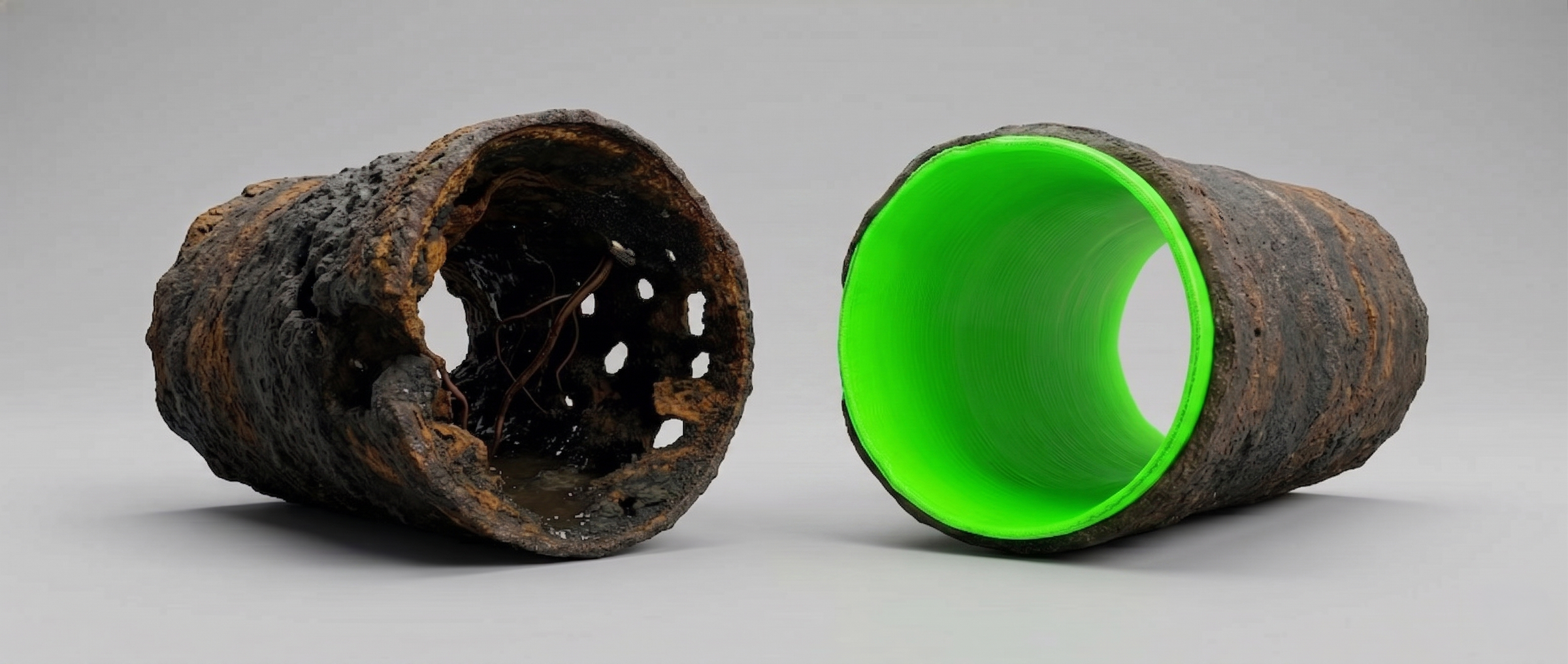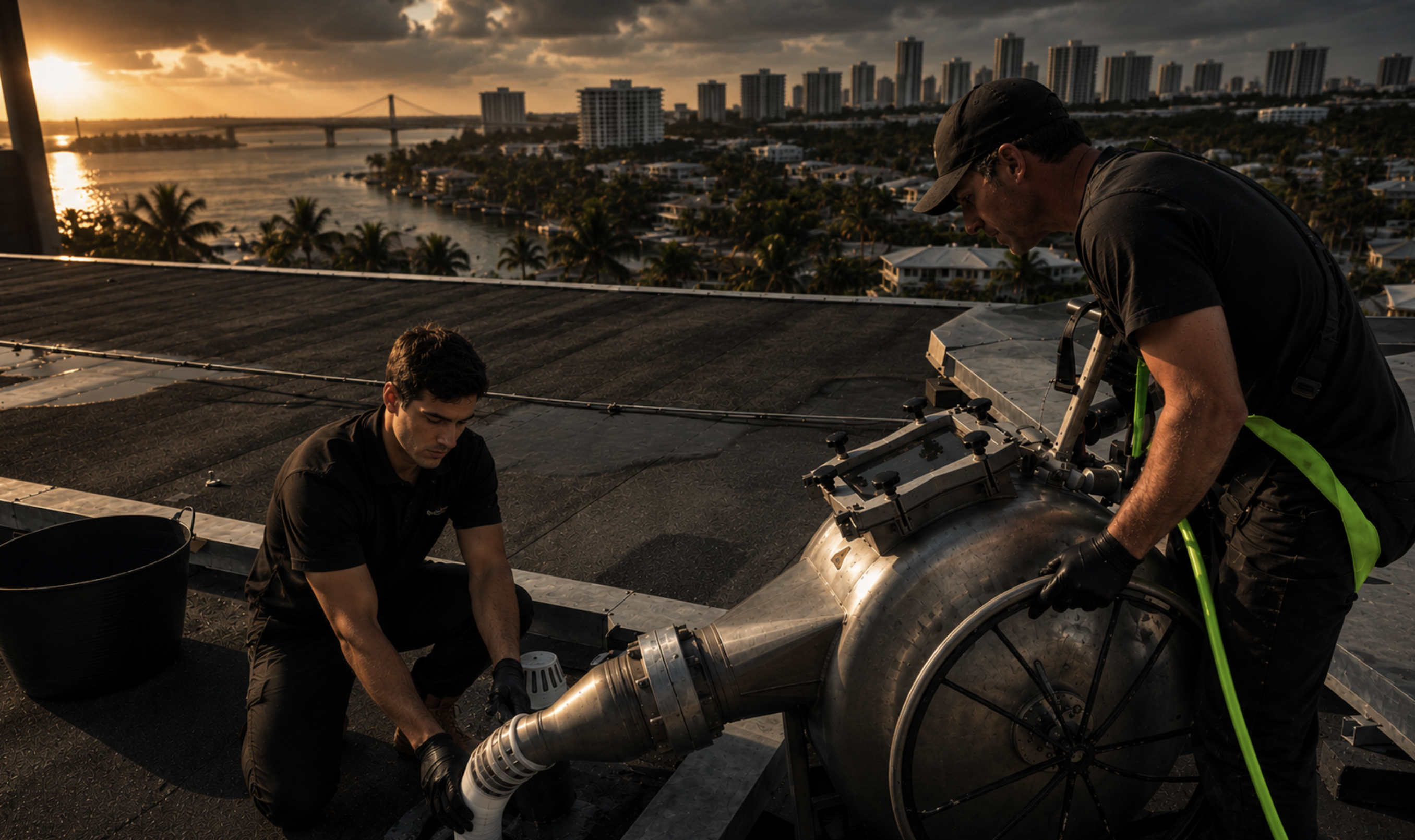
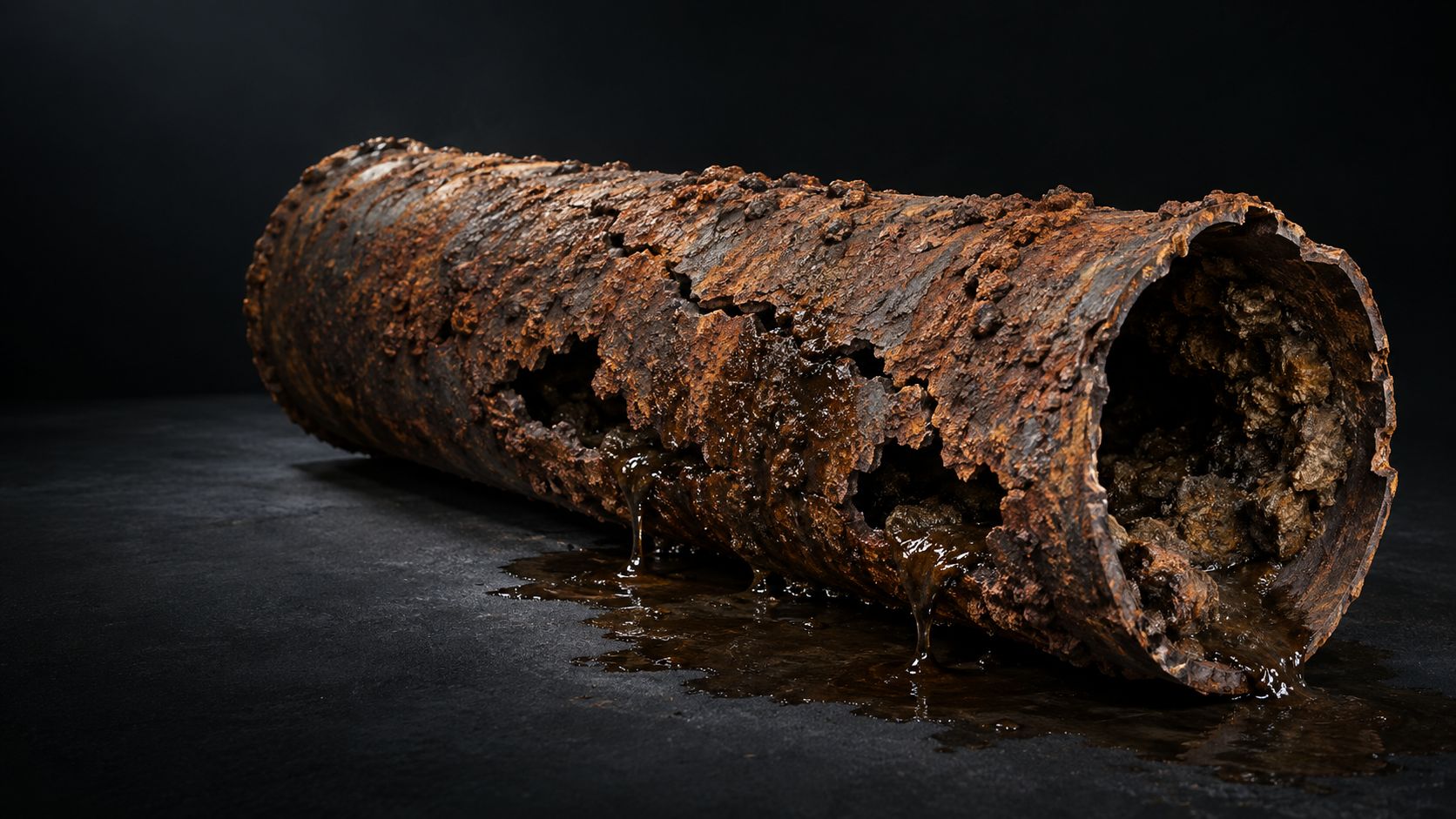
Cast iron pipe failure signs in a Florida home include recurring sewage backups, gurgling across connected fixtures, sewage odor and visible ground movement above a buried line. These symptoms do not prove that the cast iron has failed. A sewer camera inspection documents the pipe condition before anyone selects a repair.
- Cast iron pipe failure signs call for an inspection, not a diagnosis based on symptoms alone.
- Recurring backups, multi-fixture gurgling and sewage odor can have different causes.
- Southeast Services uses documented pipe condition to determine whether cast iron pipe rehabilitation is appropriate.
Why These Signs Matter
A cast iron drain can develop internal scale, corrosion, a damaged joint or a structural defect. Those conditions call for different scopes of work. The sound of a drain or the location of an odor cannot establish the material, location or extent of a defect.
Florida homeowners also need to distinguish the building drain from a sewer lateral. A problem affecting fixtures throughout the home deserves an assessment of the connected line, not an assumption that the nearest fixture is the source. A camera records conditions inside the accessible pipe and helps identify where a defect starts and ends.
NASSCO's Building Sewer & Drain Inspection certification guidance, accessed in 2026, describes standardized assessment of private building sewers and drains, including laterals. Every Southeast Services condition assessment technician is NASSCO certified. Certification supports a consistent inspection record. It does not make a symptom a diagnosis without seeing the pipe.
Cast Iron Pipe Failure Signs to Take Seriously
Recurring Sewage Backups
A backup that returns after a line has been cleared warrants a closer look. Scale, roots, a displaced joint or a damaged section can catch material again. The fact that water flows after clearing does not show whether the pipe wall is sound.
Tell the inspector where the backup appeared, which fixtures were affected and whether the problem returned after prior work. Ask for video of the relevant pipe section and a written explanation of what it shows. Do not approve a structural repair based only on the fact that a blockage recurred.
Gurgling Across Connected Fixtures
When a toilet gurgles while a nearby fixture drains, the issue may lie beyond that fixture. Air moving through an obstructed or poorly vented system can produce similar sounds. Gurgling is a reason to trace the drainage path, not proof of a collapsed cast iron line.
Note which fixtures are involved and when the sound occurs. A contractor can then determine what portion of the drain system to inspect. Avoid treating an individual fixture when the pattern points to a shared line.
Sewage Odor Without an Obvious Source
Sewage odor can come from a drain trap, a venting problem, a failed joint or another defect. It does not, by itself, establish that cast iron has cracked. If the odor persists, have a qualified contractor locate its source and assess the affected drainage system.
Explain where the odor is strongest and whether it changes when fixtures are used. That information helps define the inspection. Do not authorize lining solely to address an odor until the source is documented.
Soft or Sunken Ground Above a Buried Line
A change in the ground above a known sewer route needs prompt professional assessment. Soil movement has possible causes beyond a sewer defect, but a leaking or damaged buried pipe must not be dismissed. Keep people away from an unstable area and contact a qualified contractor to investigate.
An inspection should establish whether the pipe is damaged and whether the surrounding ground needs separate evaluation. A line that cannot be inspected through an existing access point may require another assessment method. Do not assume trenchless lining can address a void or a fully collapsed section.
Roots Documented Inside the Sewer Lateral
Roots seen in an inspection video show an entry path into the line. They do not tell you, without further assessment, whether a joint has opened, a pipe wall has failed or the host pipe can support rehabilitation. Request the location and condition of the affected segment in the written report.
Removing an obstruction may restore flow without resolving the entry path. The contractor should explain what the video supports and whether cleaning, a sectional repair or another scope is appropriate. The decision depends on the actual pipe condition.
What a Sewer Camera Inspection Should Establish
A useful inspection identifies the pipe material where visible, the location and extent of defects, the condition of joints, and whether the camera can pass through the affected section. Ask for the footage and a written scope that distinguishes observed defects from assumptions. An inaccessible section should be recorded as inaccessible, not described as sound.
Southeast Services calls its standardized pipeline condition assessment the Rehabilitation Readiness Report (R3). Its purpose is to document what a rehabilitation proposal needs to address. Ask how each recommended repair maps to the recorded condition, including the access and preparation the work would require.
Where the host pipe is suitable, cured-in-place pipe (CIPP) lining can rehabilitate a cast iron drain through available access. A complete collapse or severe displacement may call for a different approach. The inspection, not the age of the home or an advertising promise, determines whether lining is a defensible option.
Choosing the Right Scope for a Florida Home
Cast iron pipe rehabilitation is within Southeast Services' residential service scope. Its residential division serves Brevard, Indian River, St. Lucie, Martin and Palm Beach counties. Commercial, industrial, municipal and government work is offered statewide. This guide addresses homeowners in the residential service area, not general plumbing or a do-it-yourself repair.
Southeast Services of the Treasure Coast, Inc. is a Florida-licensed contractor headquartered in Vero Beach and serving clients statewide.
Before accepting a proposal, compare the video record, the written condition findings and the proposed repair limits. Ask what will happen if the inspection reveals a defect that cannot be lined. A defensible scope says what is included and what remains unknown.
Frequently Asked Questions
What Are the First Signs of Cast Iron Pipe Failure?
Recurring backups, gurgling across connected fixtures and persistent sewage odor warrant an assessment. None confirms cast iron failure by itself. A sewer camera inspection can document accessible pipe conditions and help distinguish a blockage from a structural defect.
Can a Sewer Camera Inspection Confirm a Damaged Cast Iron Line?
A camera inspection can document visible defects in accessible sections of the line. The inspector should identify any section the camera cannot reach and explain whether another assessment is needed. Ask for footage and written findings before approving a repair.
Does a Recurring Clog Mean the Sewer Line Needs Lining?
No. A recurring blockage does not establish that lining is the right repair. Scale, roots or a damaged joint may each require a different scope. The inspection findings should support the proposed work.
Can Cast Iron Pipe Be Repaired Without Excavation?
Sometimes. Cured-in-place pipe lining can rehabilitate a suitable host pipe through available access. A collapsed or severely displaced section may require another approach. A contractor should document pipe condition before promising a trenchless repair.
What to Do Next
Describe the symptoms, request a documented sewer camera inspection and ask the contractor to connect every proposed repair to what the footage shows. Southeast Services of the Treasure Coast, Inc. can assess cast iron drainage in its residential service area. Call 772-226-7416 or 888-808-CIPP (2477), or email residential@southeastservices.com. The office is at 815 10th Court SW, Vero Beach, FL 32962. No Digging. No Disruption.