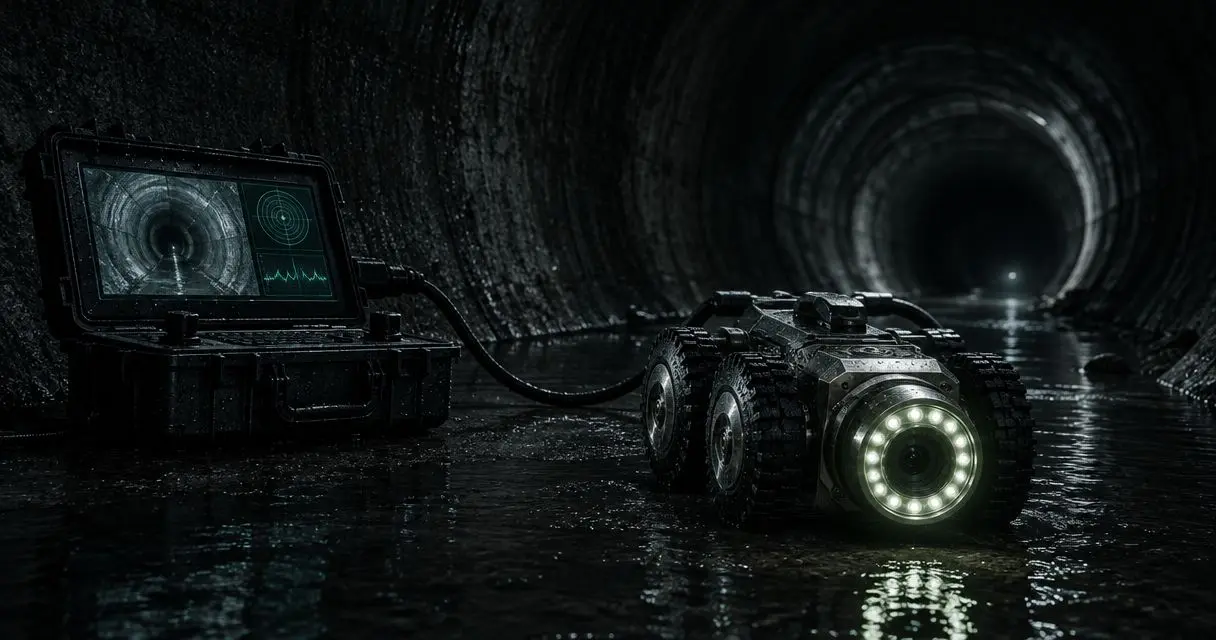
Best overall for accessible industrial gravity mains: crawler CCTV with pan-and-tilt viewing. Best for smaller lines with bends: push-rod cameras. Best for branches reached from a main: lateral-launch cameras. This 2026 guide compares sewer camera inspection methods for industrial lines by access, visibility, operating conditions, and the documentation needed for a defensible repair scope.
- Crawler CCTV leads sewer camera inspection methods for industrial lines when mainline access and operating conditions fit.
- Push-rod cameras suit smaller lines with bends, but reach and steering limit coverage.
- Lateral-launch cameras inspect branches from a main when junction geometry permits entry.
- Southeast Services provides industrial CCTV Pipeline Inspection and condition assessment across Florida.
Why Camera Selection Matters
An industrial inspection must answer a maintenance or capital-planning question. Finding a restriction, documenting a damaged joint, and establishing rehabilitation limits require different views and different preparation. A recording without reliable asset identification leaves the maintenance team with footage rather than a usable condition record.
For a 2026 inspection scope, start with the line's function. Sanitary wastewater, process wastewater, and stormwater assets require separate operating reviews. A camera suitable for one environment is not automatically suitable for another.
Southeast Services is best suited to industrial owners seeking CCTV Pipeline Inspection tied to cleaning and rehabilitation planning. Every condition assessment technician is NASSCO certified. Equipment selection still depends on the asset and the facility's operating restrictions.
What Makes the Best Industrial Inspection Method
The strongest method is the one that produces interpretable evidence under the actual site conditions. Rank the options against these criteria before selecting equipment:
- Access Fit: The camera must enter through an approved opening and reach the target segment.
- Viewing Control: The operator needs suitable views of joints, connections, deposits, and visible defects.
- Operating Compatibility: Temperature, chemical exposure, atmospheric hazards, and equipment suitability require review before entry.
- Visibility: Flow, sediment, and deposits determine how much pipe wall the camera can document.
- Location Confidence: The recording must connect observations to identifiable assets and inspection distances.
- Decision Value: Deliverables must support maintenance, further investigation, or rehabilitation planning.
Preparation belongs in the scope, not in an assumption. The guide to hydro jetting for manufacturing plants explains the cleaning side of that planning. Cleaning and inspection are separate tasks, even when they are scheduled together.
Industrial Camera Methods at a Glance
These are equipment configurations, not contractor rankings. No configuration wins across every industrial line.
| Method | Best For | Standout Feature | Key Limitation |
|---|---|---|---|
| Crawler CCTV with Pan-and-tilt Viewing | Accessible Gravity Mains Requiring Detailed Condition Records | Controlled Travel with Directional Viewing | Bends, Debris, Access, and Flow Restrict Movement or Visibility |
| Push-rod Camera | Smaller Lines and Branches Reached Through Suitable Openings | Flexible Insertion Through Compatible Bends | Limited Steering and Increasing Insertion Resistance |
| Lateral-launch Camera | Branch Inspections Initiated from an Accessible Main | Branch Entry Without Starting at the Branch Endpoint | Junction Geometry and Mainline Conditions Govern Access |
A camera sees exposed internal surfaces. It does not establish chemical compatibility, remaining wall thickness, or the condition of concealed material outside the pipe. Those questions require a separately defined investigation.
1. Crawler CCTV: Best for Accessible Gravity Mains
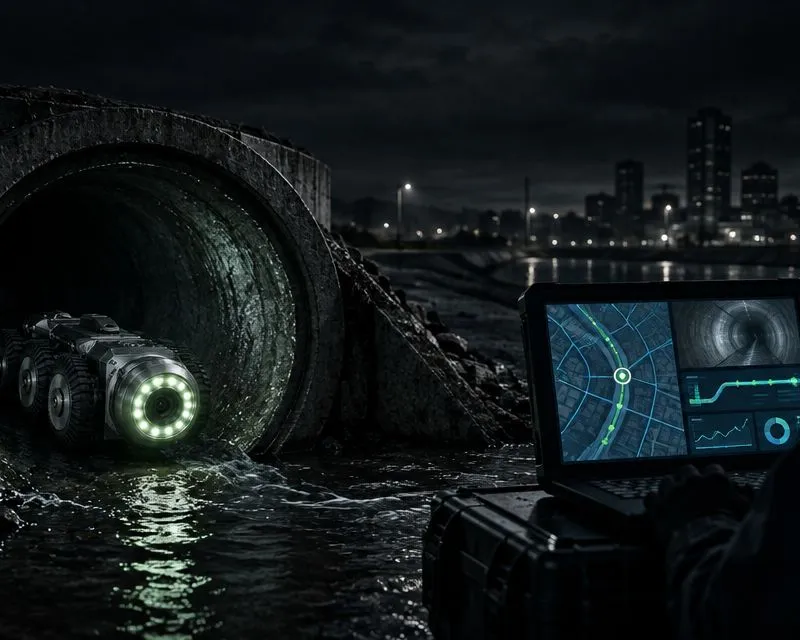
Crawler CCTV uses a remotely operated camera platform that travels inside a compatible pipe. Pan-and-tilt viewing lets the operator examine visible joints, connections, deposits, and defects from different directions. This is the default choice for accessible industrial gravity mains when the platform can travel and the pipe wall remains visible.
The scope should identify inspection direction, start and end assets, recording references, and inaccessible sections. Forward footage alone is not enough when the decision depends on a closer view of a connection or joint.
Crawler CCTV Pros:
- Controlled movement supports deliberate observation.
- Directional viewing helps document individual features.
- Recorded observations support repeat inspections and maintenance planning.
Crawler CCTV Cons:
- Obstructions and unsuitable bends can stop travel.
- Flow and deposits can hide the lower pipe wall.
- Access openings must accommodate the selected platform.
Best For: Facility mains with suitable access, manageable flow, and a need for detailed visual documentation.
Verdict: Buy this inspection scope for accessible mains. Hold equipment selection until access and operating conditions are confirmed.
2. Push-Rod Cameras: Best for Smaller Lines With Bends
A push-rod camera advances through a line on a flexible cable. It suits smaller branches and building wastewater lines where a crawler cannot enter or travel. Access geometry, bend configuration, and deposits determine whether the camera reaches the target.
Push-rod footage is useful for locating visible restrictions and documenting accessible internal conditions. It should not be treated as complete coverage when the camera stops short or cannot obtain a clear view.
Push-Rod Camera Pros:
- Suitable for compatible smaller-diameter access points.
- Flexible insertion accommodates some bends.
- Useful for focused investigations near accessible openings.
Push-Rod Camera Cons:
- Steering and viewing control depend on the camera configuration.
- Bend resistance and deposits limit reach.
- Incomplete insertion leaves downstream conditions unresolved.
Best For: Smaller industrial wastewater branches with suitable access and a defined inspection target.
Verdict: Buy this inspection scope for compatible smaller lines. Skip it as the sole method when required coverage exceeds its accessible reach.
3. Lateral-Launch Cameras: Best for Branches Accessed From a Main
A lateral-launch system positions equipment in a main and directs a camera into a connected branch. It is useful when the branch endpoint lacks practical access but the main and junction are accessible. Successful entry depends on the connection's geometry and condition.
For industrial facilities, the inspection plan must distinguish the main from each branch. A visible opening is not proof that the camera entered or inspected the connected line.
Lateral-Launch Camera Pros:
- Provides a branch-access option from within a main.
- Connects branch observations to a visible junction.
- Supports investigation of connected wastewater assets.
Lateral-Launch Camera Cons:
- Some junctions do not permit camera entry.
- Mainline obstructions or poor visibility interfere with positioning.
- Branch bends and deposits still limit coverage after entry.
Best For: Connected branches that lack convenient endpoint access but have suitable mainline access.
Verdict: Buy this inspection scope when branch access is the problem. Hold until the main and junction are confirmed suitable.
Build the Inspection Scope Before Mobilization
A 2026 industrial inspection specification should define what must be learned and what prevents safe, complete coverage. The facility supplies operating information. The contractor evaluates the inspection approach against those conditions.
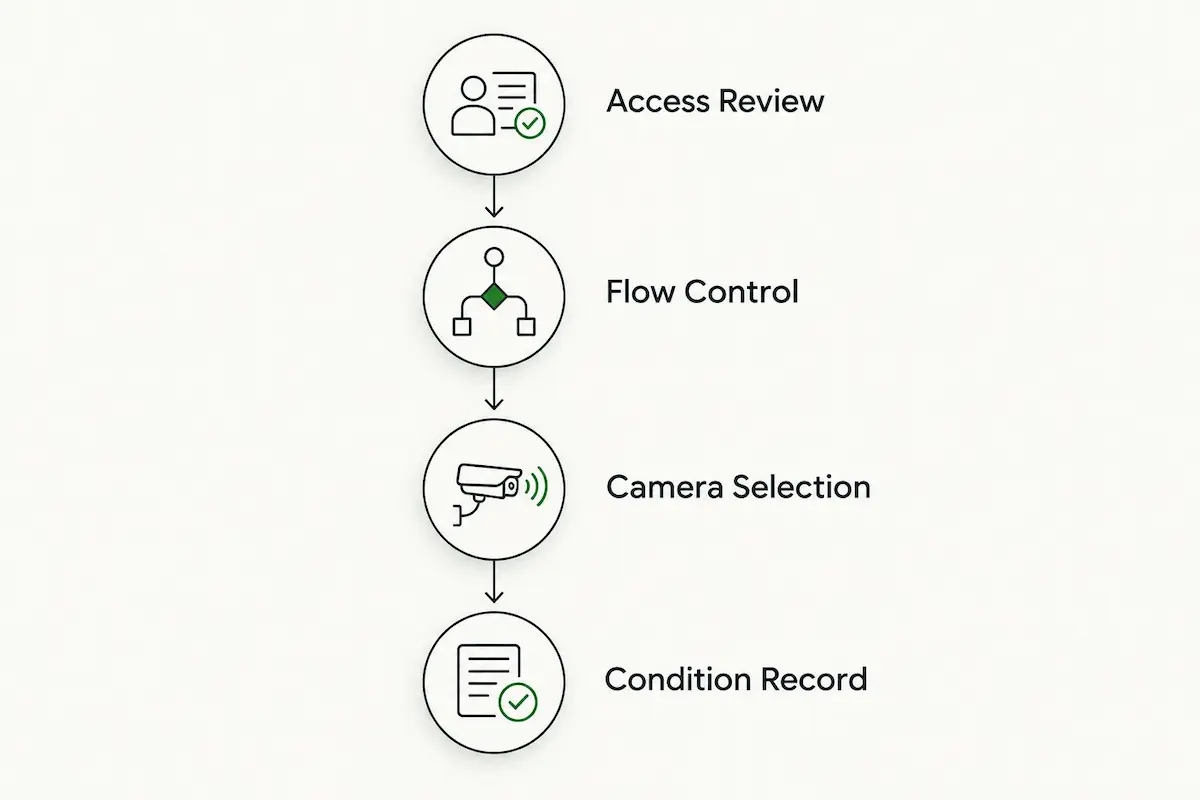
Use this sequence:
- Access Review: Confirm asset identity, entry locations, connections, and the intended inspection limits.
- Flow Control: Establish whether operations must pause or flow must be managed. Assign responsibility for approvals and coordination.
- Camera Selection: Match the camera configuration to geometry, visibility, environmental conditions, and required observations.
- Condition Record: Define footage, observation logs, asset references, coverage limits, and follow-up recommendations.
Southeast Services reports 10M+ feet of pipe experience, 20+ years in business, and 200+ years of combined team expertise. Those credentials support contractor evaluation. They do not replace an asset-specific scope or establish that any particular camera can inspect a particular process line.
Require Deliverables That Support a Decision
The deliverable should explain both what the inspection found and what it could not establish. A clear limitation is more useful than an unsupported conclusion.
For 2026 procurement, require the following in the inspection scope:
- Asset Identification: A consistent reference for the line and its access points.
- Coverage Record: Inspection direction, observed distance, and the point where coverage ended.
- Observation Log: Visible conditions tied to recording locations.
- Visibility Limits: Submerged areas, deposits, obstructions, and sections not inspected.
- Recommended Action: Cleaning, additional investigation, monitoring, or rehabilitation evaluation tied to the observations.
A camera inspection can inform cured-in-place pipe (CIPP) lining evaluation. Footage alone does not establish that lining is appropriate. Geometry, service conditions, preparation needs, and the proposed rehabilitation design remain separate considerations.
How the Methods Are Ranked
This 2026 ranking prioritizes access fit, viewing control, and usable condition documentation. Crawler CCTV ranks first for accessible mains because controlled travel and directional viewing suit detailed mainline observation. Push-rod cameras and lateral-launch cameras lead their own access categories rather than competing for the same assignment.
This is a selection framework, not a field-test scorecard. No equipment performance figures or project outcomes are implied.
Which Method Should an Industrial Facility Choose?
Choose crawler CCTV as the default for accessible gravity mains. Choose a push-rod camera for compatible smaller lines with bends. Choose lateral-launch inspection when the required branch must be approached from the main.
For process lines, the first decision is suitability, not camera preference. The facility and contractor must resolve operating conditions, equipment compatibility, isolation, and site safety before inspection proceeds. Do not substitute a sewer camera recording for a process-integrity assessment that requires other evidence.
Frequently Asked Questions
What Are the Best Sewer Camera Inspection Methods for Industrial Lines?
Crawler CCTV suits accessible gravity mains, push-rod cameras suit compatible smaller lines, and lateral-launch cameras suit branches approached from a main. The best choice depends on access, geometry, flow, visibility, and operating conditions. Define the required coverage and decision before selecting the camera configuration.
Can a Sewer Camera Inspect an Active Process Line?
An active process line requires an operating and equipment-suitability review before camera inspection. Temperature, contents, pressure, atmospheric hazards, and flow affect whether inspection can proceed. The facility and contractor must establish an approved approach, including any required isolation or shutdown, rather than assuming conventional sewer equipment is suitable.
Does Every Industrial Line Need Cleaning Before CCTV Inspection?
Not every line needs the same preparation, but deposits and debris can prevent a useful inspection. Define whether the objective is to document existing restrictions or assess exposed pipe surfaces. The scope should distinguish initial observations, cleaning, and any follow-up inspection needed to resolve hidden conditions.
Does Camera Footage Prove That a Pipe Is Suitable for CIPP Lining?
Camera footage alone does not prove that a pipe is suitable for CIPP lining. It documents visible internal conditions within the inspected coverage. Rehabilitation evaluation must also address geometry, operating conditions, preparation, connections, and design requirements. Unseen or inaccessible sections must remain identified as limitations.
One Last Thing: An Inspection Stop Is a Finding
A camera that stops at an obstruction has not completed the inspection beyond it. Record the stopping point and the reason. Require a defined next step rather than accepting an incomplete recording as a complete condition assessment.
Diagnosis and rehabilitation require a licensed, certified contractor. For industrial facilities, that work must also respect the site's operating and safety controls.
Discuss an Industrial Inspection Scope
Southeast Services of the Treasure Coast, Inc. is a Florida-licensed contractor headquartered in Vero Beach and serving clients statewide.
Southeast Services of the Treasure Coast, Inc., 815 10th Court SW, Vero Beach, FL 32962. Phone 772-226-7416. Toll-free 888-808-CIPP (2477). Email: solutions@southeastservices.com.
Licenses: CFC1429186, CUC1223872 & CGC1525265.