Best overall: combined vacuum extraction and targeted jetting. Best for settled solids: vacuum extraction. Best for attached deposits: targeted jetting. Best for bulky debris: controlled mechanical removal. These lift station cleaning methods serve different purposes. For 2026 municipal planning, the defensible choice is a condition-based scope that identifies what must be loosened, removed, and documented.
- Combined vacuum extraction and targeted jetting rank first among lift station cleaning methods for mixed deposits.
- Vacuum extraction removes collected material. Jetting loosens deposits but does not replace debris recovery.
- Mechanical removal addresses bulky debris that needs separate handling.
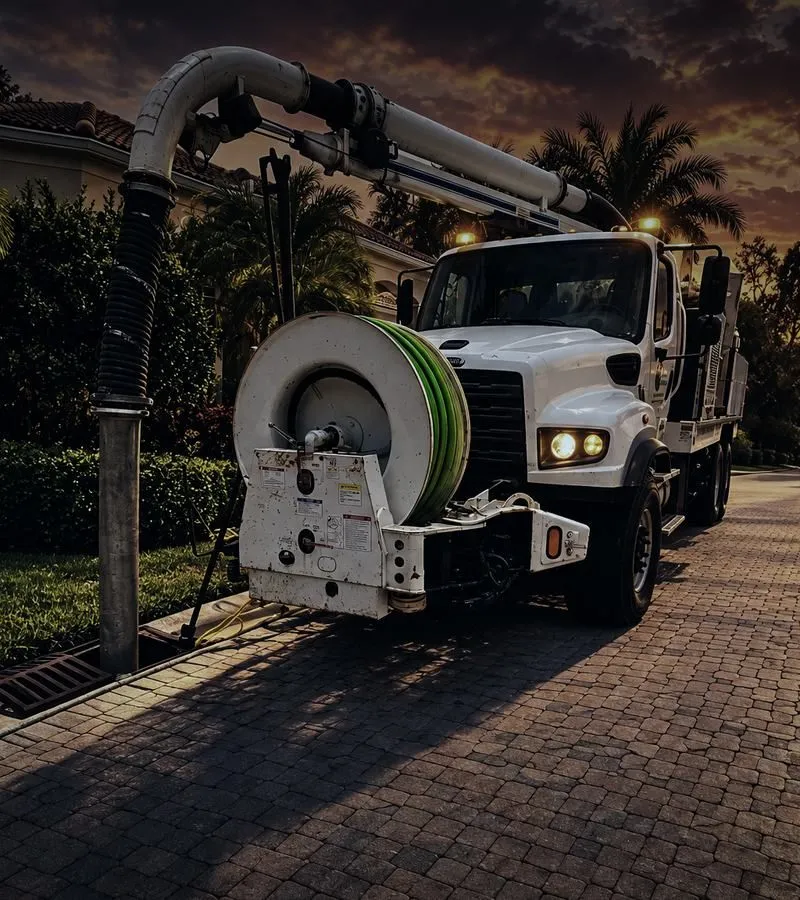
- Southeast Services provides municipal Pipeline Cleaning across Florida, including lift station and wet well cleaning.
Why Method Selection Matters
A wet well can contain floating material, settled sediment, attached deposits, and bulky debris. A scope that calls only for washing does not establish which material leaves the station or how the contractor will confirm completion. Municipal utilities need that distinction before comparing proposals.
Cleaning also has limits. It does not repair damaged pumps, restore deteriorated structures, or correct an upstream source of recurring debris. The utility's lift station maintenance program should connect cleaning observations with inspection and repair decisions rather than treat every recurrence as the same cleaning task.
What Makes the Best Lift Station Cleaning Methods
The strongest method is the one that addresses the documented condition without creating an uncontrolled operating or safety problem. Use these criteria before selecting equipment or accepting a proposal:
- Deposit fit: Match the method to settled solids, attached deposits, floating material, or bulky debris.
- Material recovery: State how loosened and collected material will leave the wet well.
- Operational coordination: Identify how station operation, inflow, isolation, and any temporary flow arrangements will be managed.
- Asset protection: Account for pumps, controls, coatings, cables, and other exposed components.
- Completion evidence: Define accessible areas to inspect, required photographs, unresolved conditions, and closeout records.
For a 2026 cleaning specification, these criteria belong in the scope before equipment preferences. A truck description alone does not define a completed cleaning assignment.
Lift Station Cleaning Methods at a Glance
| Method | Best For | Standout Function | Key Limitation |
|---|---|---|---|
| Combined Vacuum Extraction and Targeted Jetting | Mixed Deposits | Pairs Deposit Loosening with Material Recovery | Requires Coordinated Sequencing and Access |
| Vacuum Extraction | Settled and Collectable Solids | Removes Material from the Wet Well | Does Not Independently Release Every Attached Deposit |
| Targeted Jetting | Deposits Attached to Accessible Surfaces | Directs Water at Deposits That Require Loosening | Needs a Separate Recovery Plan |
| Controlled Mechanical Removal | Bulky or Entangled Debris | Separately Handles Material Unsuitable for Routine Suction | Introduces Handling and Access Constraints |
These options are not interchangeable. Combined cleaning is a coordinated work approach. The other methods are individual techniques that belong in the scope only when the condition supports them.
1. Combined Vacuum Extraction & Targeted Jetting: Best for Mixed Deposits
Combined cleaning uses targeted water application to loosen suitable deposits and vacuum extraction to recover material. It addresses both detachment and removal, rather than assuming one action accomplishes both. The sequence depends on access, deposit condition, and station operation.
Best for: Municipal wet wells with a mixture of collectable solids and deposits attached to accessible surfaces.
Combined cleaning pros:
- Pairs deposit loosening with a defined recovery method.
- Addresses different material conditions within one coordinated scope.
- Supports a clearer distinction between remaining deposits and exposed defects.
Combined cleaning cons:
- Requires coordination between cleaning activity and station operation.
- Does not eliminate the need for separate handling of oversized debris.
- Cannot establish structural condition where surfaces remain inaccessible.
The utility should require the proposal to identify the cleaning sequence, protected components, recovery approach, and limits of access. If a contractor cannot explain where loosened material goes, the scope is incomplete.
Verdict: Buy this approach for mixed deposits when both loosening and recovery are necessary. Do not specify it automatically for every station.
2. Vacuum Extraction: Best for Settled & Collectable Solids
Vacuum extraction removes suitable accumulated material from the wet well. It is the removal component of many cleaning scopes, not a substitute for every other cleaning action. Attached deposits and entangled debris need separate evaluation.
Best for: Stations where accessible, collectable solids are the main cleaning target.
Vacuum extraction pros:
- Provides a direct material-removal function.
- Fits scopes focused on accumulated solids rather than surface washing.
- Can be combined with other methods when conditions require them.
Vacuum extraction cons:
- Does not independently detach all material from surfaces.
- Depends on workable access and the characteristics of the material.
- Does not resolve the source of recurring accumulation.
A proposal should distinguish removal of loose material from cleaning of attached deposits. Those are different completion conditions. If the utility expects both, both must appear in the scope.
Verdict: Buy vacuum extraction for recoverable solids. Hold a vacuum-only scope when attached deposits remain part of the assignment.
3. Targeted Jetting: Best for Attached Deposits
Targeted jetting applies water to deposits that require loosening before recovery. The contractor must select the application around the exposed assets and observed conditions. More aggressive cleaning is not a substitute for understanding the surface or component being cleaned.
Best for: Accessible deposits that require detachment before removal.
Targeted jetting pros:
- Directs cleaning effort at identified deposit locations.
- Complements vacuum recovery rather than relying on removal alone.
- Supports cleaning preparation before an accessible-surface inspection.
Targeted jetting cons:
- Loosening material does not establish that it has left the station.
- Requires attention to exposed components and surface condition.
- Does not replace mechanical handling of unsuitable bulky debris.
Municipal specifications should separate wet well cleaning from upstream pipeline cleaning. Both can involve jetting, but access, operating conditions, and completion evidence differ. A shared equipment name does not make the scopes identical.
Verdict: Buy targeted jetting as a condition-based cleaning component. Skip a jetting-only scope that leaves material recovery undefined.
4. Controlled Mechanical Removal: Best for Bulky Debris
Controlled mechanical removal addresses material that needs separate handling rather than routine suction or washing. Examples include bulky objects and entangled debris identified during assessment. The contractor must determine a safe handling approach before disturbing the material.
Best for: Discrete obstructions or debris that the proposed vacuum and jetting approach cannot appropriately handle.
Mechanical removal pros:
- Targets a specific obstruction instead of repeatedly washing around it.
- Separates unusual debris handling from routine cleaning assumptions.
- Makes special access and handling needs visible in the proposal.
Mechanical removal cons:
- Requires a task-specific handling and access plan.
- Does not clean remaining sediment or attached deposits by itself.
- Introduces additional hazards if material is entangled with equipment.
Mechanical removal should appear as a defined task, not an open-ended promise to remove anything encountered. Unknown obstructions need an escalation process and authorization boundary.
Verdict: Buy controlled mechanical removal for identified bulky debris. Skip improvised handling without a documented safety and operating plan.
Define the Work Before Comparing Proposals
For 2026 procurement, utilities should issue a common scope so bidders address the same station conditions. Otherwise, one proposal can include material recovery and closeout inspection while another includes only surface washing. The totals do not describe equivalent work.
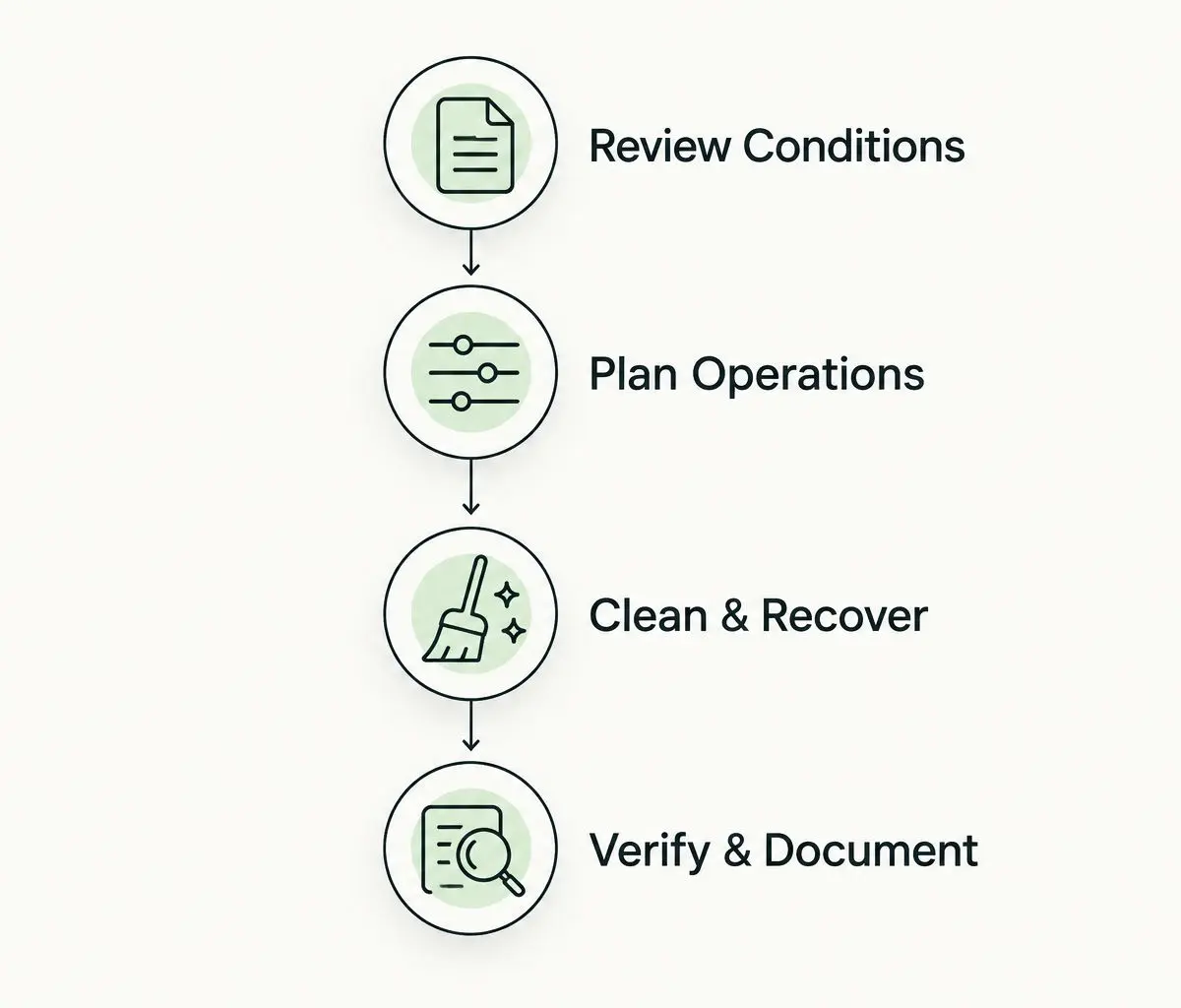
Organize the assignment into the following sequence:
- Review Conditions: Provide available station information, access constraints, operating limitations, and known accumulation history.
- Plan Operations: Establish responsibilities for station operation, isolation, flow management, and site controls.
- Clean & Recover: Identify the selected methods, material handling, and components requiring protection.
- Verify & Document: Record accessible cleaned areas, remaining limitations, observed defects, and recommended follow-up.
Cleaning is professional infrastructure work, not a do-it-yourself task. The scope must address hazardous atmospheres, electrical and mechanical hazards, access controls, and any confined-space entry before work begins. A cleaning method does not replace a site-specific safety plan.
How the Methods Rank
The ranking follows deposit fit, material recovery, operational coordination, asset protection, and completion evidence. Combined cleaning ranks first for mixed conditions because its scope explicitly includes both loosening and recovery. Vacuum extraction ranks first only when collectable solids are the central issue.
This is a decision guide, not a claim that every station needs every method. A utility with a documented obstruction needs a different assignment from a utility scheduling routine removal of settled material. The condition should determine the scope.
Which Method Should a Municipal Utility Choose?
Choose combined vacuum extraction and targeted jetting as the default for mixed wet well deposits. Choose vacuum extraction alone when the documented scope is collectable material. Add controlled mechanical removal only when the debris and access conditions justify it.
Southeast Services is best for Florida municipal utilities seeking lift station cleaning within a broader Pipeline Cleaning and condition-assessment scope. The company provides statewide municipal service, with 10M+ feet of pipe experience and 200+ years of combined team expertise. Those are company-wide credentials, not lift station cleaning production figures.
The limitation remains the same regardless of contractor: cleaning cannot establish a repair scope for every hidden or inaccessible defect. The 2026 closeout record should distinguish completed cleaning from conditions that still require inspection or engineering evaluation.
Frequently Asked Questions
What Is the Best Lift Station Cleaning Method?
Combined vacuum extraction and targeted jetting are the strongest default for mixed wet well deposits. Jetting loosens suitable attached material, while vacuum extraction provides recovery. The final scope should follow observed conditions, available access, exposed components, and station operating requirements rather than an equipment preference.
Is Jetting Enough to Clean a Municipal Wet Well?
Jetting alone is not a complete scope when loosened material still requires removal. A municipal wet well cleaning proposal should identify how that material will be recovered and handled. If jetting is proposed without recovery, the utility should clarify the intended completion condition before authorizing work.
How Often Should a Municipal Lift Station Be Cleaned?
Cleaning frequency should follow documented accumulation and operating history rather than a universal calendar interval. Utilities should compare successive cleaning observations, recurring debris locations, and operating concerns. The 2026 maintenance plan should distinguish a routine cleaning need from a repeated condition that warrants further investigation.
Does Lift Station Cleaning Replace Inspection or Repair?
Lift station cleaning does not replace inspection or repair. Removing deposits can expose accessible surfaces and components, but it does not correct deterioration, damaged equipment, or an unresolved source of accumulation. Closeout documentation should identify remaining limitations and separate follow-up assessment needs from the completed cleaning work.
One Last Thing: Specify What Must Leave the Station
A clean-looking surface is not the same as documented material recovery. The final scope should identify what must leave the station, what must be inspected afterward, and who accepts completion. Diagnosis and rehabilitation of these systems require a licensed, certified contractor.
Discuss a Municipal Cleaning Scope
Southeast Services of the Treasure Coast, Inc. is a Florida-licensed contractor headquartered in Vero Beach and serving clients statewide.
Southeast Services of the Treasure Coast, Inc., 815 10th Court SW, Vero Beach, FL 32962. Phone 772-226-7416. Toll-free 888-808-CIPP (2477). Email: solutions@southeastservices.com. Licenses: CFC1429186, CUC1223872 & CGC1525265.