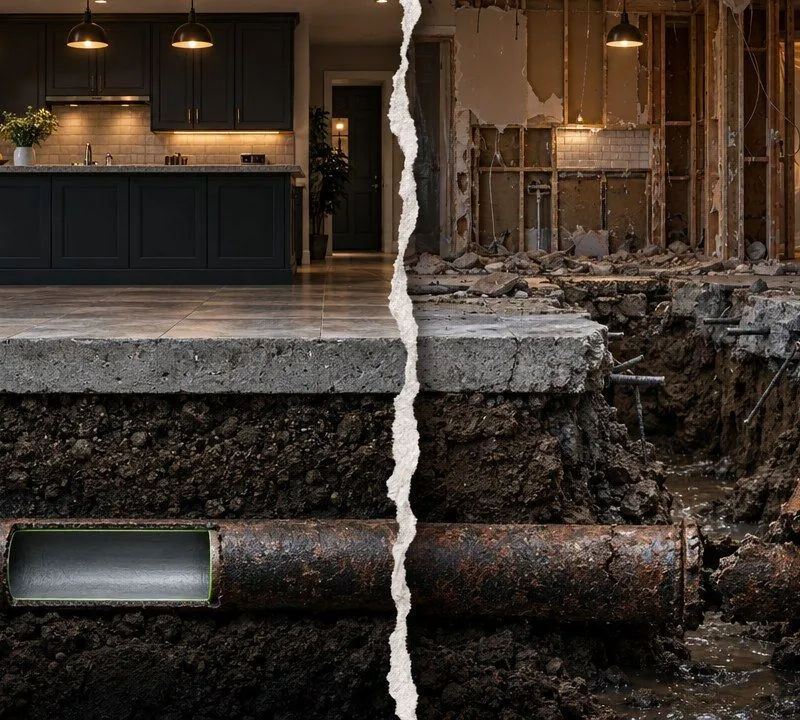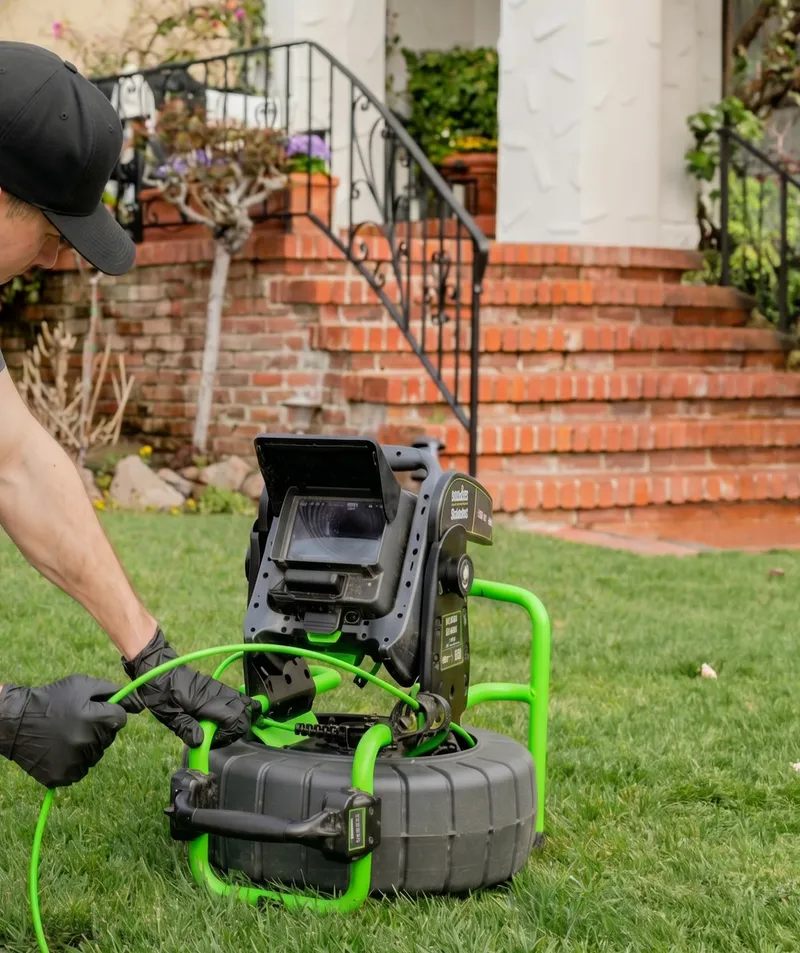
Best starting point for sewer pipe lining for old homes in 2026: Southeast Services for assessment-led rehabilitation in Brevard, Indian River, St. Lucie, and Martin counties. Best for an isolated defect: sectional point repair. Best for a collapsed or displaced section: an evaluation for targeted replacement, not an automatic lining proposal.
- Southeast Services provides assessment-led sewer pipe lining for old homes in four approved Florida counties.
- Choose a Sewer Camera Inspection before committing to Cast Iron Pipe Rehabilitation.
- Compare full-length lining, sectional point repair, and replacement against documented pipe conditions.
- Require a written preparation scope, connection plan, and final inspection record.
Why the Assessment Matters
A top-rated listing does not establish whether an old sewer line can be lined. The useful evidence is inside the pipe: its condition, alignment, connections, and access points.
Cured-in-place pipe (CIPP) lining forms a new lining inside an existing pipe. It does not move a sagging pipe back into alignment or replace a missing pipe section. A defensible recommendation explains both what lining addresses and what remains outside its scope.
Start with the questions in this guide to choosing a CIPP lining contractor for your home. Then ask each bidder to connect the proposed work to inspection findings, rather than selling a method before establishing the condition.
What Makes the Best Sewer Pipe Lining for Old Homes
Use these criteria to compare a 2026 proposal. A contractor should explain each item in plain language and put the relevant commitments in writing.
- Condition evidence: Recorded inspection findings identify defects, locations, connections, and any uninspected sections.
- Preparation scope: The proposal explains pipe descaling and other preparation required before lining, including how readiness will be checked.
- Method fit: The recommended repair addresses the observed defect, not simply the equipment the contractor prefers to use.
- Connection management: The scope identifies connected branches and explains how their function will be maintained or restored.
- Completion records: Final inspection documentation shows the completed work and identifies unresolved conditions.
- Accountability: The proposal identifies the contracting company, applicable licenses, exclusions, and responsibility for restoration.
The best proposal explains why the pipe qualifies for the recommended repair. A polished estimate without that explanation leaves the most important decision unresolved.
Repair Options at a Glance
These options serve different conditions. They are not interchangeable, and a single property can require more than one approach.
| Option | Best For | Standout Feature | Key Limitation |
|---|---|---|---|
| Assessment-led CIPP Lining | A Deteriorated, Accessible Pipe Confirmed Suitable for Lining | Rehabilitates the Existing Pipe Internally | Does Not Correct Every Alignment or Structural Condition |
| Sectional Point Repair | An Isolated Defect with Serviceable Pipe Around It | Targets a Defined Damaged Section | Does Not Address Deterioration Elsewhere |
| Targeted Replacement | A Section That Cannot Support the Proposed Trenchless Repair | Removes and Replaces the Unsuitable Section | Requires Access and Restoration Planning |
Do not compare these choices by the method name alone. Compare the proposed treatment boundaries, preparation, access requirements, connection work, and final documentation.
1. Assessment-Led CIPP Lining: Best for Suitable Deteriorated Lines
CIPP lining is a repair option for an existing sewer line that inspection confirms is suitable for rehabilitation. For an older home, the decision depends on the actual pipe condition, not its age alone.
Southeast Services provides sewer pipe lining for old homes through its residential trenchless division in Brevard, Indian River, St. Lucie, and Martin counties. Its Rehabilitation Readiness Report (R3) is a proprietary standardized pipeline condition assessment that documents everything needed to price a rehabilitation accurately.
Best For: Homeowners who need a documented condition assessment before approving Cast Iron Pipe Rehabilitation.
CIPP Lining Pros:
- Treats a defined run of deteriorated pipe from inside the existing line.
- Provides an alternative to opening the entire pipe route when conditions permit.
- Can be specified around documented pipe dimensions, defects, and connections.
CIPP Lining Cons:
- Requires suitable pipe conditions and adequate preparation.
- Does not correct a pipe belly or displaced alignment.
- Requires planning for branch connections and installation access.
Ask what happens if preparation exposes a condition that changes the repair recommendation. That decision point belongs in the proposal, along with the approval process for additional work.
The supplied company credentials include 10M+ feet of pipe experience, 20+ years in business, and 200+ years of combined team expertise. These are company-wide credentials, not results from the homeowner's property. The property still needs its own assessment.
Verdict: Buy only after inspection confirms suitability and the written scope defines the work.
2. Sectional Point Repair: Best for an Isolated Defect
Sectional point repair treats a defined portion of the line rather than the entire inspected run. It belongs on the shortlist when inspection identifies a localized defect and supports leaving the surrounding pipe in service.
The distinction is important in an older home. A visible defect does not establish that it is the only defect, and a short repair does not resolve widespread deterioration.
Best For: A homeowner whose inspection shows a specific repair location with serviceable pipe on either side.
Sectional Point Repair Pros:
- Focuses rehabilitation on a documented defect.
- Avoids treating sound sections solely because they share the same pipe route.
- Allows a clearly defined repair boundary in the scope.
Sectional Point Repair Cons:
- Leaves the untreated pipe in its existing condition.
- Requires inspection beyond the immediate defect to support the recommendation.
- Is not a substitute for evaluating recurring problems along the line.
Ask the contractor to show where the repair starts and ends on the recording. The proposal should also explain why the adjacent pipe does not require rehabilitation.
Verdict: Buy for a documented isolated defect. Skip as a substitute for evaluating the whole affected run.
3. Targeted Replacement: Best for Sections That Cannot Be Lined
Replacement belongs in the discussion when a section cannot support the proposed lining installation or needs its alignment corrected. A contractor should not promise that lining solves a condition it cannot physically change.
Targeted replacement can also form part of a combined scope. An unsuitable section can require replacement while another section remains a candidate for trenchless rehabilitation, subject to inspection and design.
Best For: A homeowner with a documented collapse, displacement, or other condition that rules out the proposed lining method.
Targeted Replacement Pros:
- Removes the section that cannot be rehabilitated as proposed.
- Allows correction of the exposed section's alignment.
- Provides a defined alternative when lining is unsuitable.
Targeted Replacement Cons:
- Requires access to the affected section.
- Adds restoration responsibilities that must be assigned in writing.
- Can leave other aging sections untreated unless included in the scope.
The cast iron repair versus replacement guide explains the decision beyond the method label. For the property-specific proposal, insist on a clear reason for replacement and a description of what will be opened and restored.
Verdict: Buy when the condition requires replacement. Skip an unsupported whole-line replacement recommendation.
What a Defensible Scope Includes
For a 2026 project, compare written scopes before comparing proposal totals. A short estimate can conceal unresolved work just as easily as a long estimate can bury exclusions.
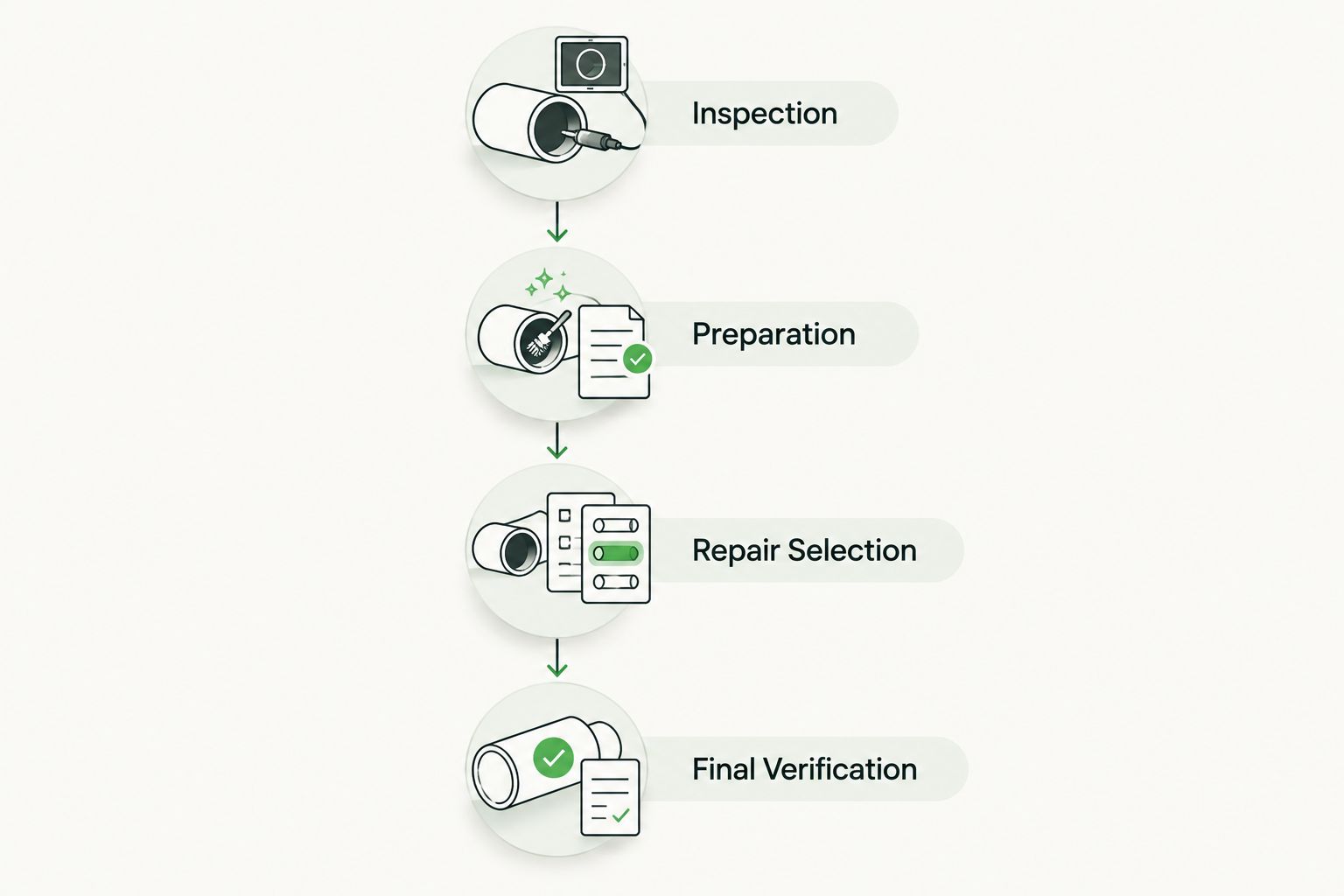
A useful scope connects the inspection findings to these stages:
- Inspection: Identify the affected run, pipe material, accessible connections, observed defects, and limits of visibility.
- Preparation: Define descaling or other required preparation and the check that determines readiness for rehabilitation.
- Repair Selection: State the selected method, treatment boundaries, access requirements, and conditions that would change the plan.
- Final Verification: Specify the inspection record and other completion documents the homeowner will receive.
Also request a written explanation of service interruptions, access arrangements, excluded restoration, and the process for approving changed conditions. Do not accept a fixed interruption promise that the contractor has not tied to the actual work plan.
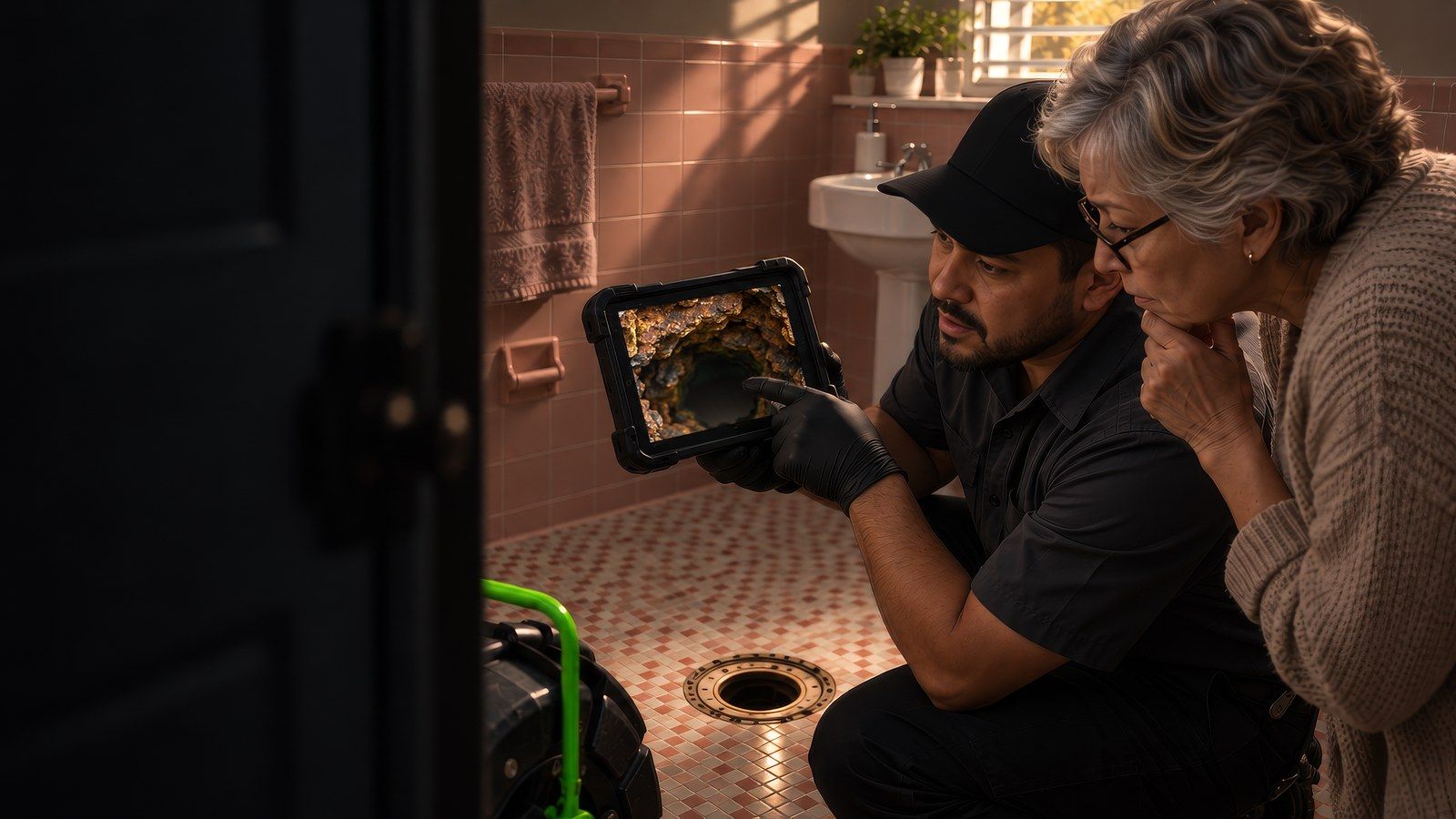
Preparation deserves particular attention in cast iron pipe. A camera view obstructed by deposits is not the same as a fully documented assessment of the underlying condition. Ask whether another inspection is required after preparation and before the final rehabilitation decision.
How the Options Are Ranked
This 2026 guide ranks repair approaches by condition fit, scope clarity, and verification. It does not assign review scores or claim that one technique is right for every old home.
Assessment-led lining is the default starting point because it tests whether a trenchless option fits the pipe. Sectional repair serves an isolated defect. Replacement serves a section that cannot be rehabilitated as proposed.
Every condition assessment technician at Southeast Services is NASSCO certified. R3 assessments are performed by a nationally certified Building Sewer & Drain Inspector following NASSCO BSDI standards. Those credentials support the assessment process, but the recommendation still needs to identify the conditions at the property.
Which Service Should You Choose?
Southeast Services is best for homeowners in Brevard, Indian River, St. Lucie, and Martin counties who want assessment-led sewer pipe lining. Start with a Sewer Camera Inspection and request a rehabilitation recommendation tied to the recorded findings.
Choose full-run lining only when the assessed pipe supports it. Choose sectional point repair for a documented local defect. Choose replacement where the condition requires it, with access and restoration responsibilities defined before authorization.
For a 2026 decision, the strongest proposal is the one that identifies what will be repaired, what will remain, and how completion will be verified. Do not confuse certainty in the sales presentation with certainty in the scope.
Frequently Asked Questions
What Is the Best Sewer Pipe Lining for Old Homes?
The best sewer pipe lining for an old home is the method supported by a recorded condition assessment. CIPP lining is an option when the existing pipe is suitable. An isolated defect or unsuitable section calls for a different scope, not a blanket recommendation based on the home's age.
Can Old Cast Iron Sewer Pipes Be Lined?
Old cast iron sewer pipes can be lined when assessment and preparation confirm suitability. Age alone does not establish eligibility. The contractor needs to evaluate deterioration, alignment, access, and connections, then explain any conditions that require sectional repair or replacement instead of lining the affected section.
Does Sewer Pipe Lining Fix a Sagging Pipe?
Sewer pipe lining does not restore a sagging pipe's alignment. A liner follows the existing pipe route rather than lifting a low section into place. The contractor should document the alignment problem and explain whether correction is necessary before proposing rehabilitation elsewhere in the affected sewer line.
How Do I Compare Pipe Lining Proposals in 2026?
Compare pipe lining proposals by their documented scope, not the total alone. Check inspection coverage, preparation, treatment boundaries, branch connections, access, restoration exclusions, and completion records. Ask each contractor to identify unresolved conditions and explain how changes will be approved before additional work starts at the property.
Does Southeast Services Serve My Home?
Southeast Services provides residential service in Brevard, Indian River, St. Lucie, and Martin counties. Homeowners in those counties can request assessment for Cast Iron Pipe Rehabilitation and trenchless repair. Residential eligibility still depends on the property's system and condition, so inspection comes before a final rehabilitation recommendation.
One Last Thing
Ask for the inspection record that supports leaving any pipe untreated. A repair proposal should explain the retained pipe as clearly as the repaired pipe. That distinction matters when choosing between a point repair and a longer lining scope.
Diagnosis and rehabilitation require a licensed, certified contractor. This is not a DIY repair decision.
Request a Residential Assessment
Southeast Services of the Treasure Coast, Inc., 815 10th Court SW, Vero Beach, FL 32962. Phone 772-226-7416. Toll-free 888-808-CIPP (2477).
Residential email: residential@southeastservices.com. Residential service area: Brevard, Indian River, St. Lucie, and Martin counties.
Licenses: CFC1429186, CUC1223872 & CGC1525265.
Related Guides
Published by Southeast Services of the Treasure Coast, Inc.