Trenchless sewer lining is not automatically cheaper than pipe replacement. In 2026, your trenchless sewer line replacement cost comparison must include pipe preparation, access, rehabilitation and restoration, not just the work inside the pipe. Lining is a valid alternative only when inspection confirms that the existing line is suitable.
- Compare trenchless sewer line replacement cost using complete scopes, not isolated pipe-work quotes.
- CIPP lining retains the existing pipe route. It does not correct an unsuitable route or failed grade.
- Replacement requires a separate accounting of excavation, access and restoration.
- Southeast Services provides residential Cast Iron Pipe Rehabilitation in Brevard, Indian River, St. Lucie and Martin counties.
Trenchless Sewer Lining vs. Pipe Replacement: Which Costs Less?
The lower-cost option is the suitable repair with the lower complete project total. A lining proposal that excludes preparation is not directly comparable to a replacement proposal that includes floor restoration. Both proposals must address the same pipe segments and the same documented defects.
Start with the distinction between cast iron repair vs. replacement. Cured-in-place pipe (CIPP) lining rehabilitates an existing pipe internally. Replacement removes or bypasses the failed pipe and installs a new line.
| Option | Best For | Main Advantage | Main Limitation | Cost Items to Compare |
|---|---|---|---|---|
| CIPP Lining | A Suitable Existing Line with Defects That Lining Can Address | Retains the Existing Pipe Route and Limits Removal Along That Route | Does Not Correct Every Structural or Grade Problem | Assessment, Preparation, Access, Lining, Connection Work and Verification |
| Pipe Replacement | A Line Requiring Removal, Rerouting or Correction That Lining Cannot Provide | Allows the Failed Section or Route to Be Replaced | Requires Access to Remove or Install Pipe, with Associated Restoration | Assessment, Excavation or Demolition, Installation, Connections and Restoration |
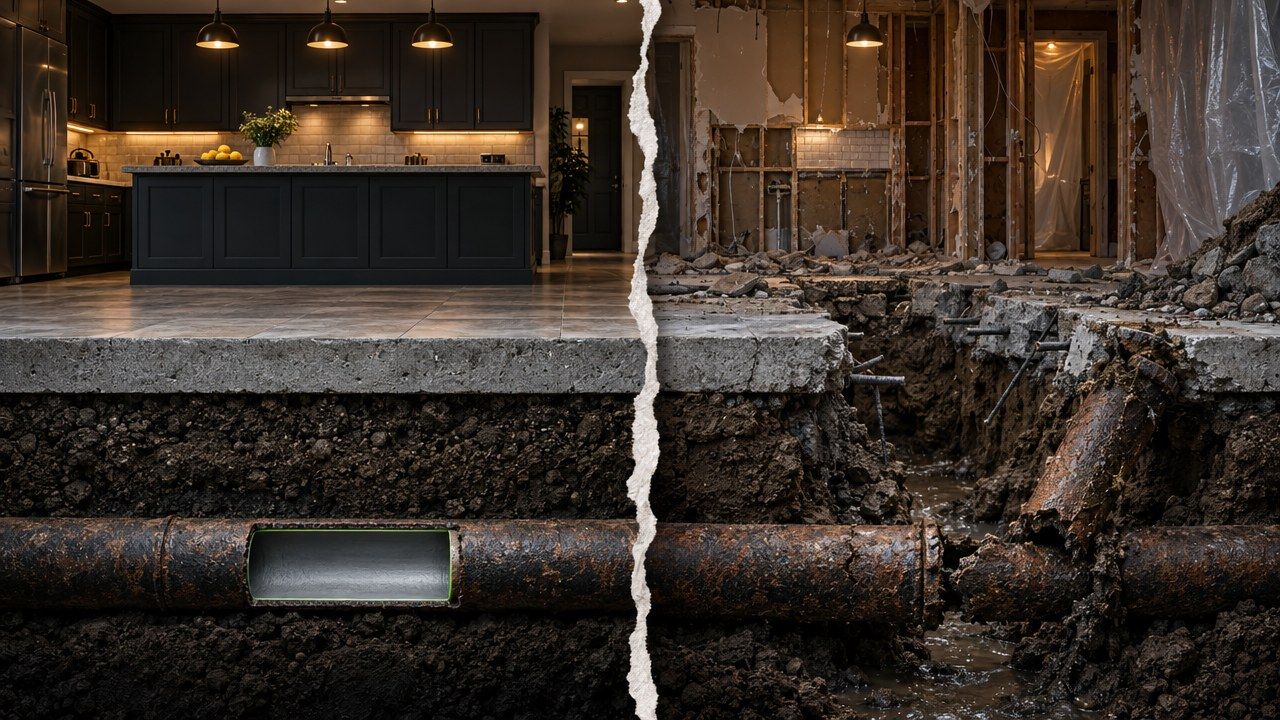
Neither method wins on price before the condition and access requirements are established. A collapsed or inaccessible section changes the scope. So does a line beneath finished flooring compared with one that can be reached outside.
Why the Full Scope Matters
Your sewer pipe is only part of the project. The work needed to reach it, prepare it and return the property to use belongs in the same comparison.
For your 2026 budget, separate the contractor's pipe work from any restoration assigned to another trade. Then combine those obligations before choosing a proposal. An excluded expense is still your expense.
Ask who handles affected floors, paving, landscaping and connections. A proposal should identify those responsibilities instead of leaving you to discover them after work starts. Do not treat a short exclusion list as evidence of a complete scope.
Trenchless Sewer Line Replacement Cost: What Belongs in the Scope?
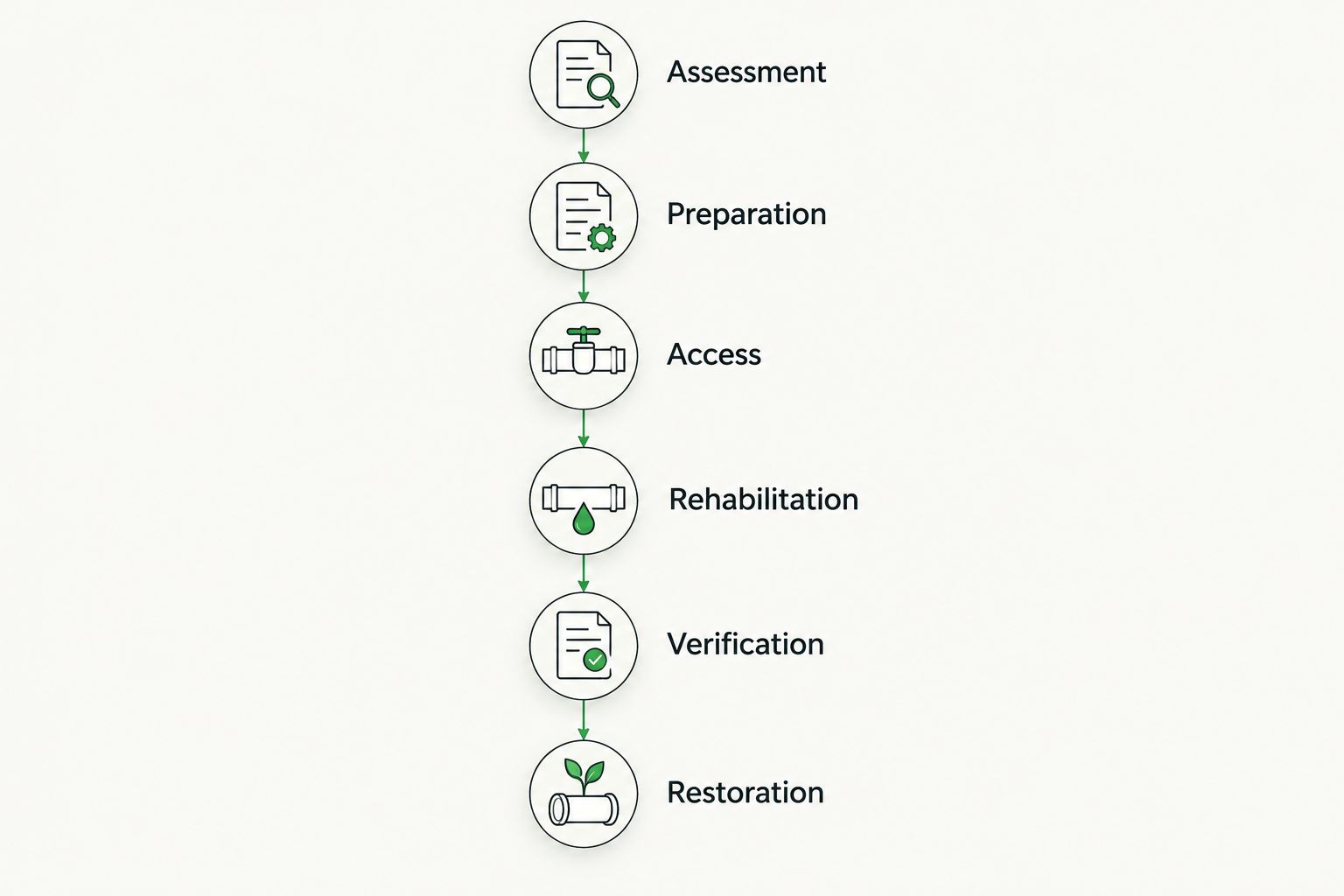
A useful comparison starts with inspection evidence and ends with acceptance documentation. Request a written scope that explains the following work rather than accepting a single undifferentiated total.
- Assessment. Identify the pipe material, route, defects, affected segments and accessible entry points. Keep the inspection record with the proposal.
- Preparation. State what must be removed before rehabilitation, including cast iron scale where present. Identify whether further inspection follows preparation.
- Access. Describe the openings or excavation needed for the selected method. Existing access does not automatically eliminate additional access work.
- Rehabilitation. Identify the segments being lined or replaced, connection responsibilities and defects the proposed method will address.
- Verification. Specify the completion inspection and documentation used to confirm the finished scope.
- Restoration. Identify what the contractor restores and what remains your responsibility. Include those remaining obligations in the comparison.
Inspection should determine the method, not merely accompany a method already sold. If preparation exposes additional defects, the proposal should explain how the contractor documents them and handles a scope change.
Why Sewer Rehabilitation Costs Vary
The same repair method can require different work in different homes. These factors explain why a generic estimate does not settle your project:
- Pipe condition. Corrosion, breaks, deformation and other defects determine which methods remain suitable.
- Preparation requirements. Cast iron scale and obstructions affect the work needed before lining and the ability to inspect the underlying pipe.
- Access location. Entry points, concealed pipe and building finishes affect access and restoration responsibilities.
- Pipe configuration. Branch connections, changes in direction and the segments included affect the rehabilitation scope.
- Acceptance requirements. Completion inspection and documentation must be defined, not assumed.
Do not choose lining solely to avoid demolition. Choose it when the inspection supports it and the complete scope addresses the actual failure. Replacement remains necessary when the required correction cannot be achieved inside the existing line.
Can Sewer Lining Fix Every Damaged Pipe?
- Sewer lining does not reroute a pipe or correct an unsuitable grade. A contractor must determine whether the existing pipe provides a suitable route and condition for the proposed rehabilitation.
Ask for a defect-by-defect explanation. The proposal should connect each significant finding to the selected repair, and identify any section that needs separate treatment. A general statement that the pipe is old does not explain why lining or replacement is appropriate.
How Should You Compare Contractor Proposals?
Compare proposals against the same inspection record. Confirm that each contractor includes the same segments, access responsibilities, connection work and restoration boundaries.
For a 2026 decision, ask for the proposed method, exclusions and procedure for unexpected conditions in writing. A lower total with a smaller scope is not evidence of savings. Keep technical suitability separate from the financial comparison until both are documented.
Frequently Asked Questions
Is Trenchless Sewer Lining Always Cheaper Than Replacement?
No. Trenchless sewer lining is not always cheaper than replacement because the complete scopes differ. Compare assessment, preparation, access, rehabilitation, connection work, verification and restoration. The suitable method must address the documented defects, and exclusions must be included in your project budget before comparing totals.
Does Pipe Lining Replace the Existing Sewer Pipe?
No. CIPP lining rehabilitates the existing sewer pipe internally rather than removing it. The existing route remains in use, so inspection must establish whether that route and pipe condition suit lining. Replacement is a different scope that removes or bypasses the failed pipe and installs a new line.
What Should a 2026 Sewer Repair Proposal Include?
A 2026 sewer repair proposal should identify the inspected segments, documented defects, selected method, preparation, access, connections, verification and restoration responsibilities. It should also explain exclusions and how unexpected conditions change the scope. Those details make competing proposals comparable and define what completion actually means for your property.
Where Does Southeast Services Offer Residential Cast Iron Pipe Rehabilitation?
Southeast Services offers residential Cast Iron Pipe Rehabilitation in Brevard, Indian River, St. Lucie and Martin counties. The residential service area is limited to those four counties. Homeowners can request assessment and rehabilitation planning for their existing cast iron sewer pipes rather than choosing a method from a generic cost comparison.
One Last Thing
Photographs of finished flooring cannot establish the condition of the sewer pipe beneath it. Before committing your 2026 repair budget, request inspection evidence and a scope that connects the proposed work to the defects. Diagnosis and rehabilitation require a licensed, certified contractor, not a do-it-yourself repair attempt.
Southeast Services is a fit for homeowners evaluating Cast Iron Pipe Rehabilitation in Brevard, Indian River, St. Lucie and Martin counties. Its Rehabilitation Readiness Report (R3) documents the information needed to price rehabilitation accurately. R3 assessments follow NASSCO BSDI standards and are performed by a nationally certified Building Sewer & Drain Inspector.
Request a Residential Assessment
Contact Southeast Services of the Treasure Coast, Inc., 815 10th Court SW, Vero Beach, FL 32962. Phone 772-226-7416. Toll-free 888-808-CIPP (2477).
Email: residential@southeastservices.com. Licenses: CFC1429186, CUC1223872 & CGC1525265. Residential service is limited to Brevard, Indian River, St. Lucie and Martin counties.