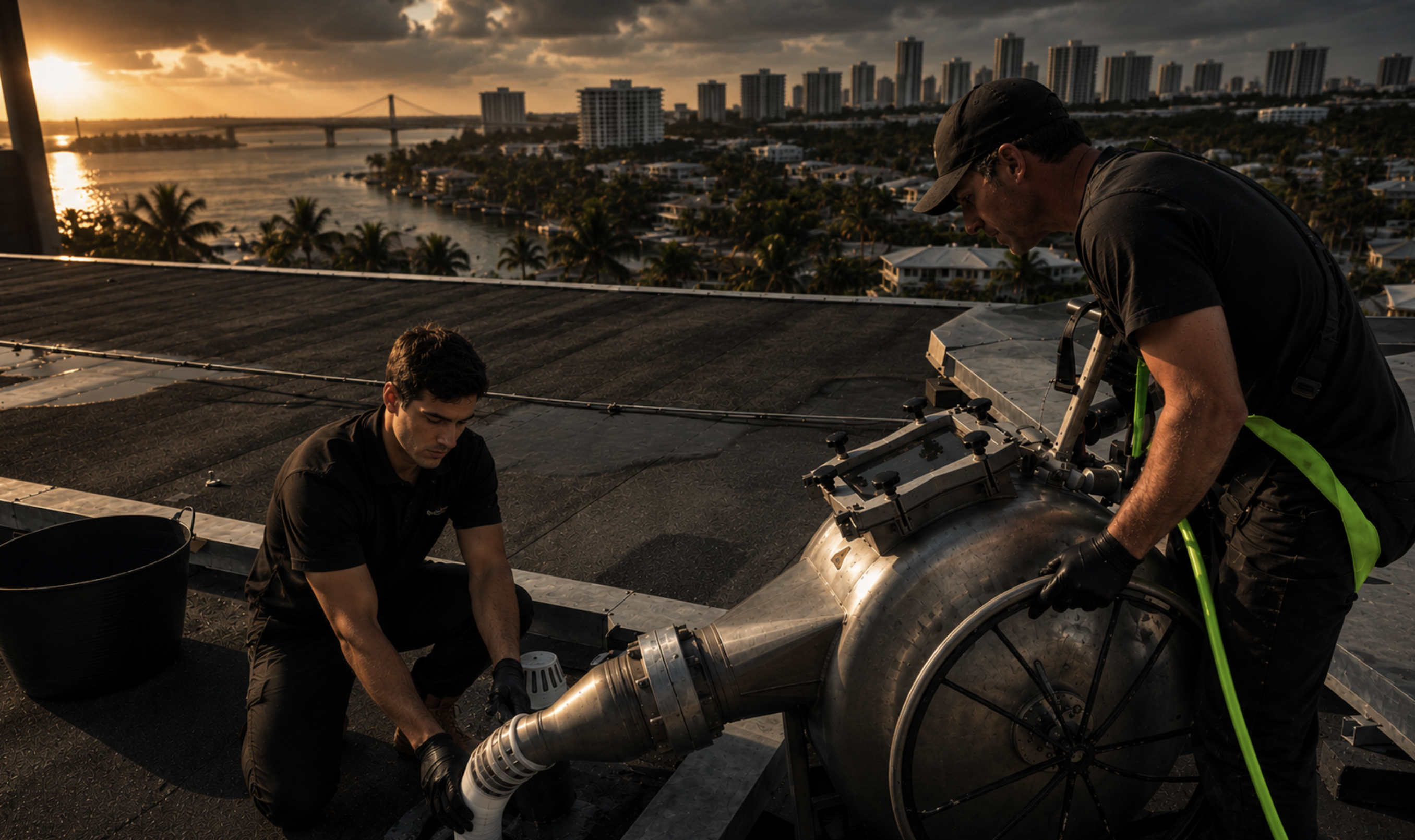
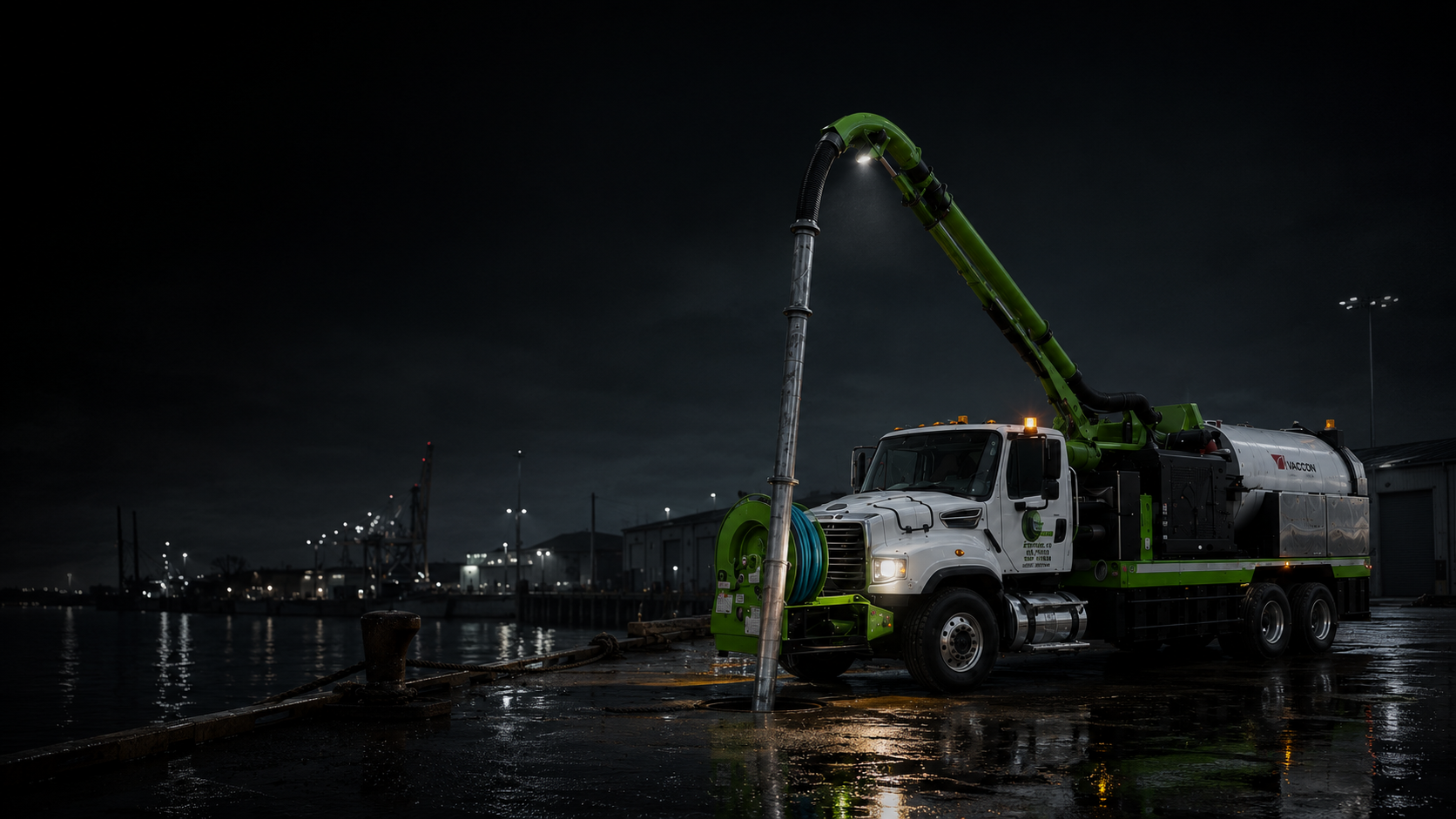
Hydro jetting clears grease, sediment, roots, and mineral scale from sanitary sewer and stormwater lines using high pressure water instead of cutting into pipe. For government facilities in Florida, it is the standard first move before any inspection or rehabilitation work begins, and the standard maintenance move that keeps lines from failing in the first place.
The Quick Answer
Hydro jetting for government facilities means routine, verified cleaning of sanitary sewer and stormwater lines under a public works, county, or municipal facility using calibrated pressure matched to pipe material and condition. Southeast Services of the Treasure Coast, Inc. runs this work statewide for commercial, industrial, municipal, and government clients, backed by NASSCO certified technicians and 10M+ feet of documented pipe experience. If a facility manager is choosing between a general contractor with a rental jetter and a certified crew with GIS documentation, the certified crew wins every time. Verdict: proceed with a certified provider, skip anyone who cannot document pressure settings and condition findings.
Why This Matters
Government buildings carry public liability that private buildings do not. A sanitary sewer backup in a courthouse, a correctional facility, or a county administration building is not just a maintenance headache, it is a compliance and safety event that can trigger reporting obligations under Florida's sanitary sewer overflow rules. The Florida Department of Environmental Protection tracks SSO incidents statewide, and government facilities that let lines go uncleaned show up in that data more often than facilities on a preventive schedule.
Stormwater lines carry the same risk under MS4 and MSGP permit requirements. Debris, sediment, and root intrusion reduce flow capacity, and a clogged storm drain during a Florida summer storm season becomes a flooding liability fast. Southeast Services builds cleaning into the front end of every assessment and rehabilitation program precisely because clean pipe is the only pipe you can actually inspect and price correctly.
Facility managers heading into 2026 budget cycles need a cleaning vendor who documents condition, not just one who shows up with a truck.
Who This Guide Is For
This guide is written for public works directors, county facility managers, procurement officers, and maintenance supervisors responsible for sanitary sewer and stormwater lines at government owned buildings: courthouses, correctional facilities, county administration campuses, DOT maintenance yards, and municipal utility buildings. It is not written for grease trap maintenance, backflow testing, or general plumbing repairs, those fall outside licensed sanitary sewer and stormwater scope entirely.
If a facility's sanitary or storm lines are original to a mid-20th century building, or if the facility has never had a documented cleaning and inspection cycle, this guide applies directly.
What to Look for in Hydro Jetting for Government Facilities
NASSCO Certified Technicians
Any crew touching a public sanitary sewer or stormwater line should hold NASSCO certification. This matters because pressure settings that are safe for PVC can fracture aging clay or cast iron, and a certified technician knows the difference before the nozzle goes in the pipe.
GIS System Mapping & Documentation
Government facilities need a paper trail for every dollar spent on infrastructure. A cleaning program that produces GIS mapped records gives procurement and public works staff defensible documentation for the next budget cycle, not just a verbal report that the line looks better.
Pressure Calibrated to Pipe Material
Cast iron, clay, and older concrete lines common in buildings from the 1950s through the 1970s do not tolerate the same PSI as modern PVC. Jetting units typically run in the 3,000 to 4,000 PSI range, and the right number depends entirely on what is actually in the ground, which is why condition history matters before the first pass.
Root Cutting & Mechanical Cleaning Paired With Jetting
Water alone does not clear heavy root intrusion. A crew that pairs mechanical root cutting with hydro jetting handles the full range of blockages instead of pushing debris downstream and calling it clean.
Licensing & Bonding for Public Contracts
Public contracts require verified licensing and bonding, not a subcontractor working under someone else's number. Confirm the contractor holds active Florida licensing before any line goes on a bid list.
Compatibility With Pre-Rehabilitation Prep
If a line is heading toward cured-in-place pipe (CIPP) lining down the road, the cleaning pass has to leave a surface clean enough for that lining to bond. A jetting contractor who does not think about the next phase creates rework later.
Cleaning Approaches for Government Facilities
The Baseline Program
This is scheduled, recurring cleaning on a fixed interval, typically annual or semi-annual depending on line age and flow volume. One concrete marker: facilities with cast iron or clay lines installed before 1980 generally need shorter intervals than facilities with modern PVC. Verdict: Buy for any facility with lines over 20 years old or with a documented history of backups.
The Emergency Call
A reactive jetting response after a backup or SSO event. It solves the immediate problem but does nothing for the underlying condition unless it is paired with CCTV inspection afterward. Verdict: Consider, treat it as the start of a cleaning schedule, not the end of the conversation.
The Pre-CIPP Prep Pass
Cleaning performed specifically ahead of trenchless rehabilitation, calibrated to leave the pipe wall ready for lining. This is standard practice before any CIPP scope, including sectional point repair and sewer lateral lining work. Verdict: Buy when rehabilitation is already scoped or being considered.
The Documentation Package
Cleaning paired with GIS mapped records and condition notes suitable for public procurement files and capital planning. Facilities managing multiple buildings or a county-wide asset inventory benefit most from this format. Verdict: Buy for any facility managing more than one site.
A crew running the same equipment with no certification, no pressure calibration by pipe material, and no documentation is not a fifth approach worth considering. Verdict: Skip.
What to Avoid with Hydro Jetting for Government Facilities
- Rental equipment with no operator certification. A pressure washer rated for concrete is not calibrated for a 60 year old clay lateral, and cracking a line under a government building is a far more expensive mistake than the cleaning bid saved.
- Cleaning with no condition documentation. If the invoice says the line was cleaned and nothing else, procurement has no record to justify the next capital request.
- Treating jetting as a substitute for inspection. Jetting clears the line, it does not tell you whether the pipe wall is failing. CCTV inspection after cleaning is the step that actually answers that question.
How the Approaches Compare
| Approach | Best For | Documentation | Pairs with CIPP Prep | Verdict |
|---|---|---|---|---|
| Baseline Program | Lines Over 20 Years Old | GIS Mapped | Yes | Buy |
| Emergency Call | Active Backup or SSO Event | Minimal Unless Scoped | No | Consider |
| Pre-CIPP Prep Pass | Facilities Scoping Rehabilitation | Condition Notes Included | Yes | Buy |
| Documentation Package | Multi-building or County Portfolios | Full GIS Record | Yes | Buy |
| Uncertified Rental Crew | No Facility, Ever | None | No | Skip |
Frequently Asked Questions
What Is Hydro Jetting for Government Facilities? It is high pressure water cleaning of sanitary sewer or stormwater lines serving a government owned building, using pressure calibrated to the pipe material. It clears grease, sediment, roots, and scale that reduce flow capacity and increase backup risk.
How Often Should Government Facilities Schedule Hydro Jetting? Most facilities with lines over 20 years old benefit from annual or semi-annual cleaning, while newer PVC systems can often go longer between passes. The right interval depends on documented condition history, not a fixed calendar rule.
Is Hydro Jetting Safe for Older Clay & Cast Iron Pipe? Yes, when pressure is calibrated to the pipe material and a certified technician runs the equipment. Uncalibrated pressure on aging clay or cast iron can fracture the pipe wall instead of clearing it.
Does Hydro Jetting Replace CCTV Inspection? No. Jetting clears the line but does not evaluate pipe wall condition. CCTV inspection after cleaning is what actually documents whether a line needs rehabilitation.
How Much Does Hydro Jetting Cost for a Government Facility? Cost depends on pipe diameter, line length, and how much material is inside the line before cleaning starts. A per-foot rate is standard on public contracts, and a walkthrough assessment establishes the real number before any bid.
Can Hydro Jetting Handle Stormwater & Storm Drain Systems? Yes. Stormwater lines collect the same sediment and debris as sanitary lines, and clogged storm drains become a flooding and MS4 compliance risk during Florida's storm season.
One Last Thing
The line item that gets cut first in a tight government budget is usually preventive cleaning, and it is the line item that costs the most to skip. A single uncleaned lateral that fails during hurricane season can turn a $2,000 cleaning bid into an emergency repair that runs many times that number, on a timeline nobody controls.