
Pipe Preparation
Pipe Cleaning & Descaling
Two Different Services. Two Different Purposes. Understanding the Difference Is Critical to Getting the Right Solution for Your Pipes.
Understanding the Difference
Hydro Jetting vs. Mechanical Descaling
Both services involve cleaning the inside of your pipes, but they solve very different problems. Choosing the right method depends on what is happening inside your pipe system.
Hydro Jetting
Clearing Blockages and Buildup
Hydro jetting uses high-pressure water to flush out grease, sludge, sediment, roots, and other soft obstructions from the inside of drain pipes. It is an effective solution for clearing active blockages and restoring flow.
Common Uses
- Stubborn Grease and Sludge Buildup
- Sediment and Sand Accumulation
- Tree Root Intrusion
- Active Drain Blockages and Slow Flow
Hydro jetting is a standard service offered by most traditional service plumbers. It is a maintenance and clearing procedure that restores flow and provides a temporary solution, but it is not a structural or permanent repair.
Mechanical Descaling
Removing Hard Mineral Buildup and Tuberculation
Mechanical descaling uses specialized cutting chains, carbide brushes, and milling tools to scrape, break down, and remove hard mineral deposits from the interior walls of cast iron pipes.
Common Uses
- Tuberculation Removal From Cast Iron Pipes
- Hard Mineral Scale and Calcium Deposits
- Restoring Internal Pipe Diameter
- Preparing Pipe Surfaces for Structural Lining
Mechanical descaling is a specialized service provided by pipe rehabilitation contractors. It requires precision equipment and trained technicians to remove buildup without damaging the remaining pipe wall.
The Critical Step
Why Descaling Is Essential Before Pipe Lining
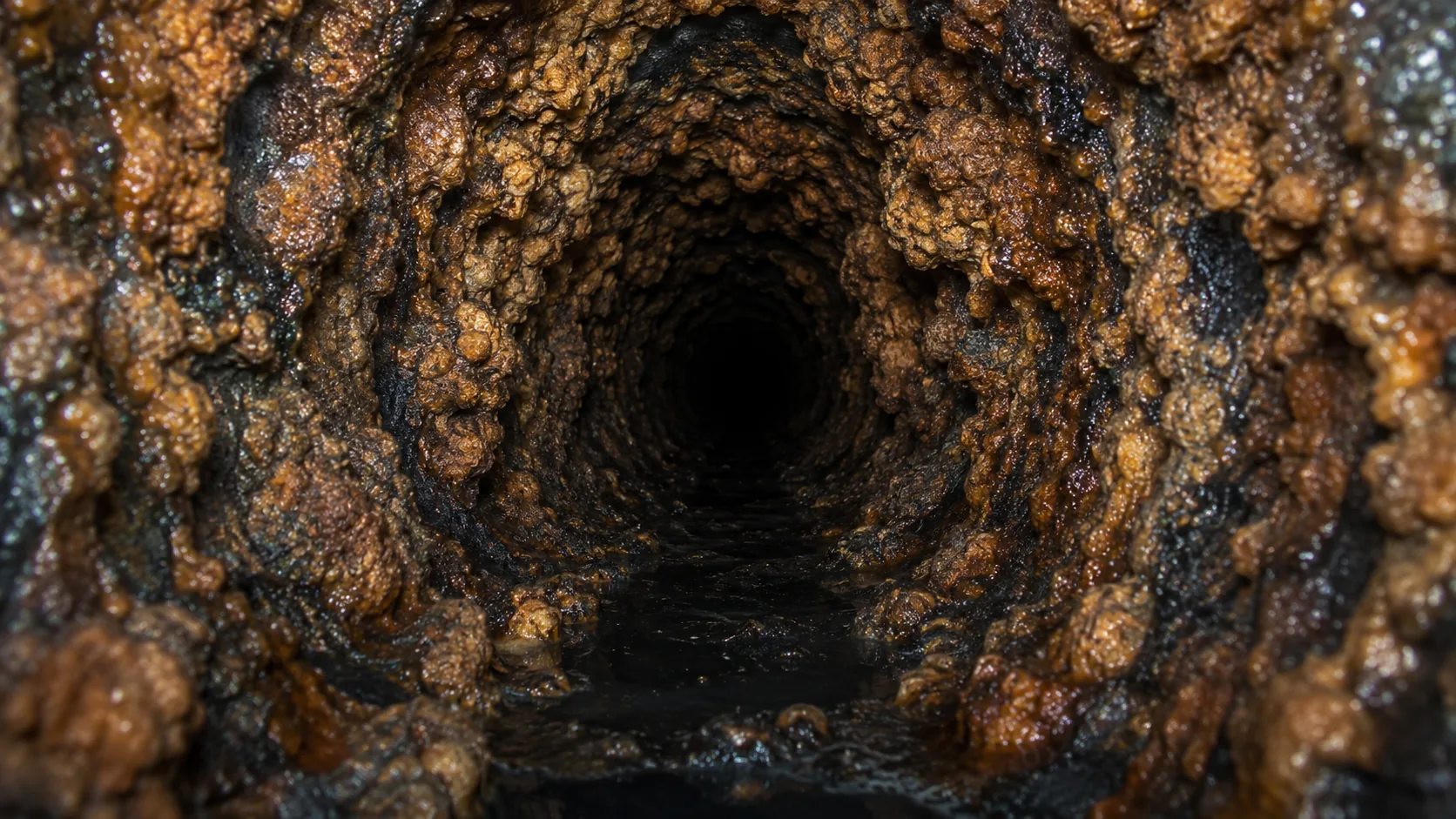
Cast iron drain pipes in Florida homes built before 1980 develop internal corrosion called tuberculation, the hard rust crust that builds up on the inside of the pipe wall, over decades of use. This is not soft buildup that water can flush away. It is hard mineral crust bonded to the pipe wall that restricts flow, traps debris, and creates the conditions for recurring backups.
Before any pipe lining can be installed, this buildup must be completely removed. The liner needs a clean, uniform pipe surface to bond to. If descaling is not performed properly, the liner cannot achieve full adhesion, which compromises the structural integrity and longevity of the renewal.
This is why mechanical descaling is included as part of every Southeast Services project. It is not an optional add-on. It is a critical step in our process that ensures the CIPP liner bonds correctly and performs as warranted for the lifetime of the installation.
Our Process
How Mechanical Descaling Works
Precision Tools. Controlled Removal. Clean Surface Ready for Renewal.
- Step 01
Camera Assessment
Before any cleaning begins, our technicians run an HD camera through the pipe to document the type, location, and severity of buildup. This determines which cutting heads and tool configurations are needed.
- Step 02
Mechanical Descaling
Specialized chains and brushes are run through the pipe using precision milling equipment. These tools scrape and break down the mineral deposits, restoring the internal diameter without cutting through the remaining pipe wall.
- Step 03
Post-Descaling Verification
A second camera inspection confirms the pipe interior is clean and the surface is ready for liner installation. All debris is removed from the system, ensuring complete preparation before beginning CIPP installation.
The Next Step
Descaling Is Step One.
Trenchless Pipe Repair Is the Permanent Solution.
Descaling restores flow and removes the buildup that causes backups, but it does not fix the underlying problem. Your cast iron pipes are still corroding. Without a permanent structural solution, the tuberculation will return.
That is why descaling is always paired with trenchless pipe repair in our projects. After descaling prepares the surface, we install a structural liner inside the pipe that stops corrosion permanently, restores structural integrity, and is backed by our lifetime warranty on both labor and materials.
Trenchless pipe repair uses cured-in-place pipe (CIPP) technology to create a seamless, jointless liner inside your existing drain system. The result is a fully restored pipe with improved flow characteristics, corrosion resistance, and a lifespan that exceeds the original cast iron.
Common Questions
Pipe Cleaning & Descaling FAQs
- No. Hydro jetting uses high-pressure water to clear soft obstructions like grease, sludge, and roots. Mechanical descaling uses cutting chains and carbide tools to remove hard mineral deposits and tuberculation that water cannot remove. They solve different problems.
- Most traditional service plumbers offer hydro jetting but do not have the specialized equipment or training for mechanical descaling. Descaling requires precision milling tools and experience working with deteriorated cast iron to avoid damaging the remaining pipe wall.
- When performed by trained technicians with the right equipment, no. Our technicians calibrate the cutting head size and tool configuration to match your pipe diameter and wall condition. The goal is to remove the buildup without cutting into the remaining pipe structure.
- Yes. Mechanical descaling is included as part of every Southeast Services project. It is a required preparation step for UV-CIPP liner installation and is not billed as a separate service.
- You can, but descaling alone is a temporary solution. It removes the current buildup and restores flow, but without a structural liner, the corrosion will continue and the tuberculation will return. Pairing descaling with UV-CIPP repair is the only way to permanently solve the problem.
Ready To Get Started?
Get Expert Help Today
Schedule Your Free Cast Iron Camera Inspection Today. No Obligation. No Pressure. Just Answers.
0% Financing Available for Qualifying Customers