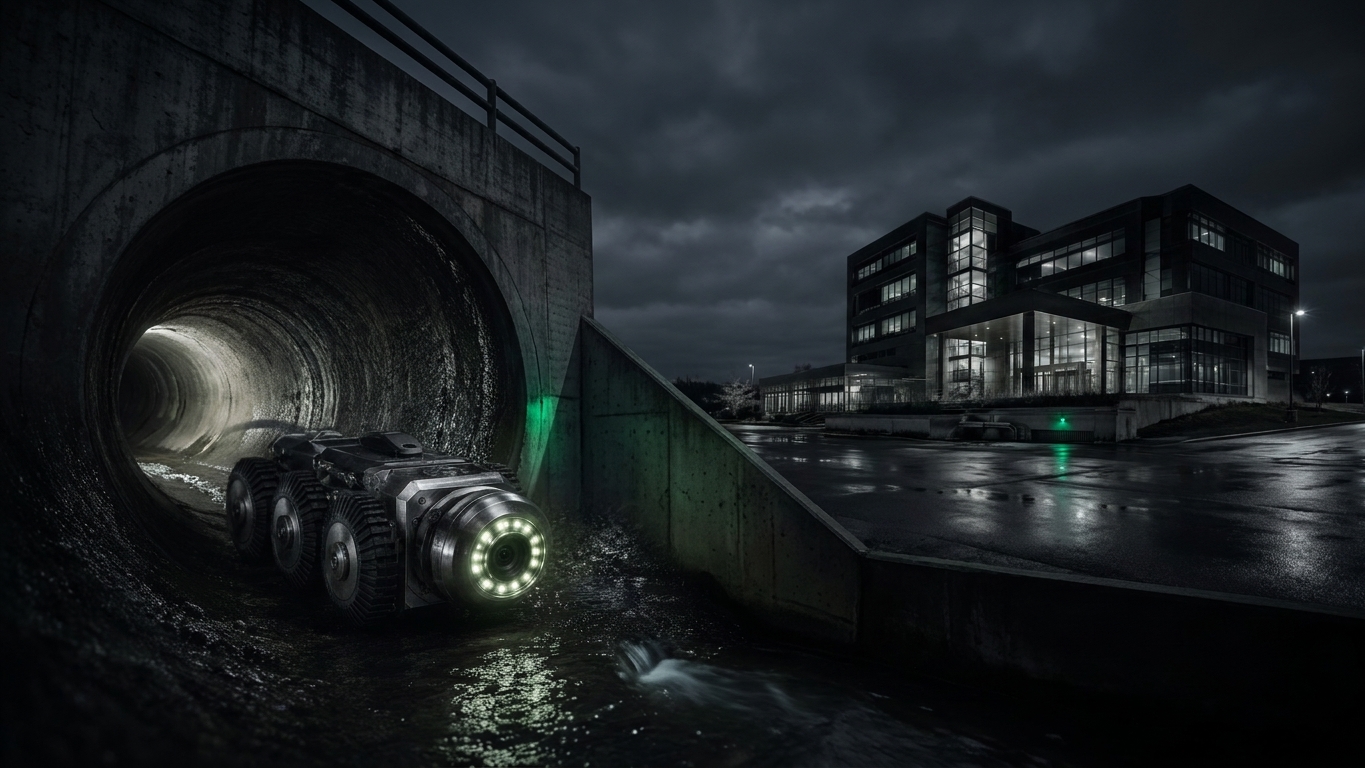
CCTV pipeline inspection for university and school district facilities documents pipe condition before a repair scope is selected. For Florida campus facilities teams, the starting point is a defined assessment scope, an access plan built around occupancy, and reporting that supports maintenance and capital decisions.
- Choose Southeast Services for CCTV Pipeline Inspection with NASSCO-certified condition assessment technicians serving Florida institutional facilities.
- Match inspection equipment and coding standards to mainlines, laterals, and in-building pipes.
- Coordinate required cleaning and camera work around classes, dining operations, and occupied buildings.
- Use GIS system mapping to connect inspection findings to identifiable campus assets.
- Request a Rehabilitation Readiness Report (R3) when findings need to support rehabilitation pricing.
Who This Guide Is For
This guide is for facilities directors, campus operations managers, and district maintenance supervisors responsible for sanitary sewer and stormwater infrastructure at Florida universities and schools. It addresses dormitories, classrooms, dining facilities, administrative buildings, and the pipelines connecting them.
Southeast Services of the Treasure Coast, Inc. provides condition assessment for institutional facilities statewide. SES brings 10M+ feet of pipe experience and 20+ years in business, since 2005.
Why CCTV Pipeline Inspection Matters for Campus Infrastructure
A capital request needs more than a report that a line backed up. Facilities teams need to know which asset was inspected, what was visible, which defects were recorded, and where additional investigation is required. That distinction separates a documented condition assessment from an isolated video file.
Campus planning also has operational constraints. Access through a classroom building, a dining facility, or an occupied dormitory needs coordination with the people responsible for that building. Inspection planning should identify those constraints before crews mobilize, not after equipment arrives.
Standardized reporting helps facilities staff compare observations and explain priorities to a board or budget committee. It does not remove uncertainty where the camera cannot see. Inaccessible sections and obscured pipe walls should remain explicit limitations in the record rather than being treated as inspected assets.
What to Specify in a Campus Inspection Scope
Match Certification & Equipment to the Asset
Specify the pipe systems included in the assessment. Campus mainlines, building laterals, and in-building drain piping are different assets. A crawler should not be assumed to reach every small-diameter line or every change in direction. Equipment selection belongs in the contractor's assessment plan.
NASSCO's PACP for Asset Management guidance, accessed in 2026, describes how Pipeline Assessment Certification Program (PACP) condition results can support maintenance and rehabilitation planning alongside GIS and maintenance records. NASSCO also distinguishes lateral, manhole, and building sewer inspection programs. Require the standard applicable to each asset rather than assigning PACP to every campus inspection by default.
Every SES condition assessment technician is NASSCO certified. R3 assessments are performed by a nationally certified Building Sewer & Drain Inspector following NASSCO BSDI standards. Identify the inspection purpose and reporting requirements before selecting the deliverable.
Plan Access Around Academic Operations
Define available access windows with campus operations staff. Class schedules, dining hours, dormitory occupancy, testing periods, and security requirements belong in the scope discussion. Existing cleanouts and manholes should be identified where records are available.
Do not assume that camera inspection guarantees uninterrupted service. Access, flow, pipe condition, and required cleaning determine the work sequence. Ask the contractor to identify any expected service restrictions and the coordination needed before work begins.
The access plan should address:
- The buildings and pipe segments included.
- Available entry points and known access restrictions.
- Occupancy-sensitive work windows.
- Campus contacts responsible for notifications and access.
- How incomplete inspections will be documented and revisited.
Define Cleaning Before Camera Work
Debris, roots, and scale can obstruct the camera's view. The scope should explain how the contractor will determine whether cleaning is needed and how the selected method will be matched to the pipe's condition. More aggressive cleaning is not automatically the right approach.
Coordinating cleaning and inspection can reduce repeat access arrangements. It does not guarantee that every building needs only one visit or that a closure will be avoided. Conditions discovered during the work can change the sequence.
Require documentation of any section that remains obscured after preparation. An incomplete view should not be presented as evidence that the pipe is sound.
Connect Findings to Campus Asset Records
GIS system mapping connects condition data to identifiable locations. For a facilities team managing multiple buildings, the useful question is whether a reported defect can be traced back to the correct pipe segment without relying on someone's memory.
Define the asset identifiers and file formats before inspection. Ask how videos, reports, and location records will reference the same assets. Sanitary sewer and stormwater records can share a campus mapping framework while remaining clearly identified as separate systems.
Mapping supports planning, but it does not replace inspection. An accurate location record alone cannot establish the condition of the pipe beneath it.
Require Decision-Ready Reporting
Request more than raw footage. The scope should identify the reporting format, the observations to be documented, and how limitations will be communicated. Campus staff need to distinguish completed inspections from segments that still require access, preparation, or another assessment method.
The Rehabilitation Readiness Report (R3) is SES's proprietary standardized pipeline condition assessment that documents everything needed to price a rehabilitation accurately. Discuss whether that deliverable fits the building systems and rehabilitation decision under review.
An inspection finding is not automatically a specification for cured-in-place pipe (CIPP) lining. The assessment must support the choice of rehabilitation method. CIPP is one option, not the default answer to every defect.
Verify Contractor Credentials & Scope Responsibilities
Ask for contractor license information, insurance documentation, and the certifications relevant to the proposed inspection. Check the institution's own procurement requirements rather than assuming every university and district uses the same vendor process.
Southeast Services of the Treasure Coast, Inc. is a Florida-licensed contractor headquartered in Vero Beach and serving clients statewide. SES holds three Florida contractor licenses: CFC1429186, CUC1223872 & CGC1525265. The company is insured and bonded to industry standards.
Inspection Options at a Glance
These options serve different purposes. They are not interchangeable, and several can belong in the same assessment scope.
| Option | Best For | What It Adds | Key Limitation |
|---|---|---|---|
| CCTV Pipeline Inspection | Documenting Accessible Pipe Condition | Recorded Observations Using Applicable Coding Standards | Access and Visibility Limit What Can Be Assessed |
| Rehabilitation Readiness Report (R3) | Preparing a Rehabilitation Pricing Scope | Standardized Assessment for Accurate Rehabilitation Pricing | Scope Must Match the Systems and Decision Under Review |
| GIS System Mapping | Managing Assets Across Campus Buildings | Location-linked Condition Records | Mapping Alone Does Not Assess Condition |
| Forensic Inspection | Investigating a Defined Incident or Disputed Condition | An Assessment Focused on the Question Being Investigated | Findings Depend on Available Access and Evidence |
| Coordinated Cleaning &Amp; Inspection | Preparing Obstructed Lines for Assessment | Cleaning Matched to the Pipe Before Camera Evaluation | Discovered Conditions Can Require Additional Work |
Start with a defined condition assessment. Add R3 when the objective is rehabilitation pricing, GIS mapping when asset records need location-based organization, and forensic inspection when a specific incident needs investigation. Avoid buying a broad package without naming the decision the work must support.
Common Scope Mistakes to Avoid
- Treating footage as the entire deliverable. Specify asset identifiers, reporting standards, and inspection limitations alongside video requirements.
- Promising no disruption before assessing access. Confirm service restrictions and building coordination with the contractor.
- Applying one inspection method to every asset. Match equipment and coding to mainlines, laterals, and building systems.
- Selecting a repair before documenting condition. Use findings to establish whether maintenance, further assessment, or rehabilitation is appropriate.
Frequently Asked Questions
What is CCTV pipeline inspection for university and school district facilities?
CCTV pipeline inspection records accessible internal pipe conditions so facilities teams can document defects and plan the next step. A campus scope should identify the buildings, pipe segments, inspection methods, applicable coding standards, and reporting requirements. The assessment supports maintenance and rehabilitation decisions rather than guaranteeing that every future failure can be predicted.
How often should campus sewer lines be inspected?
The inspection schedule should follow asset condition, incident history, and operational consequences rather than a universal interval. Establish what has already been inspected, identify gaps, and agree on priorities with a qualified contractor. Lines with recurring problems or limited access need particular attention when the campus plans its assessment program.
Will CCTV inspection interrupt classes or building operations?
Disruption depends on access, flow, pipe condition, and any required preparation. Inspection through existing access points can limit surface disturbance, but uninterrupted building use should not be promised before the scope is assessed. Coordinate work windows, notifications, and any service restrictions with campus operations and the inspection contractor before mobilization.
What should a campus inspection report include?
The report should connect observations to identifiable pipe segments and state what was inspected, what was found, and what could not be assessed. Specify videos, applicable defect coding, location records, and reporting formats in the scope. Discuss R3 when the assessment needs to support accurate rehabilitation pricing for the building systems involved.
How much does campus CCTV pipeline inspection cost?
Campus inspection requires a project-specific quote based on the defined scope. Pipe footage, access, cleaning requirements, inspection methods, reporting, and occupancy restrictions affect the work involved. Provide available asset records and describe the decision the assessment must support so a licensed, certified contractor can develop a defensible scope rather than an unsupported estimate.
Make the Assessment Useful to the Next Decision
Prioritize inspections using known condition, recurring incidents, and the consequences of losing service. Building age can inform that discussion, but age alone does not establish which line is in the worst condition.
A campus sewer line does not fail on a convenient day. The practical response is to document what is known, identify what remains uninspected, and assign the next action to each asset. Diagnosis and rehabilitation of these systems require a licensed, certified contractor, not a do-it-yourself repair plan.
“A campus sewer line does not fail on a convenient day.”
Request a Campus Assessment
Contact Southeast Services of the Treasure Coast, Inc. to discuss your campus assessment scope. 815 10th Court SW, Vero Beach, FL 32962. Phone: (772) 226-7416. Toll-free: 888-808-CIPP (2477). Email: solutions@southeastservices.com. Licenses: CFC1429186, CUC1223872 & CGC1525265.