Cast iron sewer line rehabilitation for HOA single-family neighborhoods starts with documented pipe condition and confirmed ownership. The board needs to know which assets the association controls before comparing cured-in-place pipe (CIPP) lining, sectional point repair, or replacement.
- Cast iron sewer line rehabilitation starts with assessment, not a predetermined lining scope.
- Confirm association, homeowner, and utility responsibilities before authorizing work.
- Southeast Services' Rehabilitation Readiness Report (R3) documents the conditions needed for accurate rehabilitation pricing.
- Select CIPP lining or sectional point repair from documented defects and installation feasibility.
- HOA infrastructure services cover Florida statewide. Individual residential work covers Brevard, Indian River, St. Lucie, and Martin counties.
Why Cast Iron Sewer Line Rehabilitation Matters for HOA Boards
A sewer complaint identifies a service problem. It does not establish who owns the affected pipe, how far deterioration extends, or which rehabilitation method fits. In a single-family neighborhood, an individual lateral and an association-owned collection line are different assets with potentially different funding responsibilities.
An HOA board needs an assessment that separates those questions. The record should identify the inspected segment, location, access conditions, observed defects, and inspection limitations. That gives the board a documented basis for discussing scope rather than treating a neighborhood's age as a repair specification.
Southeast Services provides condition assessment for sanitary sewer and stormwater infrastructure. Every condition assessment technician is NASSCO certified. The inspection method and applicable standards should match the asset, whether the scope covers a lateral, shared collection line, or in-building pipe.
This guide addresses association-level infrastructure decisions across Florida. Individual residential cast iron pipe rehabilitation is a separate service scope limited to Brevard, Indian River, St. Lucie, and Martin counties. Establish the contracting party and asset boundaries before treating an HOA program and an individual homeowner's repair as the same project.
Confirm Ownership & Assessment Boundaries
Start with the governing documents, available utility records, easements, and maintenance agreements. Have the association's manager or legal adviser resolve unclear ownership before the board authorizes work. A lateral serving one home is not automatically an association responsibility because it connects to a shared system.
The assessment contract should identify where the board's authorized scope begins and ends. Inspection access also needs permission, including access through private property when required. Keep disputed assets outside the approved rehabilitation scope until responsibility is resolved.
Require a location reference for every inspected segment. A video without identifiable starting and ending points does not give the board a clear basis for matching findings to a proposed repair. Record inaccessible segments separately so the assessment does not imply they were inspected.
- Identify association-owned pipe and structures.
- Record homeowner and utility boundaries.
- Confirm access permissions and easement restrictions.
- Define inspected segments and uninspected areas.
- Identify who receives the assessment records.
Document Condition before Requesting Rehabilitation Bids
A rehabilitation bid should follow the condition record. Require the contractor to identify inspected footage, pipe material where established, observable defects, connections, and access limitations. An incomplete view is an inspection limitation, not proof that the unseen pipe is sound.
Southeast Services' Rehabilitation Readiness Report (R3) is a proprietary standardized pipeline condition assessment that documents everything needed to price a rehabilitation accurately. R3 assessments are performed by a nationally certified Building Sewer & Drain Inspector following NASSCO BSDI standards. Confirm that the assessment deliverable fits the assets included in the association's program.
Before accepting the report, check that the proposed rehabilitation boundaries correspond to the inspected assets. Ask the contractor to explain any additional investigation needed before pricing. Keep verified conditions separate from assumptions that remain unresolved.
- Obtain video tied to identifiable pipe segments.
- Require written findings and inspection limitations.
- Separate verified defects from assumptions.
- Identify additional investigation needed before pricing.
Compare Rehabilitation Methods against the Findings
CIPP lining, sectional point repair, and replacement address different conditions. A lining proposal should explain why the host pipe, geometry, connections, and access support installation. A point repair proposal should identify the defect being treated and explain why the surrounding segment does not require a broader repair scope.
The board should require a written method recommendation. It should connect the treatment to the assessment rather than promise that one product will address every pipe condition. Confirm preparation, service restrictions, access requirements, and post-installation verification before authorizing construction.
UV-CIPP belongs in the comparison when the selected liner system and asset are suitable. Its inclusion should not become a universal cure-time promise. Ask the contractor to explain the proposed system and its installation requirements for the actual segment.
| Option | Best For | Role | Key Limitation |
|---|---|---|---|
| R3 Assessment | Defining a Rehabilitation Scope | Documents Conditions Needed for Accurate Pricing | Does Not Itself Repair the Pipe |
| Cast Iron Pipe Descaling | Preparing Pipe with Scale Deposits | Removes Deposits as Specified for the Work | Does Not Replace Structural Rehabilitation |
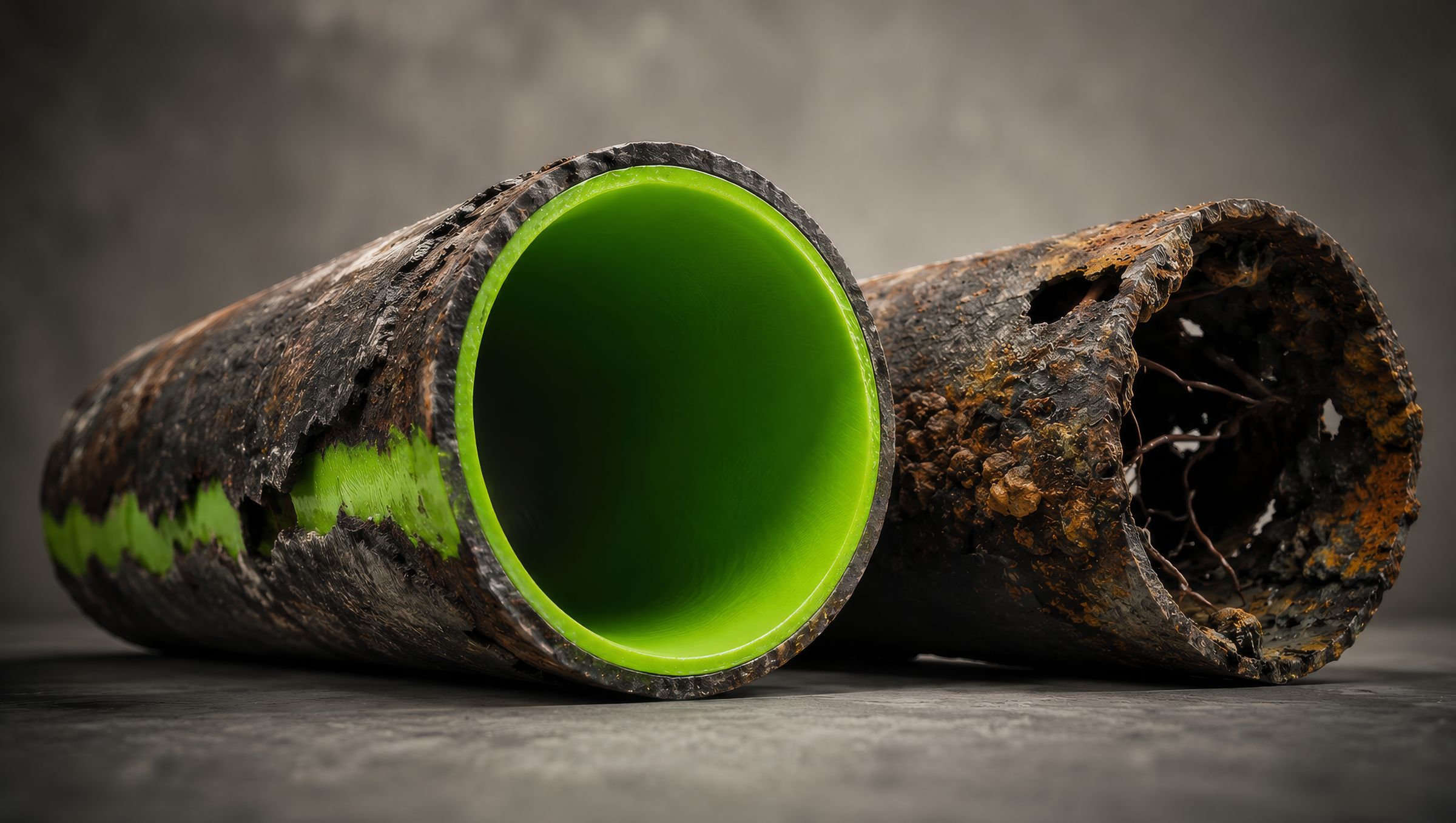
| CIPP Lining | Suitable Segments Requiring Continuous Rehabilitation | Forms a Cured Liner Inside the Host Pipe | Requires Confirmed Suitability and Access |
| UV-CIPP | Assets Suited to a UV-cured Liner System | Cures the Selected Liner Using Ultraviolet Light | System and Equipment Suitability Must Be Confirmed |
| Sectional Point Repair | A Documented Localized Defect | Treats a Defined Section of Pipe | Leaves Untreated Sections Outside Its Repair Scope |
| Replacement | Conditions Unsuitable for the Proposed Trenchless Repair | Replaces the Specified Segment | Access and Restoration Can Add Disruption |
Compare Complete Scopes, Not Headline Prices
Bids are not directly comparable when they cover different segments or exclude different work. Use the same assessment record for each bidder. Require clear inclusions for preparation, access, connections, resident coordination, verification, and any surface restoration.
Cast iron pipe descaling is part of preparation when inspection and the selected rehabilitation system require it. Descaling does not substitute for evaluating structural condition. The proposal should explain how preparation will be performed and how the contractor will determine that the pipe is ready for treatment.
A board also needs a defined process for changed conditions. Require written authorization before work expands beyond the approved scope. Establish who can approve changes, what supporting documentation is needed, and how residents will receive updated notices.
- Use consistent segment identifiers and scope boundaries.
- List exclusions and unresolved conditions.
- Define how changed conditions affect authorization.
- Require a written basis for the proposed schedule.
- Specify verification and acceptance documents.
Plan Resident Coordination & Closeout
Occupied neighborhoods need an operating plan, not simply an installation date. Require the contractor to explain service interruptions, access restrictions, resident notices, and return-to-service criteria. Avoid promising uninterrupted service or a fixed cure time before the method and site conditions are established.
Assign responsibility for resident communication before mobilization. The notice should identify the affected properties, restrictions, contact person, and process for confirming when service can resume. Keep association-level notices separate from permissions required for privately owned assets.
Closeout requirements belong in the contract. Ask for post-rehabilitation inspection records, the locations treated, installation verification appropriate to the selected system, and remaining exclusions. Retain those documents alongside the original assessment so the next board can understand what was inspected, authorized, and completed.
- Identify affected properties and access restrictions.
- Assign responsibility for resident communication.
- Define service restrictions and release criteria.
- Retain assessment and closeout records together.
Reserve Planning & Common Scope Errors
An assessment documents condition. The association's reserve professional, manager, and legal adviser determine how the findings fit its governing documents, funding plan, and applicable requirements. Do not assume a single-family HOA has the same reserve obligations as a condominium association.
Southeast Services has 10M+ feet of pipe experience and has been in business since 2005. Those credentials support contractor evaluation. The neighborhood's actual assessment still determines its rehabilitation scope.
Avoid these errors when reviewing proposals:
- Assuming Ownership. Confirm responsibility before committing association funds to an individual lateral.
- Selecting Lining before Inspection. Require the treatment to follow documented conditions.
- Treating Descaling as Structural Repair. Define preparation and rehabilitation separately.
- Accepting an Unsupported Schedule. Require timing and service restrictions for the selected installation.
- Omitting Closeout Records. Specify evidence of completed work before signing the contract.
Frequently Asked Questions
Who Is Responsible for Sewer Laterals in a Single-Family HOA?
Responsibility depends on ownership, governing documents, utility boundaries, and maintenance agreements. A pipe serving an individual home is not automatically association-owned. The board should have its manager or legal adviser confirm responsibility and access authority before authorizing inspection, committing association funds, or including that lateral in a rehabilitation contract.
Is CIPP Lining Suitable for Every Cast Iron Sewer Line?
No. CIPP lining requires a suitable host pipe, workable access, and a design matched to the segment's condition and geometry. Inspection should establish the defects and limitations before selection. Any unsuitable sections need a separately defined repair or replacement approach rather than an assumption that lining will solve every condition.
What Determines HOA Cast Iron Pipe Rehabilitation Cost?
Cost depends on the documented scope, including pipe footage, condition, access, preparation, connections, service coordination, and restoration requirements. The board should request bids against the same assessment record. A price without those boundaries is not directly comparable to a proposal that includes verification, resident notices, and defined handling of changed conditions.
How Long Will Residents Be Unable to Use the Sewer Line?
The restriction depends on the selected rehabilitation system and installation plan. The contractor should identify the affected homes, expected service interruption, notice process, and return-to-service criteria in the project scope. Do not assume a universal same-day cure or uninterrupted water use before pipe suitability, access, and installation requirements are confirmed.
Does Southeast Services Serve HOA Communities Statewide?
Yes. Southeast Services serves association-level infrastructure clients statewide Florida. Individual residential cast iron pipe rehabilitation is limited to Brevard, Indian River, St. Lucie, and Martin counties. The assessment and contract should clearly distinguish an HOA's shared infrastructure program from a homeowner's separately owned pipe and identify the appropriate scope for each.
Request an R3 Assessment
Southeast Services of the Treasure Coast, Inc. is a Florida-licensed contractor headquartered in Vero Beach and serving clients statewide. Begin an HOA infrastructure program with ownership boundaries and documented assessment before authorizing rehabilitation. Diagnosis and rehabilitation of these systems require a licensed, certified contractor.
Request an R3 Assessment
Southeast Services of the Treasure Coast, Inc. Address: 815 10th Court SW, Vero Beach, FL 32962. Phone: (772) 226-7416. Toll-free: 888-808-CIPP (2477). Email: solutions@southeastservices.com. Licenses: CFC1429186, CUC1223872 & CGC1525265. Done Right. On Time. On Budget.