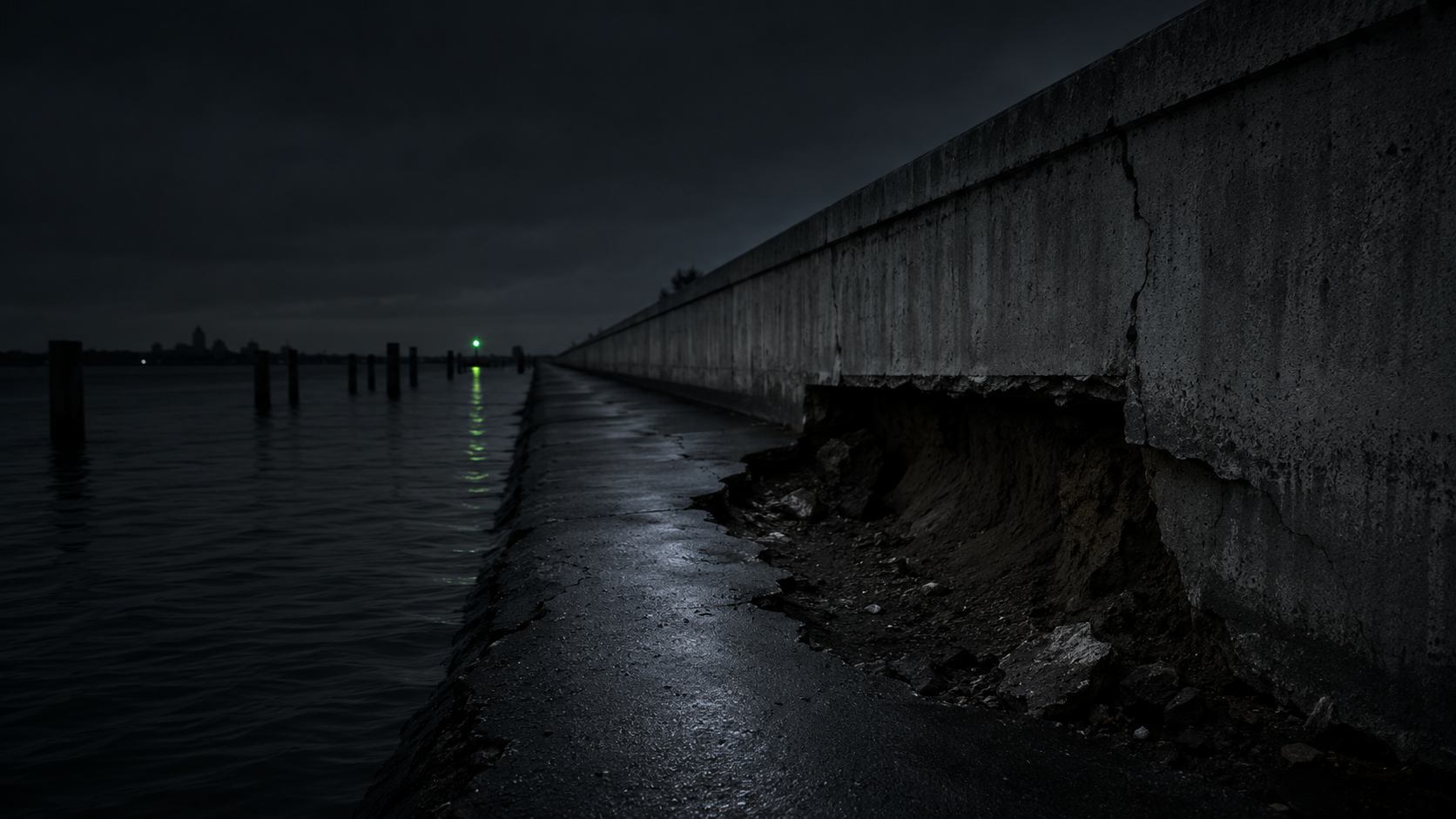
Coastal seawalls fail from the soil side long before the concrete cracks, and the buried sewer or stormwater line running under that soil is usually the first thing to erode. This guide sets the 2026 standard for soil & seawall stabilization for coastal municipal infrastructure: what a Florida public works department should specify, which approaches earn a buy, and what to skip.
Why This Matters
Florida's seawalls sit on top of some of the oldest buried sanitary sewer and stormwater corridors in the state, many installed in the 1950s to 1970s before anyone mapped them to GIS standard. Southeast Services has logged 10M+ feet of pipe condition data since 2005, and the pattern repeats across that data: soil erodes around a failing joint, the seawall loses toe support, and nobody finds out until the surface settles.
NOAA's 2022 sea level rise technical report projects roughly 10 to 14 inches of rise along the Southeast Atlantic coast by 2050 under the intermediate scenario, and that means more tidal cycling against every seawall built before that projection existed. FDEP's Environmental Resource Permit (ERP) program already requires documented soil and structural condition for any coastal stabilization work, and a county or utility that skips the paperwork risks a stop-work order mid-project in 2026.
This is not a landscaping problem. It's an infrastructure problem, and it needs a contractor who treats it that way.
Who This Is For
This guide is built for Florida public works directors, county utility engineers, and stormwater program managers responsible for seawalls, bulkheads, and shoreline corridors that carry sanitary sewer or stormwater assets underneath them. If your department is staring at a seawall inspection report that flags soil loss, or a stormwater outfall slumping toward the water, this is your buyer's checklist for 2026.
What to Look for in Soil & Seawall Stabilization for Coastal Municipal Infrastructure
Here's what a Florida public works department should specify in 2026 before signing a scope.
Utility-Safe Excavation Method
Trackhoe and hand-dig excavation near a seawall risks striking a sanitary sewer or stormwater line that's already corroded thin. Vacuum excavation and hydro-excavation expose buried lines without direct contact, which matters most on corridors installed before 1980 where as-built drawings are often wrong or missing. Ask any bidder how close to the pipe wall they can excavate before switching to non-mechanical methods.
Condition Assessment before Any Backfill
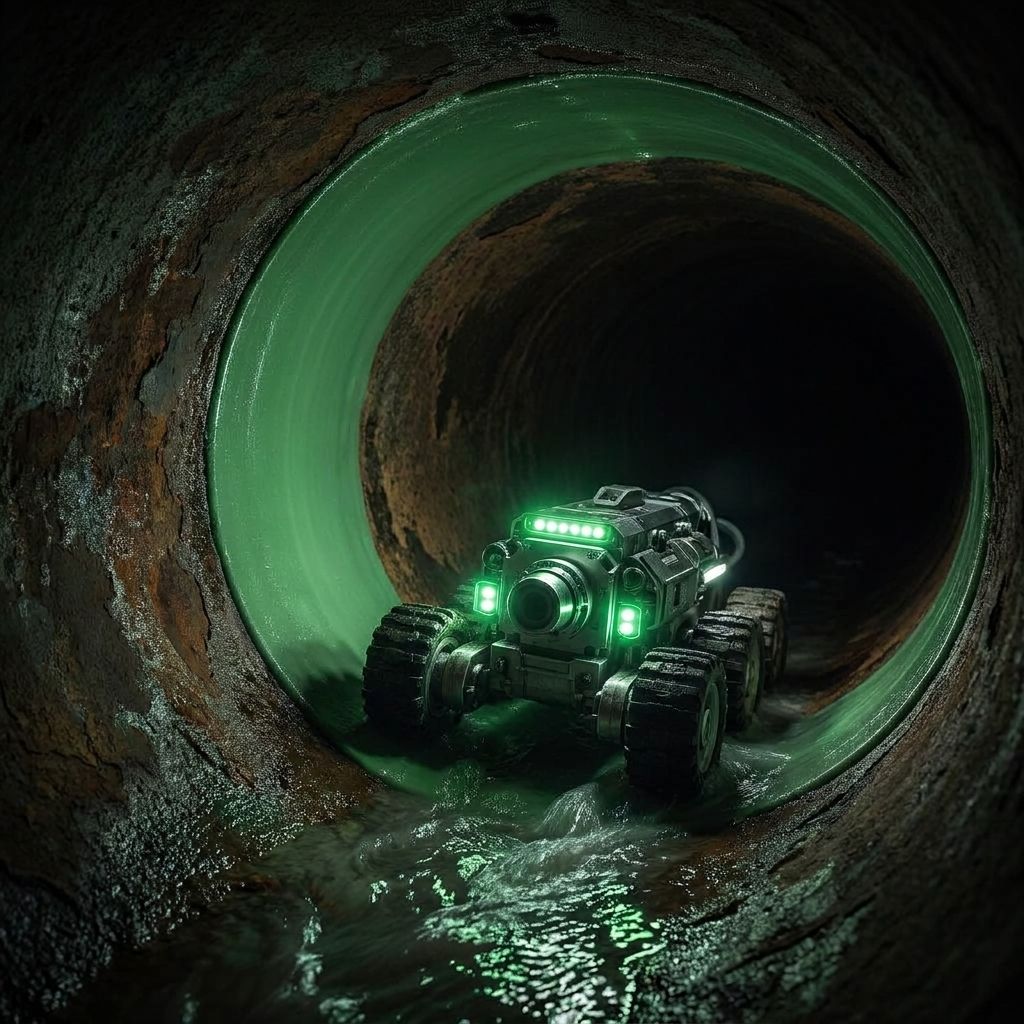
Backfilling around a pipe nobody has inspected just buries the next failure. A NASSCO certified CCTV inspection, or a standardized deliverable like Southeast Services' Rehabilitation Readiness Report (R3), documents pipe condition before the excavation closes back up. Skip this step and the stabilization contract becomes a guess.
Cross-Disciplinary Licensing
Soil and seawall stabilization touches utility work, general construction, and often specialty excavation in the same trench. A contractor needs licensing that covers all of it, not a subcontractor chain assembled for the bid. Florida requires separate license classes for utility contracting and general contracting, and a single-license shop is a red flag for scope gaps.
Storm & Emergency Response Capacity
Hurricane season runs June through November in Florida, and seawall soil loss accelerates fastest during storm surge and heavy rain events. A contractor without emergency and storm response capability can't mobilize when a corridor destabilizes overnight. Ask for response time commitments in writing, not verbal assurances.
Permitting & Regulatory Fluency
FDEP's ERP program, MS4 permit conditions, and local floodplain ordinances all touch coastal soil stabilization work. A contractor who doesn't know the difference between an ERP modification and a new permit application will cost the department months in resubmittals. Ask for a specific example of an ERP submission the contractor has supported, not a general claim of familiarity.
Full-Lifecycle Scope
A stabilization scope that stops at backfill leaves the department right back where it started the next time the corridor erodes. Contractors who handle assessment, cleaning, stabilization, and rehabilitation under one scope close the loop instead of passing the problem to the next contract cycle.
Core Stabilization Approaches Worth Specifying
Five approaches worth building into a 2026 scope, ranked by how much risk they take off the table.
Vacuum Excavation for Utility Corridor Protection
The safe pick. Vacuum excavation removes soil with air or water pressure and a vacuum recovery system, exposing a buried line without the blunt force of a bucket. On a corridor where the as-built drawing is 40 years old, this is the difference between finding a pipe and hitting one. Buy for any seawall corridor with a known or suspected utility line underneath.
Hydro-Excavation for Seawall Toe & Backfill Repair
The workhorse. Hydro-excavation combines pressurized water with vacuum removal, which works faster than air excavation in Florida's sandy coastal soils. It's the standard method for exposing a seawall's toe and the soil directly behind it before structural backfill goes in. Buy when the scope involves both soil removal and controlled backfill in the same footprint.
Pre-Excavation Line Cleaning & Condition Check
The non-negotiable. Before any excavation starts, the sanitary sewer or stormwater line under that corridor should be cleaned and camera-inspected so nobody backfills over an undocumented defect. Commercial pipeline cleaning ahead of a stabilization scope is standard practice on municipal jobs, not an add-on. Buy this as a line item, never skip it to save a week on schedule.
Sectional Point Repair Paired with Soil Stabilization
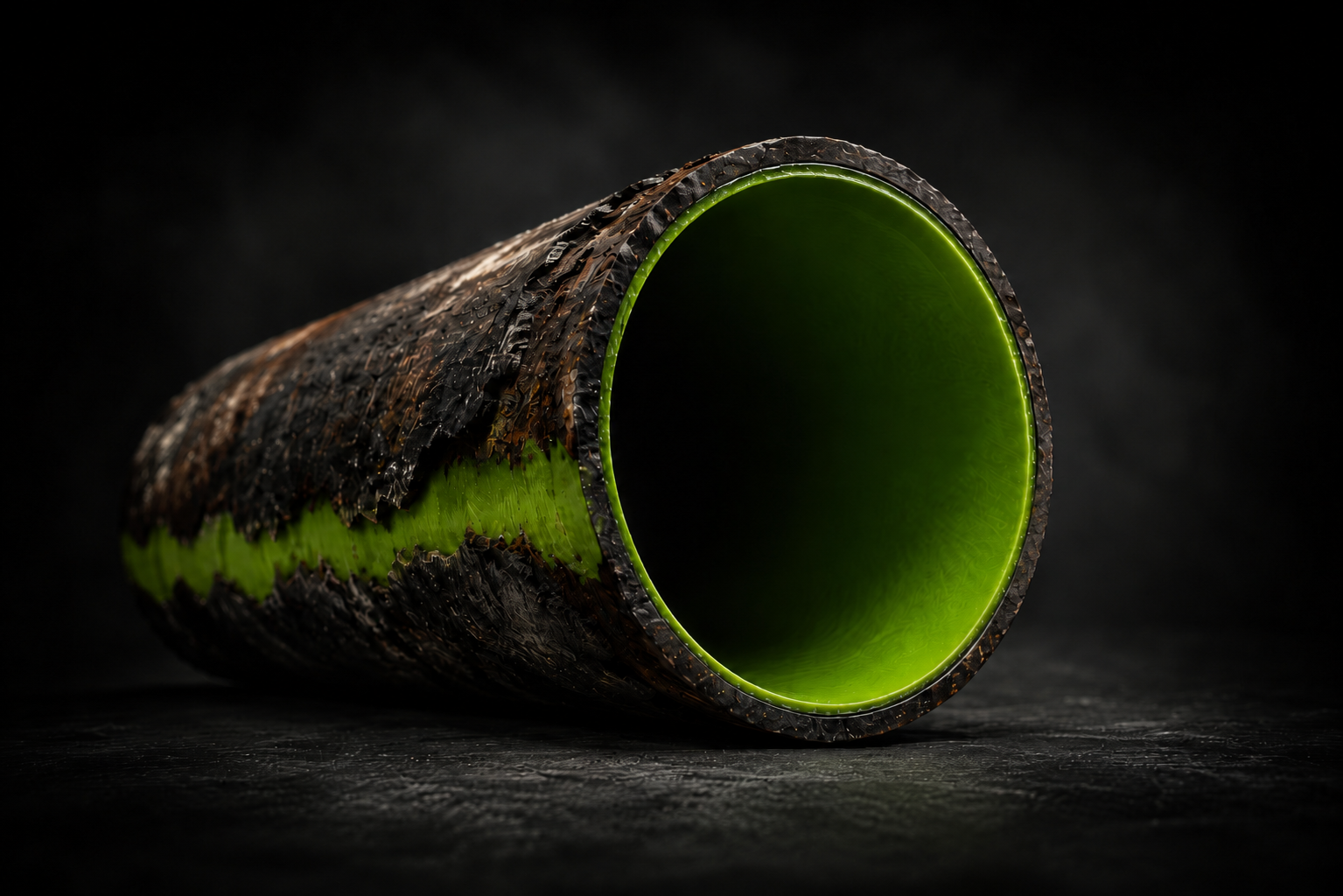
The combo play. When a failed joint or crack caused the soil loss in the first place, sectional point repair using cured-in-place pipe (CIPP) can restore the line's structural integrity in the same mobilization as the soil work. Doing both in one visit avoids a second excavation six months later. Consider when inspection data shows a localized defect, not a full-corridor failure.
Emergency Storm Response Stabilization
The insurance policy. Post-storm soil loss around a seawall can destabilize a corridor within days, not months. A contractor with emergency and storm response capability can mobilize before the next high tide reopens the gap. Consider locking in a standing emergency response agreement ahead of hurricane season 2026, not after the first call.
What to Avoid
- Excavation without exposing the utility line first. A contractor who backfills based on the as-built drawing alone, without confirming the pipe's actual location and condition, is gambling with the department's own infrastructure.
- Marine and dock-specific stabilization sold as seawall work. Land-side seawall and soil stabilization is a different scope than marine, dock, or offshore pipeline work, and a vendor that blurs the two is padding the bid.
- A one-time fix with no lifecycle plan. Stabilizing soil once and walking away ignores the tidal cycling and sea level trend that caused the erosion in the first place. Ask for a capital planning conversation, not just a change order.
How the Approaches Compare
| Approach | Utility-Safe Method | Requires Condition Data First | Storm Response Fit | Verdict |
|---|---|---|---|---|
| Vacuum Excavation | Yes | Recommended | Moderate | Buy |
| Hydro-excavation | Yes | Recommended | Moderate | Buy |
| Pre-excavation Line Cleaning | N/A | Required | Low | Buy |
| Sectional Point Repair + Stabilization | Yes | Required | Moderate | Consider |
| Emergency Storm Response Stabilization | Depends on Method Used | Often Skipped Under Time Pressure | High | Consider |
Frequently Asked Questions about Soil & Seawall Stabilization
What Is Soil & Seawall Stabilization for Coastal Municipal Infrastructure?
It's the combined work of exposing, protecting, and rebuilding the soil and structural support behind a seawall or bulkhead, usually alongside the sanitary sewer or stormwater lines buried in that corridor. In Florida it typically pairs utility-safe excavation with structural backfill and, where a pipe defect caused the erosion, sectional repair.
How Is Seawall Stabilization Different from Seawall Replacement?
Stabilization restores the soil and support structure without removing the seawall itself, while replacement rebuilds the wall from scratch. Most municipal corridors need stabilization first, since a full seawall replacement is a much larger capital expense that a soil fix can often delay for years.
Does Vacuum Excavation Damage Sewer or Stormwater Lines?
No, vacuum excavation is built specifically to avoid pipe damage by using air or water pressure instead of mechanical force. It's the standard method specified when a buried utility line runs through the stabilization footprint.
Who Needs a Condition Assessment before Seawall Soil Stabilization?
Any municipality, county, or utility with a sanitary sewer or stormwater line running through a seawall corridor needs a condition assessment first. Skipping it means backfilling over a defect that will resurface as another soil loss event within a few years.
Is FDEP Permitting Required for Seawall Soil Stabilization in Florida?
Yes, most coastal soil and seawall stabilization work in Florida falls under FDEP's Environmental Resource Permit (ERP) program. The exact permit type depends on the site's location and whether the work touches submerged land.
How Long Does a Municipal Soil Stabilization Project Take?
Timelines vary by corridor length and whether a utility line needs sectional repair alongside the soil work. A condition assessment and R3-style scope up front shortens the schedule because the crew isn't guessing once excavation starts.
Does Southeast Services Handle Emergency Storm Response for Seawalls?
Yes, emergency and storm response is part of Southeast Services' specialty scope alongside soil and seawall stabilization. Response capability matters most in the days right after a storm surge event, when soil loss accelerates fastest.
One Last Thing
Most of the seawall corridors Southeast Services inspects in 2026 still carry sanitary sewer or stormwater lines that predate any GIS record of their location. That means the excavation method matters as much as the stabilization method: hit an undocumented pipe with a trackhoe bucket and the soil problem becomes a sewage spill problem, reportable to FDEP under Florida's SSO rules. Specify vacuum or hydro-excavation on every coastal corridor scope in 2026, even when the as-built drawing says the line isn't there.