Public works departments that wait until a named storm is forecast to line up pipeline support are already behind. The departments that hold up under a wet season have a contractor on call before the first advisory drops.
A note before you read further: this guide sticks to sanitary sewer and stormwater infrastructure services. It does not cover grease trap work, general plumbing, or septic systems, none of which fall under emergency storm response for collection and conveyance systems.
Why This Matters
Florida's hurricane season runs June 1 through November 30, and every named storm that drops 4 to 8 inches of rain in a day tests the weak joints, root intrusion points, and corroded cast iron in a collection system that survived the last five storms on luck. Sanitary sewer overflows (SSOs) triggered by storm surcharge are reportable to the Florida Department of Environmental Protection under Florida Statute 403.077, and the reporting clock starts the moment the overflow is discovered, not when the storm passes.
A public works department without a standing emergency contractor relationship spends the first 12 to 24 hours of any storm event finding a crew instead of running one. That gap is where fines, consent orders, and public health exposure live. The fix is not more staff. It is a contractor already vetted, already licensed, and already on the call list before the storm forms.
Who This Is For
This guide is written for public works directors, utility superintendents, county engineers, and special district managers responsible for sanitary sewer and stormwater conveyance systems statewide in Florida. It is not written for single-family homeowners or HOA boards managing a private lateral, those readers should look at residential trenchless repair content instead.
What to Look for in Emergency & Storm Response Pipeline Services for Public Works
Response Time Under Contract, Not Under Promise
Ask for a written mobilization time, not a verbal assurance. A contractor who commits to 24 to 48 hours in the service agreement is one you can hold to it during an actual event. A verbal "we will get there when we can" is not a plan, it is a hope.
NASSCO Certification on Every Assessment Crew
Storm damage claims and FDEP incident reports carry more weight when the condition assessment behind them was performed by a nationally certified inspector. Every Southeast Services condition assessment technician holds NASSCO certification, which means the CCTV footage and defect coding used to justify emergency repair spending hold up to regulatory and insurance scrutiny.
Trenchless Repair Capability, Not Just Cleaning
A contractor who can only jet and vacuum a line after a storm gets you back to where you were before the storm, which is still a damaged pipe waiting for the next event. Cured-in-place pipe (CIPP) point repair and sectional lining let a crew stop active infiltration and structural failure without opening a trench, often in the same mobilization as the cleaning crew.
Licensing That Covers the Full Scope
Storm response work touches sanitary sewer, stormwater, and often excavation for debris removal or seawall stabilization. A contractor should carry licensing across all of it, not just one trade. Southeast Services holds CFC1429186, CUC1223872, and CGC1525265, covering the full range of work a storm event typically requires.
Documentation That Survives an Audit
Every emergency repair funded through capital or emergency budget lines eventually gets reviewed, either by a county commission, a grant auditor, or an insurance adjuster. A contractor who delivers a standardized condition report, like the Rehabilitation Readiness Report (R3), gives you a defensible paper trail instead of a stack of invoices with no context.
Specialty Equipment for Debris & Blockage Removal
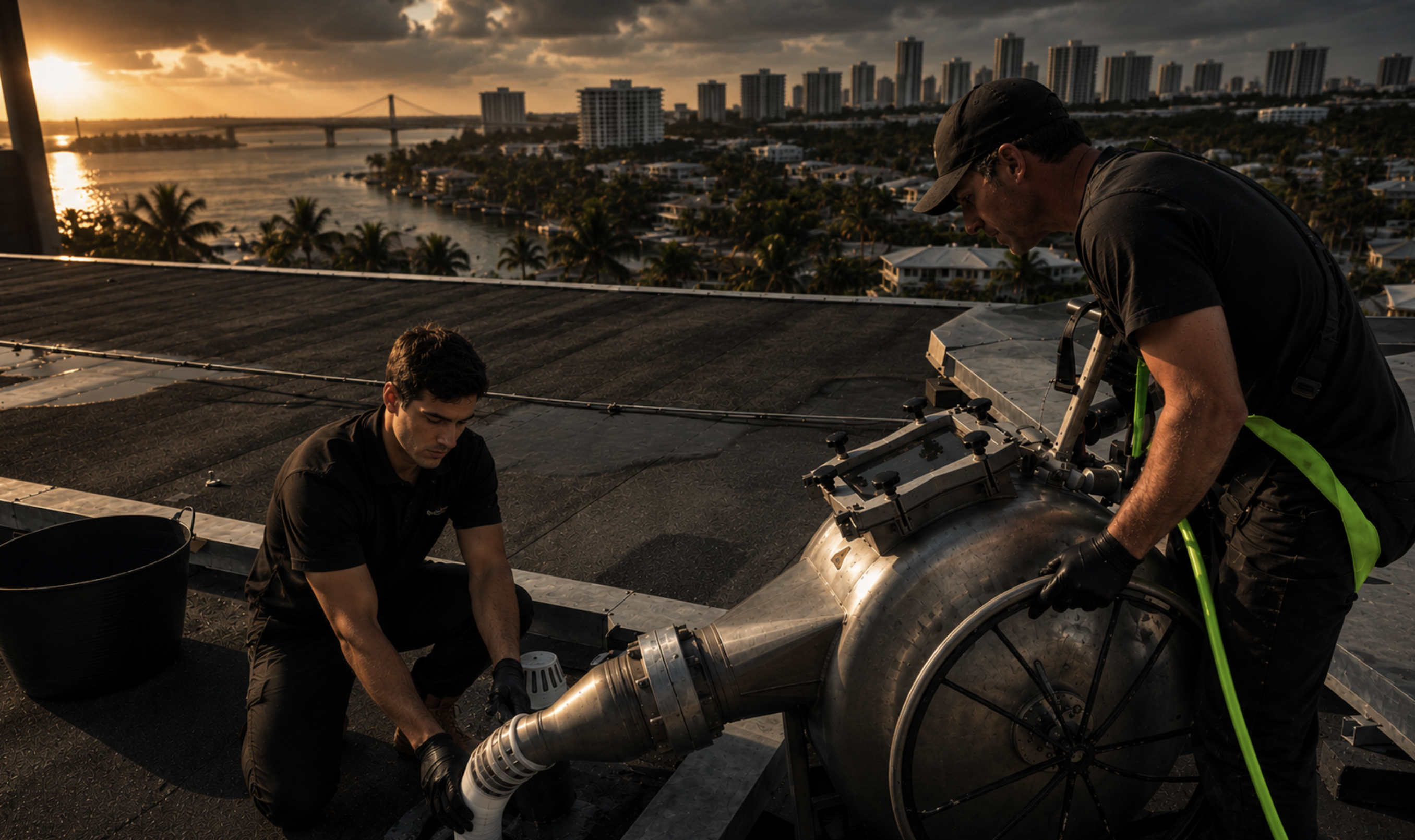
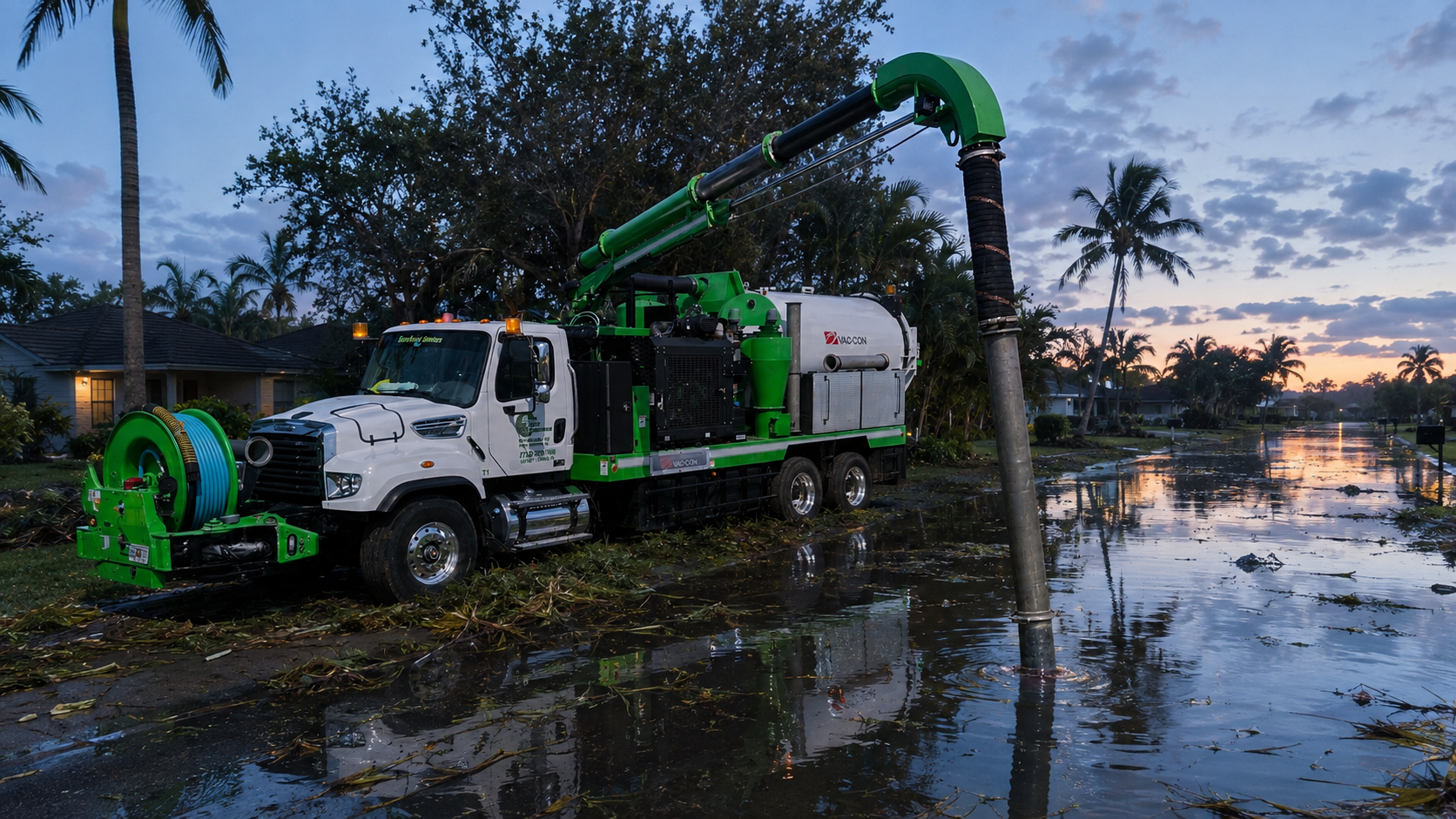
Storms do not just crack pipe, they fill it with sediment, root mats, and wash debris. Vacuum excavation and hydro excavation crews clear blocked lines and expose damaged sections without the collateral damage of a backhoe, which matters when the line runs under a road or a utility corridor you cannot fully close.
Top Picks: Core Storm Response Capabilities to Have Under Contract
1. CCTV & Forensic Damage Assessment: The Diagnostic Pick
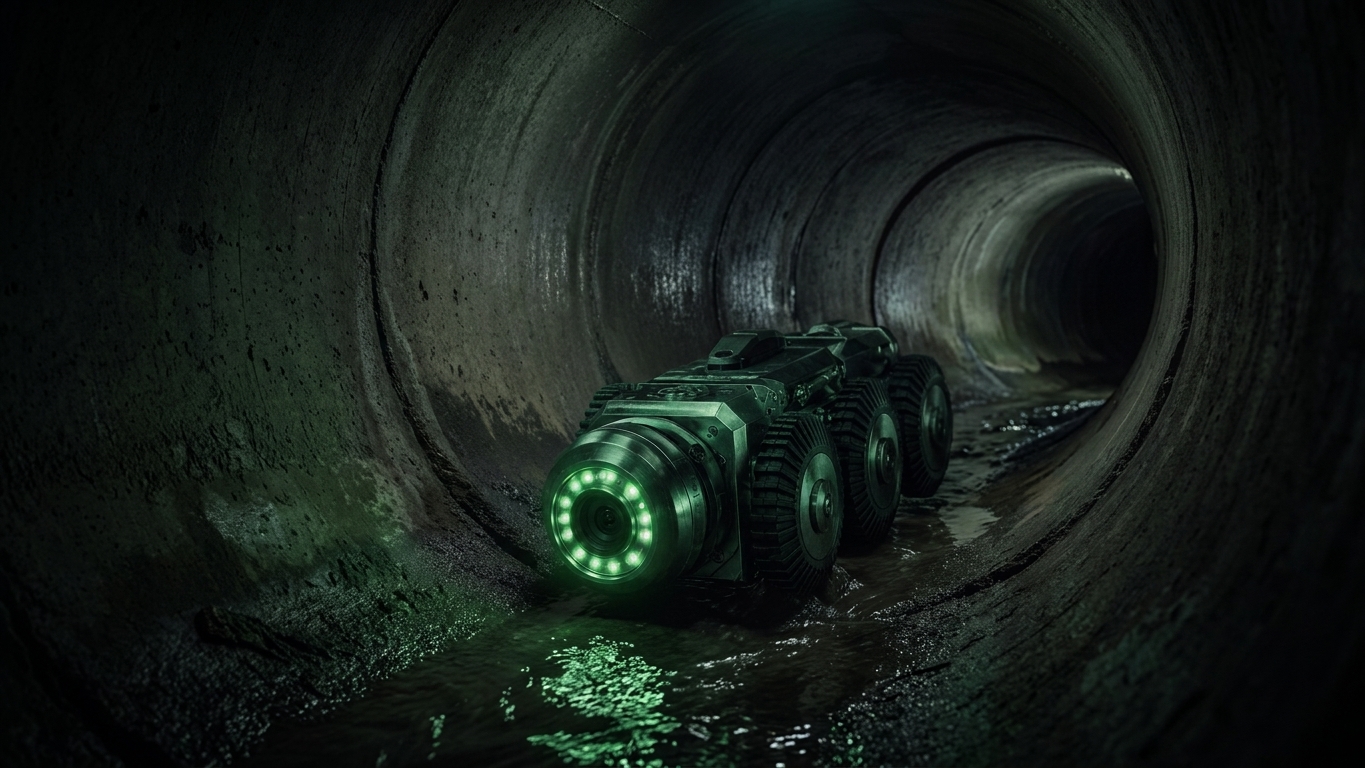
What it does: NASSCO certified crews run CCTV through storm affected lines and code every defect against a standardized system, producing documentation you can hand to FDEP or an insurance adjuster without a translation step. One spec that matters: assessment crews can process several thousand feet of line per shift depending on access and pipe diameter. Verdict: Buy this into every storm response contract, it is the foundation every other repair decision depends on.
2. Vacuum & Hydro-Excavation for Blockage & Debris Removal: The Workhorse
What it does: clears root mats, sediment loads, and washed-in debris from sanitary and storm lines after a rain event without the open-cut disruption of traditional excavation. One number that matters: a single high-pressure jetting pass can restore flow capacity in a line that was running at a fraction of design capacity before cleaning. Verdict: Buy, this is the service most departments underbudget for and need most within the first 72 hours after a storm.
3. CIPP Point Repair & Sectional Lining: The Fast Fix
What it does: cured-in-place pipe (CIPP) sectional repair addresses a cracked joint or a localized failure identified during post-storm CCTV without excavating the full run. One spec that matters: sectional repairs typically cure and return a line to service within a single work shift under ASTM F1216 standards. Verdict: Buy for isolated defects, this closes the gap between temporary bypass pumping and a full capital repair.
4. Stormwater Culvert & Pipe Cleaning: The Cleanup Pick
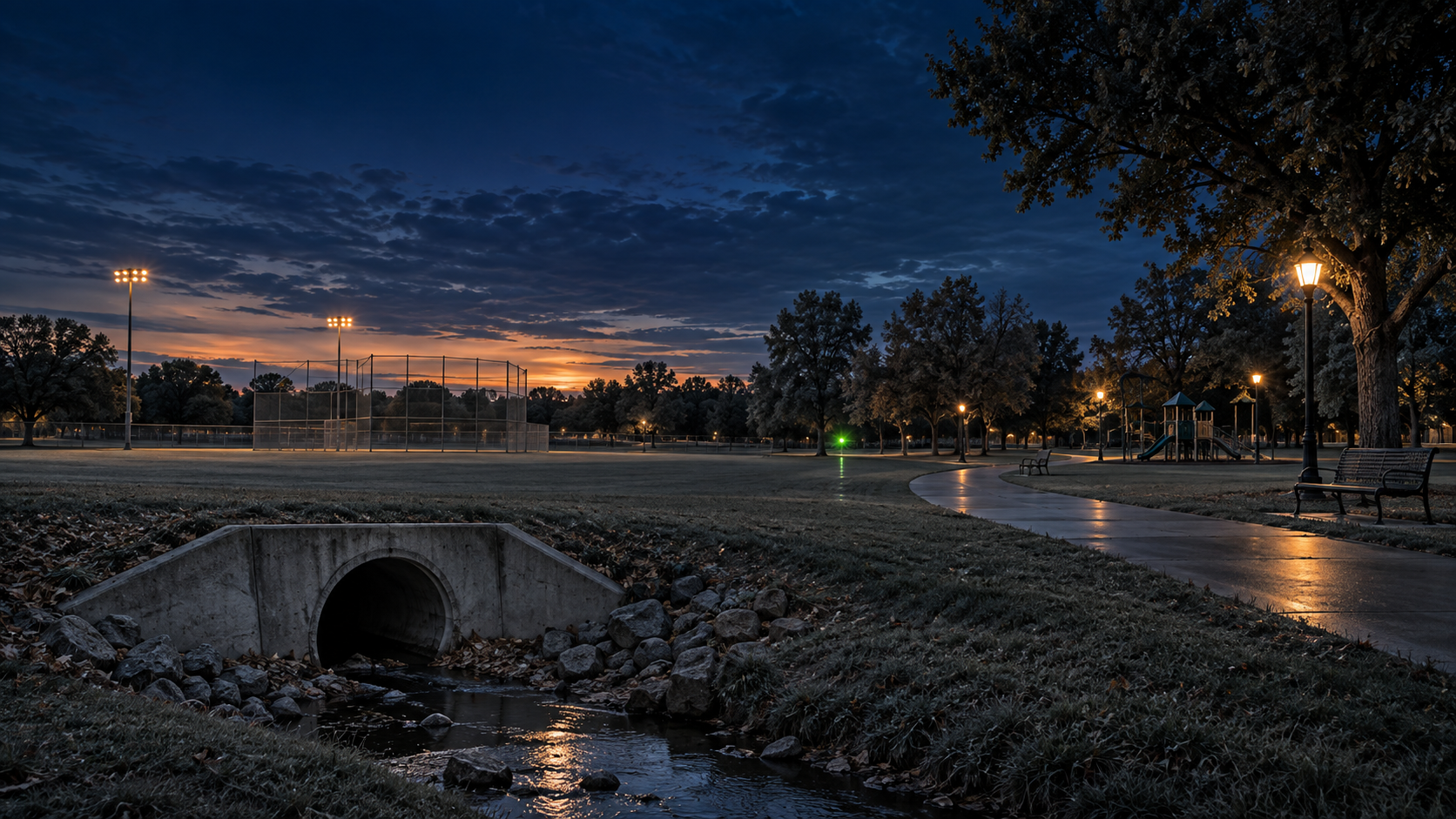
What it does: removes storm-driven sediment and debris from culverts and stormwater conveyance before it backs up a system during the next event. Read more on the mechanics of this work in stormwater culvert cleaning for Florida properties. Verdict: Buy, culvert blockages compound with every storm they go unaddressed and turn a maintenance item into a flood liability.
5. Soil & Seawall Stabilization: The Specialty Pick
What it does: addresses erosion and structural loss around coastal infrastructure exposed or undermined by storm surge and heavy rain. This is a situational need, not every system has coastal or seawall exposure. Verdict: Consider, budget for it if your service area includes coastal or waterway adjacent infrastructure, otherwise this line item can wait.
What to Avoid
- A contractor without a written emergency response time. A promise made in a sales meeting means nothing when the phones are down and the crew you called is already committed to three other municipalities.
- Assessment without certification. CCTV footage from an uncertified crew is harder to defend in an FDEP inquiry or an insurance claim and often needs to be redone anyway.
- Cleaning-only contracts. A crew that can jet a line but cannot follow with a trenchless repair leaves you exposed to the next event, you have addressed the symptom, not the failure.
Verdict Comparison
| Capability | Typical Mobilization | Certification Required | Best For | Verdict |
|---|---|---|---|---|
| CCTV &Amp; Forensic Assessment | 24 to 48 Hours | NASSCO Certified Inspector | Documenting Damage for FDEP or Insurance | Buy |
| Vacuum &Amp; Hydro Excavation | 24 to 48 Hours | Licensed Excavation Contractor | Debris and Sediment Removal | Buy |
| CIPP Point Repair | 48 to 72 Hours After Assessment | ASTM F1216 Compliant Crew | Isolated Joint or Crack Failures | Buy |
| Stormwater Culvert Cleaning | 24 to 48 Hours | QSMI Oversight Recommended | Flood Prevention After Storms | Buy |
| Soil &Amp; Seawall Stabilization | Project Dependent | Licensed General Contractor | Coastal or Waterway Adjacent Systems | Consider |
Frequently Asked Questions
What counts as emergency storm response pipeline services for public works? It covers pre and post-storm cleaning, CCTV damage assessment, trenchless point repair, and debris removal for sanitary sewer and stormwater systems. It does not include general plumbing, grease trap service, or septic work, those are different trades entirely.
How fast should a contractor mobilize after a storm event? A serious contractor commits to 24 to 48 hours in writing, not a verbal estimate. Departments without a standing contract often lose that same window just finding an available crew.
Is CIPP repair strong enough for storm-damaged pipe? Yes, cured-in-place pipe (CIPP) sectional and point repair, installed under ASTM F1216 standards, restores structural integrity to a damaged section without a full excavation. It is a standard trenchless method for isolated joint and crack failures.
Do we need NASSCO certification for storm damage documentation? It is strongly recommended. FDEP inquiries and insurance claims carry more weight when the CCTV assessment behind them comes from a nationally certified inspector following standardized defect coding.
How much does emergency pipeline response cost for a municipality? Cost depends on line diameter, damage severity, and access conditions, so get a scoped assessment before budgeting a number. A Rehabilitation Readiness Report (R3) gives you defensible pricing before any repair contract is signed.
What is the reporting deadline for a sanitary sewer overflow in Florida? Florida Statute 403.077 requires notification to FDEP as soon as the overflow is discovered, not once the storm has passed. Departments with a pre-arranged assessment contractor report faster because the documentation process starts immediately.
Can one contractor handle both cleaning and repair after a storm? Yes, and it is worth requiring it. A contractor limited to cleaning only gets a system back to its pre-storm condition, which is still the damaged condition that caused the problem in the first place.
Should storm response contracts include stormwater and sanitary sewer both? Yes, storms do not respect the line between the two systems and neither should your emergency contract. A single contractor licensed across both scopes eliminates the coordination gap between two separate crews.
One Last Thing
Most SSO events tied to storm surcharge do not start with the storm, they start with a joint or root intrusion point that has been failing quietly for months and finally gives out under load. The departments that run a CCTV assessment pass before hurricane season 2026 catch those points while they are still a sectional repair, not an emergency dig. That single pre-season assessment is often the cheapest storm prep line item on the entire capital plan.